 Stylino
Birkenstock Size Guide — Narrow vs Regular Width Explained
Getting your Birkenstock size wrong is the single fastest way to turn a €90 purchase into a drawer ornament. And unlike sneakers, where a half-size off barely registers, Birkenstocks demand precision — the cork footbed moulds to your foot shape over two weeks, so starting with the wrong base means permanent discomfort.
This guide cuts through the confusion around Birkenstock's EU-only sizing and their unique two-width system. Whether you're ordering your first pair from Stylino's Birkenstock collection or upgrading from a worn-out Arizona, you'll walk away knowing exactly which size and width to choose.
If you're still deciding whether to buy, start with our Birkenstock buying guide for Cyprus — it covers retailers, pricing, and which models work best here.
How Birkenstock Sizing Works
Birkenstock uses the European sizing system exclusively. There are no US or UK sizes stamped on the shoe, only EU numbers from 24 (kids) through 50 (large men's). This catches many first-time buyers off guard, especially when ordering from retailers that ship to Cyprus like Spartoo or Mybrand.shoes.
The critical detail: Birkenstock sizes run in whole EU numbers only. No half sizes exist. If you normally wear a 38.5 in other brands, you'll need to round — and the direction you round depends on your foot's width and how much break-in room you want.
According to Birkenstock's official fit guide, your foot should sit within the footbed contours with approximately 5–6mm of space around the edges. This margin allows the cork-latex composite to compress and shape itself to your arch, heel cup, and toe grip during the break-in period.
How to Measure Your Foot for Birkenstock
Step 1: Gather your materials
You need a blank sheet of A4 paper, a pen, a ruler (or tape measure in centimetres), and a wall to stand against. Do this in the evening — feet swell by 2–3mm throughout the day.
Step 2: Trace your foot outline
Stand on the paper with your heel touching the wall. Distribute your weight evenly on both feet. Trace around your foot with the pen held vertically — don't angle it inward.
Step 3: Measure length
Mark the longest point of your tracing (usually the big toe or second toe) and measure from the wall edge to that mark. This is your foot length in centimetres.
Step 4: Measure width
Find the widest part of your tracing (across the ball of the foot). Measure straight across — this determines whether you need Narrow or Regular.
Step 5: Match to the Birkenstock chart
Find your length measurement on the size chart below. Add 5–6mm for the ideal fit. If you fall exactly between two sizes, go up.
Narrow vs Regular: The Key Difference
Here's where Birkenstock diverges from every other footwear brand. They offer exactly two widths — and the naming is counterintuitive enough to trip up thousands of buyers every year.
Regular (identified by an outlined footprint symbol on the footbed) is Birkenstock's standard width. Despite the name, it corresponds roughly to a medium-to-wide fit compared to conventional shoe brands.
Narrow (identified by a filled-in footprint symbol) is their slimmer option. It's the same length — only the width changes, typically by 5–8mm depending on size.
The common misconception: Regular is NOT "men's only" and Narrow is NOT "women's only." Both widths are unisex. A woman with broader feet should absolutely pick Regular. A man with slim feet might prefer Narrow.
According to community sizing data from ilovebirkenstocks.com, roughly 60% of women do best in Narrow and 85% of men suit Regular — but these are guidelines, not rules.
Birkenstock Size Conversion Table
| EU Size | US Women's | US Men's | UK | Foot Length (cm) |
|---|---|---|---|---|
| 35 | 4–4.5 | — | 2.5 | 22.5 |
| 36 | 5–5.5 | — | 3.5 | 23.0 |
| 37 | 6–6.5 | — | 4.5 | 23.8 |
| 38 | 7–7.5 | 5–5.5 | 5.0 | 24.5 |
| 39 | 8–8.5 | 6–6.5 | 5.5 | 25.0 |
| 40 | 9–9.5 | 7–7.5 | 6.5 | 25.8 |
| 41 | 10–10.5 | 8–8.5 | 7.5 | 26.5 |
| 42 | 11–11.5 | 9–9.5 | 8.0 | 27.0 |
| 43 | 12 | 10–10.5 | 9.0 | 27.8 |
| 44 | 13 | 11–11.5 | 9.5 | 28.5 |
| 45 | 14 | 12–12.5 | 10.5 | 29.0 |
| 46 | — | 13–13.5 | 11.5 | 29.8 |
Kids' sizes start at EU 24 (15.3cm) and run through EU 34 (22.0cm).
Width Measurements by Size
| EU Size | Narrow Width (mm) | Regular Width (mm) | Difference |
|---|---|---|---|
| 36 | 83 | 89 | 6mm |
| 38 | 86 | 92 | 6mm |
| 40 | 89 | 96 | 7mm |
| 42 | 92 | 99 | 7mm |
| 44 | 95 | 103 | 8mm |
| 46 | 98 | 106 | 8mm |
How to Tell Which Width You Need
The simplest test: stand on a piece of paper and trace your foot. Measure across the widest point (ball of foot). Compare your measurement to the width chart above.
If your foot width matches or exceeds the Regular column — go Regular without question. If it's between Narrow and Regular, consider how you'll wear the sandals: barefoot in summer heat (feet spread more) suggests Regular. With thin socks in cooler weather suggests Narrow might work.
A physical trick that many Cyprus shoppers swear by: if you can see footbed material (the suede lining) peeking out on both sides of your foot when standing in the sandal, you've got the right width. If your foot is pressing against the raised lip on either side, you need to go wider.
Browse women's Birkenstock options or men's Birkenstock styles on Stylino to compare what's available in both widths across different retailers. The full Birkenstock catalogue shows all 1,131 products currently tracked.
Break-In Period: What to Expect
New Birkenstocks feel stiff. This is by design. The cork-latex footbed (a technology Birkenstock has refined since 1902) needs 1–2 weeks of regular wear to compress and mould to your unique foot contours.
During break-in:
- Wear them for 1–2 hours on Day 1, adding 30 minutes daily
- The arch support will feel pronounced, almost aggressive, at first
- Minor redness on the inner arch or between toes is normal
- By Week 2, you should feel the footbed has "learned" your pressure points
In Cyprus's summer heat, cork softens slightly faster than in cooler climates. Some buyers here report full break-in within 8–10 days versus the usual 14. The flip side: don't leave cork Birkenstocks in a hot car (above 40°C can warp the footbed permanently).
Model-Specific Sizing Notes
Not every Birkenstock fits the same despite sharing a size number. Here's what experienced wearers know:
Boston (closed-toe clog): Runs tighter across the instep than open-toe models. If you're between sizes, go up. The enclosed design means less room for your toes to spread forward. Many buyers pick Regular width in Boston even if they wear Narrow in Arizona.
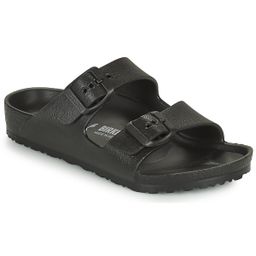
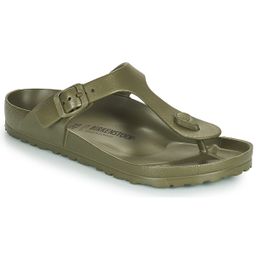
EVA models: These moulded-foam versions don't break in like cork. What you feel on Day 1 is what you'll feel on Day 100. They also run slightly shorter than their cork equivalents — so if you're between sizes in regular Birkenstocks, definitely size up for EVA.
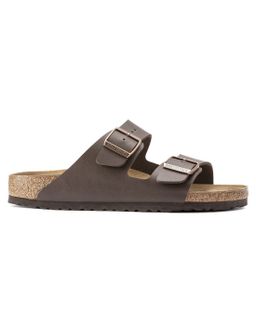
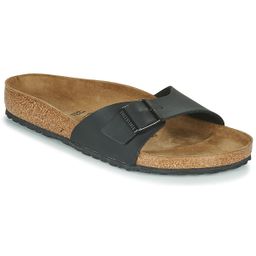
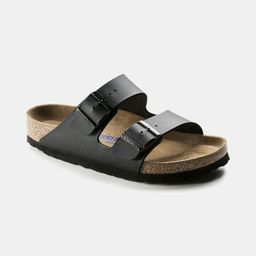
Arizona and Madrid (open-toe): The most forgiving fit. Standard sizing applies. These are the models where you can get away with being between sizes without issue. You'll find the widest Arizona selection in the women's footwear section.
Papillio platforms: The elevated sole changes weight distribution slightly. Sizing stays the same length-wise, but the platform can make the Regular width feel slightly narrower because your foot sits higher in the footbed.
For kids shopping for their first pair of Birkenstocks, leave a full thumb's width (roughly 10–12mm) of growing room rather than the standard 5–6mm adults use. Parents can filter by size on the kids' section to see what's in stock.
Common Mistakes When Ordering Online
Frequently Asked Questions
Is Birkenstock Narrow the same as women's sizing?
No. Narrow and Regular are unisex width options, not gender designations. Birkenstock's Narrow (filled footprint symbol) suits people with slim-to-medium width feet regardless of gender. About 60% of women choose Narrow and 85% of men choose Regular, but you should measure your foot width and compare to the chart rather than picking by gender.
Should I size up or down in Birkenstocks?
If you're between two EU sizes, size up. The extra 2–3mm gives the cork room to mold properly and prevents your toes from touching the front lip. The only exception is EVA models — these don't compress, so some buyers who are barely between sizes can go down.
How do I know if my Birkenstocks are too big?
Check for excessive heel slip (your heel lifts more than 5mm off the footbed with each step) or if your foot slides forward and hits the toe bar when walking downhill. Some space around the edges is normal and correct — Birkenstocks are designed with clearance.
Do Birkenstocks stretch over time?
The width doesn't stretch significantly. What changes is the depth: the cork-latex footbed compresses to match your arch shape, heel depth, and toe grip. This makes them feel roomier vertically, but a pair that's too narrow on Day 1 will still feel too narrow after break-in.
What's the difference between Birkenstock Regular and Wide?
Birkenstock doesn't offer a "Wide" option. Their widths are Narrow and Regular — that's it. Regular is their wider offering, roughly equivalent to a D–E width in conventional shoes. If you need wider than Regular, Birkenstock may not be the right brand for your foot shape.
Read Next
- Our Birkenstock Cyprus buying guide for where to find the best prices with delivery to Cyprus
- Birkenstock sandals guide (coming soon) — detailed breakdown of Arizona, Madrid, Gizeh and which suits your lifestyle