 Stylino
Birkenstock vs Crocs — Which Comfort Shoe is Better?
Two brands dominate the "ugly shoe" conversation. One was founded in 1774 by a German cobbler. The other was designed in 2002 as a boating shoe that accidentally became a lifestyle product. Both promise all-day comfort, both inspire fierce loyalty, and both sell millions of pairs every year. But they solve the comfort problem in completely different ways.
I've worn both in Cyprus summers. Birkenstocks on my morning coffee walks along the Limassol promenade, Crocs for hosing down the garden and quick beach trips. After three years of alternating, the differences are stark. This isn't a theoretical comparison. It's practical advice for anyone standing in front of their phone, wondering which to order with delivery to Cyprus.
All Birkenstock pricing below comes from Stylino's live catalogue, tracking 1,131 products from retailers that ship to Cyprus. Crocs pricing references their European retail site.
Quick Comparison: Birkenstock vs Crocs at a Glance
| Feature | Birkenstock | Crocs |
|---|---|---|
| Footbed | Cork-latex, custom-moulds to foot | Croslite foam, uniform cushion |
| Arch support | Anatomically shaped, raised arch | Flat, minimal arch contouring |
| Break-in | 1–2 weeks (cork adapts) | None (instant comfort) |
| Lifespan | 5–10 years, re-soleable | 1–2 years typical |
| Water resistance | Cork/leather: no. EVA line: yes | Fully waterproof |
| Weight | 300–450g per shoe | 170–220g per shoe |
| Entry price (Cyprus) | €36 (EVA mules on Stylino) | ~€45 (Classic Clog) |
| Premium range | Up to €290 | Up to €70 |
| Made in | Germany | Vietnam/China |
Comfort Philosophy: Cork That Moulds vs Foam That Cushions
Birkenstock's approach is patience. Their cork-latex footbed starts firm — almost uncomfortably so on day one. Over 10 to 14 days of wear, the cork softens precisely where your foot applies pressure. The result is a footbed that matches your arch height, toe grip pattern, and heel strike exactly. No two broken-in Birkenstocks feel the same, because no two feet are the same. According to Birkenstock's official materials page, the four-layer construction (cork-latex base, jute moisture layer, suede footbed lining, outsole) hasn't fundamentally changed since 1902.
Crocs take the opposite approach. Their proprietary Croslite foam delivers instant cushioning from the first step. No break-in, no waiting. The foam compresses uniformly under body weight, bouncing back to its original shape when you lift your foot. It feels like walking on a cloud. For about eight months. Then the foam begins to compress permanently, losing its bounce.
Here's the trade-off in one sentence: Birkenstock gets more comfortable over time; Crocs get less comfortable over time.
Foot Health: What Podiatrists Actually Recommend
This matters more than style debates. Michigan Foot Doctors' clinical comparison breaks it down bluntly: Birkenstocks are the better choice for long-term foot health, particularly for plantar fasciitis, flat feet, and general arch support.
Why Birkenstock wins on foot health:
- The raised arch in the cork footbed supports the medial longitudinal arch, reducing strain on the plantar fascia
- A deep heel cup stabilizes the calcaneus (heel bone), preventing over-pronation
- The toe grip bar encourages natural toe movement, strengthening foot muscles over time
Where Crocs fall short:
- The flat Croslite base offers cushioning but no structural arch support
- Loose fit (especially in Classic Clogs) forces toes to grip with each step, which can aggravate hammer toes
- No heel cup means reduced stability on uneven surfaces
One exception: If you have diabetic neuropathy or need post-surgical recovery shoes, Crocs' zero-pressure fit and featherlight weight can be medically appropriate short-term. They're not bad shoes. They're just not therapeutic ones.
Durability: The Five-Year Test
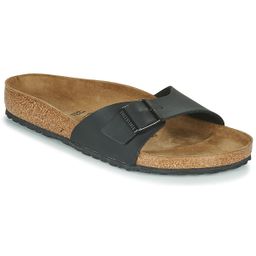
A pair of Birkenstock Arizonas bought in 2021 should still be wearable in 2026. That's not marketing optimism. The cork footbed and leather/Birko-Flor straps are designed for a minimum five-year lifespan with regular wear. The soles can be replaced by an authorized cobbler for roughly €30–40, extending the life further. My own pair is entering year four with no signs of structural fatigue — the cork is darker where my heel strikes, shaped exactly to my foot, and the buckles still click solid.
Crocs? My garden pair lasted 18 months before the Croslite compressed flat enough that my heels were touching ground through the sole. The sidewalls cracked where they flex at the toe break. This isn't unusual. Online reviews consistently report 12–24 months of useful life before Crocs become unsupportive flip-flops in disguise.
Over a decade, the math looks like this: one pair of Birkenstocks at €90 plus one re-soling at €35 = €125 for 10 years of wear. Five pairs of Crocs at €50 each = €250. Birkenstock costs half as much per year of actual use.
Style: From "Ugly Sandal" to LVMH Luxury
Birkenstock's style trajectory is one of fashion's wildest arcs. Hippie sandal in the 1970s. Steve Jobs' uniform in the 1990s. Derided as "grandpa shoes" in the 2000s. Then Phoebe Philo put them on the Celine runway in 2012 and everything changed. L Catterton (backed by LVMH's Bernard Arnault) acquired the brand in 2021 for €4 billion. Today Birkenstocks appear at Paris Fashion Week, cost up to €290 for limited editions, and the company's stock trades on the NYSE.
Crocs went a different direction. They leaned into their "ugly-cute" reputation, launched collaborations with everyone from Balenciaga to Post Malone, and embraced personalization through Jibbitz charms. It works. Crocs are deliberately fun, deliberately unserious.
In Cyprus specifically, I notice Birkenstocks more at cafes in Nicosia's old town and seafront restaurants in Paphos. Crocs dominate pool decks, water parks, and anywhere kids are involved. Both are socially acceptable. Neither will get you turned away from a casual restaurant. But the Birkenstock Boston might pass at a smart-casual dinner where Crocs wouldn't.
Price Comparison: What You'll Actually Pay in Cyprus
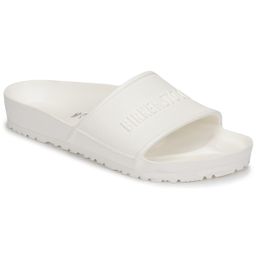
Entry-level Birkenstock on Stylino: €36 for men's EVA mules (product ID 196347, via Spartoo). The core cork-footbed Arizona starts around €73–92 depending on material.
Entry-level Crocs (EU retail): ~€45 for the Classic Clog. The platform versions run €55–65.
At the €50 price point, you're choosing between:
- Birkenstock Arizona EVA (~€50): genuine Birkenstock footbed shape, waterproof, lightweight, but no custom-moulding cork
- Crocs Classic Clog (~€50): Croslite foam throughout, ventilation ports, Jibbitz-compatible, lighter by about 100g
Both are honestly decent at this price. The difference is what happens after month eight: the Birkenstock EVA maintains its shape (the EVA foam is denser than Croslite), while the Crocs start compressing.
Best for Cyprus: When to Choose Each
Cyprus summers demand specific things from footwear. Temperatures push 40°C in July. Beaches alternate between sand and rocky coves. City pavements radiate heat. Air conditioning indoors means constant temperature swings. Here's when each brand wins:
Choose Crocs when:
- Walking directly into water (rocky beaches, boat trips, pool decks)
- Gardening or hosing down outdoor spaces
- Kids under 8 who outgrow shoes every season anyway
- Hospital/clinic workers needing wipe-clean, lightweight shifts
- You want something disposable for messy activities
Choose Birkenstock when:
- Daily commute or regular walking (30+ minutes)
- Standing for extended periods (kitchen, retail, teaching)
- You have any arch, heel, or plantar fascia issues
- You want one pair to last multiple Cyprus summers
- Walking on hot pavement (thicker sole insulates better than Croslite)
- Style matters — café-to-dinner versatility
The surprising crossover: Birkenstock's EVA line. Waterproof, lightweight, shaped with the anatomical footbed contours, priced from €36 on Stylino. It's the closest thing to "Crocs comfort with Birkenstock support." I use mine for beach walks along Dasoudi where the path alternates between boardwalk and pebbles.
The Middle Ground: Birkenstock EVA Explained
People searching "plastic Birkenstocks" are usually looking for the EVA collection without knowing its proper name. These are fully synthetic Birkenstocks — no cork, no leather, no natural materials. Just dense, closed-cell EVA foam moulded into the same anatomical footbed shape that Birkenstock has refined since 1902.
What you get:
- Same contoured arch support and heel cup as cork models
- Waterproof (can wear in sea, pool, shower)
- Ultra-light (~180g, comparable to Crocs)
- Easy to clean (soap and water)
- Available from €36 on Stylino
What you lose:
- No custom moulding — the EVA doesn't adapt to your specific foot shape
- Less breathable than cork/suede footbed
- Shorter lifespan than cork (3–4 years vs 7–10 for cork)
- Fewer colour/style options than the main collection
Think of EVA Birkenstocks as the brand's answer to Crocs: same price bracket, same water resistance, but with 120 years of footbed research baked into the mould shape. If you've been buying Crocs for water activities, switching to Birkenstock EVA gives you better arch support at roughly the same cost.
Birkenstock
Men's Mules BIRKENSTOCK Black
No longer available
Frequently Asked Questions
Are Birkenstocks better for your feet than Crocs?
Yes, according to podiatric assessments. Birkenstocks provide structured arch support, a stabilizing heel cup, and a toe grip bar that promotes natural foot mechanics. Crocs offer cushioning without structural support. For anyone with plantar fasciitis, flat feet, or overpronation, Birkenstocks are the clinically preferred option.
Which is more durable, Birkenstock or Crocs?
Birkenstock by a wide margin. Cork-footbed models last 5–10 years with regular wear and can be re-soled. Crocs' Croslite foam typically compresses and cracks within 12–24 months of daily use. Over a decade, one pair of Birkenstocks costs less than the five pairs of Crocs you'd need to replace them.
Are Birkenstock EVA sandals the same as Crocs?
Not quite. Both are waterproof foam shoes, but Birkenstock EVA sandals are moulded to the brand's anatomical footbed shape — with arch support, heel cup, and toe bar — while Crocs use a flat Croslite base with no contouring. Birkenstock EVA is denser foam that holds its shape longer. Prices are comparable: Birkenstock EVA from €36 on Stylino vs Crocs Classic at ~€45.
Can Crocs replace Birkenstocks for arch support?
No. Crocs were designed for casual wear and water resistance, not therapeutic foot support. Their flat foam base provides cushioning but no arch correction. If you need arch support, Birkenstock (cork or EVA) is the better choice. Some Crocs models now include "LiteRide" insoles with slight contouring, but these still don't match Birkenstock's footbed depth.
Read next
- our Birkenstock sandals guide for a deeper look at Arizona, Madrid, Gizeh, and Papillio models
- the complete Birkenstock buying guide for Cyprus covering all retailers and pricing
- our Birkenstock Boston clog guide if the closed-toe option appeals more than sandals
All Birkenstock prices reflect live data from Stylino — updated daily from retailers that ship to Cyprus. Compare 1,131 products across Spartoo, Mybrand.shoes, SportsPoint, and Mandellos Sports in one place.