 Stylino
Camper Pelotas explained: why 11 million people bought this shoe
Eleven million pairs. That's how many Camper Pelotas have been sold since the shoe debuted in 1995, making it one of the best-selling European shoe designs of the modern era (per Camper's official Pelotas page). If you've been searching for a camper pelotas review or want to understand what makes the 87 rubber balls shoe a phenomenon, this guide breaks down the design, the lineup, and current prices available to Cyprus shoppers on the Camper.
Origin story: from Mallorcan fields to 11 million feet
Camper was founded in 1975 in Inca, Mallorca, by Lorenzo Fluxà — the fourth generation of a shoemaking family whose roots trace back to 1877 (per Wikipedia). The brand name itself comes from the Catalan word for "peasant," a nod to the rural Mallorcan tradition of functional, durable footwear.
The Pelotas arrived two decades later, in 1995. The design team drew inspiration from two sources: the traditional Mallorcan peasant shoe — a hand-stitched leather shoe built for all-day agricultural work — and a soccer ball. The connection? Look at the sole. Those 87 individual rubber spheres arranged across the outsole echo the hexagonal panels of a football, and "pelotas" is simply Spanish for "balls."
What started as an experiment in sole engineering became Camper's identity shoe. The 87-ball sole wasn't just a visual gimmick — it distributed weight across individual contact points, creating a natural cushioning effect without bulky foam midsoles.
Design philosophy: anatomy of the 87-ball sole
The Pelotas sole is the shoe's signature, but the design philosophy extends further (per Camper official):
- 87 rubber balls: each sphere compresses independently under load, offering multi-directional flexibility and natural shock absorption. The spacing between balls also improves ventilation beneath the foot.
- Hand-stitching: the upper-to-sole connection on classic Pelotas uses a visible 360° stitch rather than glue-only construction, extending the shoe's lifespan and allowing resoling.
- Leather uppers: most Pelotas models use full-grain or smooth calfskin leather, chosen for its ability to develop character over time rather than degrade.
- Minimal internal structure: the shoe avoids rigid heel counters and arch supports in favour of the sole doing the cushioning work. This produces a distinctly flat, ground-feel wear.
The overall design language is what Dezeen has described as Mediterranean minimalism — functional, unstated, and built to last rather than to trend.
The lineup: Pelotas XL, Ariel, and Step
Not all Pelotas are the same shoe. Camper has expanded the family into distinct sub-lines, each using the 87-ball sole but differing in upper construction and profile (per Camper official):
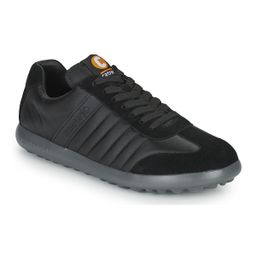
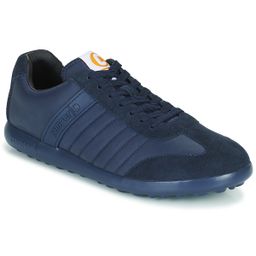
Pelotas XL — The classic. A low-top lace-up with smooth leather uppers, the traditional hand-stitched sole attachment, and a slim profile. This is the model that sold the original millions and remains the most popular. Most of the men's Pelotas on Stylino fall into this family.
Pelotas Ariel — A lighter, more casual variant with softer leather and a slightly padded collar. The Ariel keeps the 87-ball sole but uses a thinner outsole unit, making it feel closer to a sneaker than a traditional shoe. Popular in women's sizing.
Pelotas Step — A slip-on evolution that removes the lacing system entirely. The elastic gusset entry and lower-profile tongue make it a travel and commuter favourite. Fewer size runs reach Cyprus, but when they appear they tend to sell quickly.
Kids' Pelotas — Scaled-down versions of the XL and Ariel, maintaining the 87-ball sole in smaller dimensions. Available in both lace-up and velcro-strap versions for younger children.
Why 11 million: what keeps people buying
The Pelotas isn't the cheapest shoe, and it isn't the most technically advanced. So why has it outsold most of its competitors over three decades? Three reasons stand out:
1. Comfort without bulk. The 87-ball sole delivers genuine all-day comfort in a shoe that looks slim enough for an office or a dinner. Most comfort shoes sacrifice aesthetics; the Pelotas doesn't.
2. Versatility. A single pair works with jeans, chinos, and a summer suit. The understated design means it codes as smart-casual in Mediterranean dress contexts where chunky sneakers would feel out of place.
3. Longevity. The hand-stitched construction and quality leather mean a well-maintained pair lasts years, not seasons. At the €70–€130 price point, cost-per-wear often beats cheaper shoes that need replacing annually.
Men's, women's, and kids' Pelotas on Stylino
Across the retailers that ship to Cyprus and that we currently track, Camper Pelotas are available in men's, women's, and children's sizes. Here's what the current price landscape looks like:
- Men's Pelotas: €75–€101 — predominantly the XL model in black and brown leather
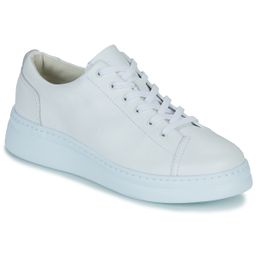
- Women's Pelotas: from €84 — lighter colourways including white and grey
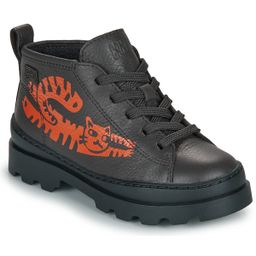
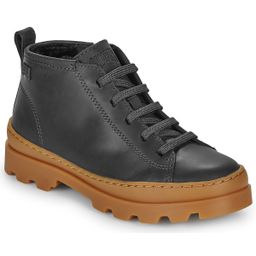
- Kids' Pelotas: €57–€71 — both girls' and boys' models with lace and velcro options
Browse the full Camper range on the Camper — every live price and retailer shown in one place.
Styling the Pelotas: three contexts
Casual daily wear. The Pelotas in brown or tan leather pairs naturally with dark jeans or chinos and a linen shirt. The slim sole profile keeps the silhouette clean where a chunky sneaker would overwhelm a relaxed outfit.
Smart-casual and office. In black leather, the Pelotas reads as a derby shoe from a distance. Pair with wool trousers and a blazer for Mediterranean office environments where full brogues feel too heavy and sneakers feel too casual.
Travel. The flat sole, light weight, and slip-on variants (Pelotas Step) make it an ideal travel shoe. It's comfortable enough for a full day of walking, presentable enough for a restaurant dinner that same evening, and compact enough to pack as a second pair.
Care and longevity: maintaining leather Pelotas
A Camper Pelotas in smooth leather will last 3–5 years of regular wear with minimal maintenance. Here's the routine that maximises their lifespan:
- Weekly wipe-down: use a damp cloth to remove surface dust and salt residue (particularly important in coastal Cyprus climates).
- Monthly conditioning: apply a thin layer of neutral leather conditioner or cream to prevent cracking. The hand-stitched seams benefit from conditioning too — dry thread is what eventually breaks.
- Sole care: the 87 rubber balls collect small stones. Check periodically and remove any debris lodged between the spheres — trapped stones wear the rubber unevenly.
- Rotation: like all leather shoes, Pelotas benefit from a day of rest between wears. This allows the leather to release moisture and recover shape.
- Storage: use shoe trees (cedar if possible) when not wearing them for extended periods. The flat profile of the Pelotas makes them prone to collapsing at the toe box without internal support.
The hand-stitched sole attachment means a skilled cobbler can restitch or even resole a Pelotas — something not possible with fully glued constructions. This is where the initial investment pays back over time.
Frequently asked questions about Camper Pelotas
Read next
- Best Camper shoes in Cyprus 2026
- The Camper story: 4 generations of Mediterranean shoemaking
- Camper vs Geox: comfort shoe showdown
- Camper size guide: how Camper shoes fit
Compare Camper Pelotas prices on Stylino
Head to the Camper to see every Camper Pelotas model currently available from retailers that ship to Cyprus — live prices, real discount flags, and size availability in one place. Set a price-drop alert on the model you want, and we'll notify you the moment it drops.