 Stylino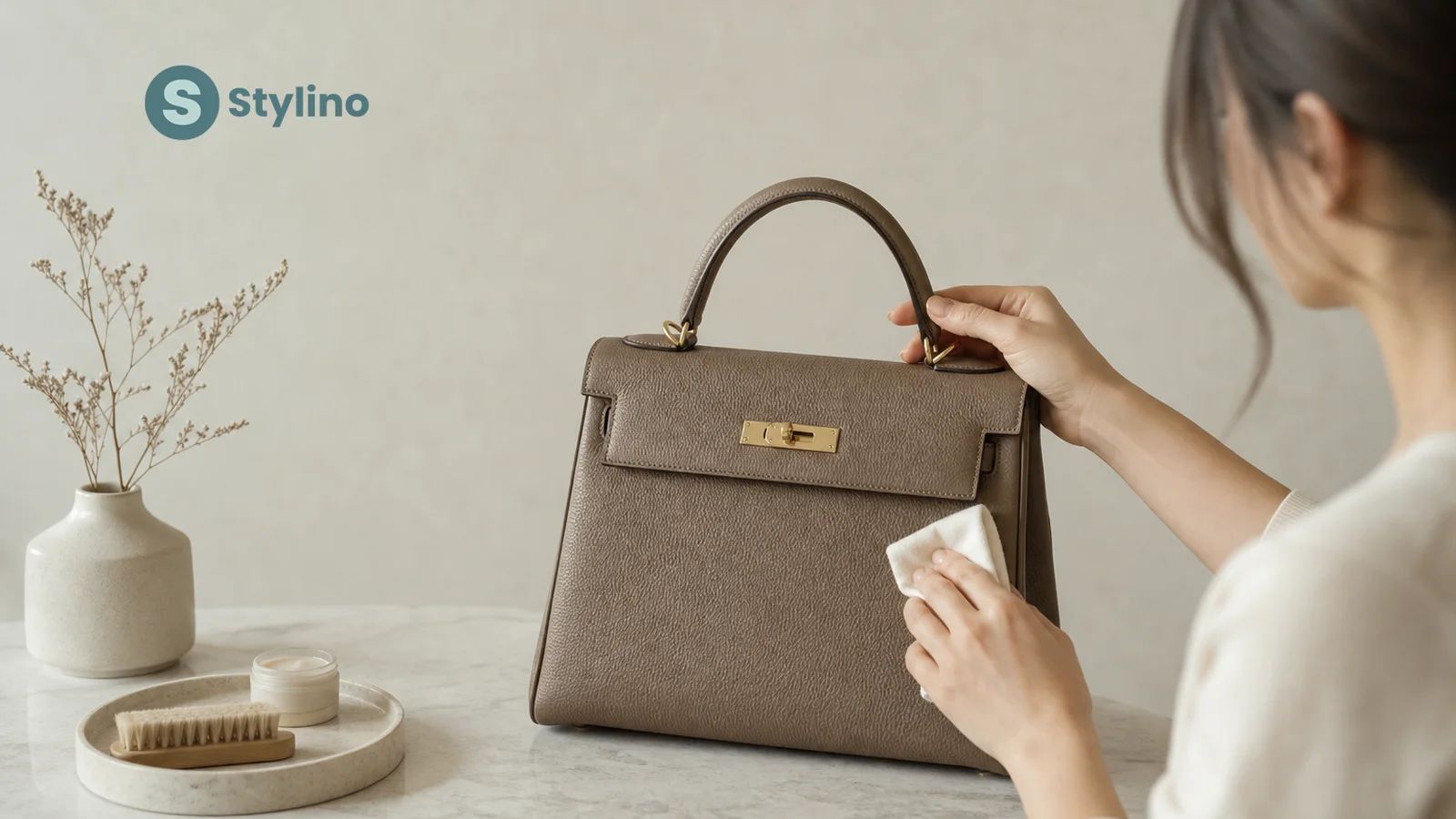
How to care for your designer leather bag
A designer leather bag is one of the few fashion investments that can hold — or even increase — its value over time. But only if you care for it properly. If you're a Cyprus shopper who invested in a Kurt Geiger crossbody or a Michael Kors tote, the Mediterranean climate presents unique challenges that generic care guides don't address: intense UV exposure, summer humidity swings, and the ever-present risk of sunscreen transfer. This guide walks you through a complete designer bag care routine designed specifically for the conditions your bag faces here.
Whether you spent €80 on a structured crossbody or €350 on a Saffiano leather satchel, the steps below will keep it looking like new — and protect your investment if you ever want to resell.
The step-by-step leather bag care routine
Step 1: Empty and inspect your bag
Remove all contents, including loose receipts, coins, and forgotten lip balms. Open every pocket and compartment. Shake out debris gently. Inspect the leather surface for stains, scratches, discolouration, or dryness. Check hardware (zips, clasps, chains) for tarnishing or green oxidation — common in Cyprus's humid coastal air.
Step 2: Dust and wipe down the exterior
Use a soft, lint-free microfibre cloth (dry) to remove surface dust. For textured leathers like pebbled or Saffiano, work the cloth in small circular motions to reach the grain valleys. For smooth leather, wipe in straight, gentle strokes following the grain direction. Never use paper towels or tissues — wood fibres can micro-scratch polished leather.
Step 3: Clean with a pH-balanced leather cleaner
Apply a small amount of leather-specific cleaner to a fresh microfibre cloth — never directly onto the bag. Work in sections: one panel at a time. For coated canvas sections (common on Michael Kors and mixed-material bags), a slightly damp cloth with diluted mild soap works well. Wipe each section dry immediately with a separate cloth.
Step 4: Condition the leather
Once clean and fully dry, apply a leather conditioner formulated for your leather type. Saffiano and coated leathers need less conditioning (once every 2–3 months); uncoated pebbled and smooth calf leather benefits from monthly conditioning. Apply a thin, even layer with a cloth, let it absorb for 10–15 minutes, then buff away any excess. This restores moisture lost to Cyprus's dry summer air and prevents cracking.
Step 5: Protect against UV and moisture
Apply a leather protector spray with UV-inhibiting properties. Hold the can 15–20 cm from the surface and spray in sweeping passes. Let it dry for 30 minutes before use. This step is critical in Cyprus where summer UV indices regularly hit 10–11. Reapply every 4–6 weeks during the May–October season.
Step 6: Store properly between uses
Stuff the bag with acid-free tissue paper to maintain its shape. Place it in its original dust bag (or a clean cotton pillowcase). Store upright in a cool, dark space — never in direct sunlight, never in a sealed plastic bag (which traps moisture and encourages mould in humid Cypriot winters). Leave hardware clasps unlatched to avoid long-term pressure marks.
Know your leather: care differs by type
Not all designer bags use the same leather, and what works for one type can damage another. Here's what you need to know about the most common materials across brands like Kurt Geiger and Michael Kors:
Saffiano leather (cross-hatch textured, wax-coated): The most durable and stain-resistant option. The wax coating acts as a built-in shield against water and light scratches. Clean with a damp cloth; condition sparingly. According to Michael Kors's care guidance, Saffiano requires minimal maintenance but should still be kept away from prolonged heat exposure that can soften the wax coating.
Pebbled leather (soft, textured grain): More absorbent than Saffiano. Condition monthly during dry seasons. Watch for colour transfer from denim or dark clothing — a common complaint with lighter pebbled bags. A protective spray forms a barrier that reduces transfer risk.
Quilted leather (padded, stitched panels): The quilting seams can trap dust and moisture. Use a soft-bristle brush (clean toothbrush) to gently clean along stitch lines. Condition the flat panels but avoid saturating the stitching thread.
Coated canvas (fabric with protective coating): Found on many Kurt Geiger and Michael Kors pieces alongside leather trim. Not actually leather — do not use leather conditioner on coated canvas panels. Clean with a slightly damp cloth and mild soap. The coating protects against water but not against UV fading.
Cyprus-specific threats to your designer bag
Generic care guides are written for temperate climates. Cyprus throws additional challenges at your leather:
Heat damage (May–October): Interior car temperatures in Cyprus regularly exceed 60°C. Leather left in a parked car can warp, crack, and suffer irreversible dye migration. Never leave your bag in a car — even in the boot. According to the Leather Working Group, sustained temperatures above 40°C accelerate the breakdown of tanning agents that keep leather supple.
UV fading: Cyprus receives 300+ sunny days annually. Even a few weeks of regular sun exposure causes visible fading, especially on dyed leathers (navy, burgundy, and tan fade fastest). The UV protector step in the routine above is non-negotiable here.
Humidity swings: Coastal areas experience high humidity in summer (60–70%) and drier conditions in winter. Rapid humidity shifts stress leather fibres. Silica gel packets in your storage space help buffer these swings — replace them every 3–4 months.
Sunscreen and body oil transfer: SPF products contain oils and UV-filtering chemicals that stain leather on contact. If you carry a crossbody bag against bare skin in summer, the strap and body-facing panel are at constant risk. Wear the bag over clothing whenever possible, or apply a protective barrier spray to high-contact areas weekly during summer.
Sea salt and sand: Beach-adjacent use means fine salt crystals and sand particles can scratch leather surfaces and lodge in hardware mechanisms. After any beach-adjacent outing, wipe down your bag thoroughly with a dry microfibre cloth.
Storage best practices
How you store your bag between uses matters almost as much as how you clean it:
- Stuff with acid-free tissue — maintains structure and absorbs residual interior moisture. Avoid newspaper (ink transfer) and coloured tissue (dye bleed risk)
- Use the dust bag — the cotton or flannel bag that came with your designer piece exists for UV and dust protection. If you've lost it, a clean white cotton pillowcase works
- Store upright — laying bags flat under other items compresses structure and creases leather permanently
- Leave space between bags — colour transfer between bags stored touching is a real risk, especially with darker dyes
- Climate control — avoid attics (heat) and below-ground storage (damp). A wardrobe in an air-conditioned room is ideal for Cyprus homes
- Silica gel packets — place 2–3 inside the bag during long-term storage to prevent mould in the humid coastal winter months
When to seek professional cleaning
Some situations go beyond home care:
- Deep-set stains that haven't responded to two cleaning attempts — further scrubbing risks removing the leather's finish
- Colour fading or dye loss from UV damage — professionals can re-dye and re-seal leather
- Mould growth (white or green patches) — common on bags stored in unventilated Cyprus spaces over winter. Mould roots penetrate below the surface; surface wiping alone won't resolve it
- Structural damage — torn stitching, broken hardware, misshapen bases
- Vintage or high-value pieces worth over €500 — the risk/reward of DIY care shifts significantly; professional services typically cost €40–€80 per bag
As a general rule from Kurt Geiger's care recommendations: if you're unsure whether a product or method is safe for your specific leather, test on an inconspicuous area first — the base underside or an interior panel.
How care extends resale value
The pre-owned luxury bag market has grown significantly in recent years. A well-maintained designer bag retains 40–70% of its retail value on resale platforms, while a visibly worn or stained piece drops to 15–30%. The difference often comes down to three factors:
- Surface condition — scratches, stains, and fading are the first things buyers inspect
- Structure — bags that have lost their shape or have collapsed corners signal neglect
- Hardware — tarnished or scratched metal suggests the bag was stored carelessly
For Cyprus shoppers buying bags from retailers that ship to Cyprus at prices already below EU retail, the resale equation is even more attractive: a bag purchased at €120 (discounted from €180) and maintained properly could resell for €80–€100 after a year of careful use. That's a cost-per-wear that beats most fast-fashion alternatives.
Regular care also simply means you enjoy the bag more. A clean, well-conditioned leather bag looks and feels premium every time you pick it up — which is the entire point of choosing designer over disposable.
Frequently asked questions
Read next
- Kurt Geiger buying guide for Cyprus shoppers
- Kurt Geiger Kensington bag guide
- Michael Kors bags guide for Cyprus
Browse designer bags on Stylino
Ready to find your next designer bag — or reward yourself for taking great care of your current one? Browse current prices on Kurt Geiger London bags and Michael Kors bags from retailers that ship to Cyprus, all compared in one place on Stylino.