 Stylino
The Story Behind Desigual: From Barcelona Patchwork to Global Fashion
In 1984, a 20-year-old Swiss guy in Barcelona's grittiest neighbourhood cut up second-hand jeans and stitched them into a patchwork jacket. He sold it on the street. That jacket — ugly by conventional standards, magnetic by every other — became the founding product of Desigual, a brand now operating in 107 countries with over 500 products tracked on Stylino alone.
This is how a single upcycled garment in El Raval became a global fashion force worth knowing about, especially if you're a Cyprus-based shopper curious about what you're actually buying when you pick something off the Desigual rack.
1984: A jacket made from scraps
Thomas Meyer was born in Switzerland but raised between Ibiza and Barcelona. By his early twenties, he'd settled in El Raval, then one of Barcelona's roughest barrios (now its creative heart). According to Desigual's official history, Meyer's first creation was a denim jacket assembled entirely from pre-owned jeans. No two panels matched. That was the point.
The name came from Spanish filmmaker Isabel Coixet (who would later direct Elegy and The Secret Life of Words). She called the jacket "desigual" (unequal, different), and the word stuck. The first logo was designed by artist Peret: a naked couple holding hands, titled "Humans." It was provocative, joyful, and completely unlike anything else in mid-1980s Spanish fashion.
Meyer started selling handmade patchwork pieces on Las Ramblas and in Barcelona's Sunday markets. Each one was unique because each was built from whatever denim was available that week. Forty years later, that constraint became the brand's entire identity.
1986–2000: From Ibiza to the world
The first proper Desigual store opened in 1986, not in Barcelona, but in Ibiza's port, designed by architect Tonet Sunyer. The location tells you something about the brand's DNA: Ibiza in the late '80s was the Mediterranean capital of creative misfits, DJs, and artists who valued expression over convention.
Early moves included selling printed t-shirts at Barcelona's Nautic Salon in 1985 and exporting to France and Portugal by the late '80s. The Desigual Company Profile notes that international expansion was gradual at first; the brand had to convince buyers that "unmatched" was intentional, not a manufacturing error.
By 1997, Desigual was showing at Pasarela Gaudí (Barcelona's fashion week). The patchwork aesthetic had matured from street market curiosity into something store buyers could see selling in bulk. The prints became more controlled, but never lost that hand-assembled feeling.
2000s: The boom decade
The 2000s turned Desigual from a Mediterranean brand into a genuinely global one. The company expanded to 107 countries, opened hundreds of retail points, and recruited supermodels like Adriana Lima and Bella Hadid for campaigns that mixed high-gloss photography with the brand's anti-uniform message.
What made the growth work was a specific formula: saturated colour, unmistakable prints, and a price point that sat comfortably below luxury but above fast fashion. A Desigual dress costs €50–€120 in most cases. That's more than Zara, less than Sandro, and completely different from both. As GrowYourBrand's case study puts it, Desigual built a "colour and patchwork system" that made every piece recognisable from across a room.
The brand's advertising leaned into provocation too. Naked sales events, kiss-based campaigns, and marketing that treated joy as the product's core benefit. It wasn't for everyone, but the people it was for became fiercely loyal.
2011–present: The Lacroix era
In 2011, Desigual announced something unexpected: a design collaboration with Christian Lacroix, the French haute couture legend. On paper, it seemed odd. Lacroix's world was Paris ateliers and red-carpet gowns. Desigual's world was Barcelona streets and printed t-shirts.
But as Desigual's collaboration page explains, the two shared something fundamental: a love of colour, pattern, and the refusal to be boring. Lacroix described it as "friendship, respect and love."
Fifteen years later, the collaboration is still running. Lacroix pieces sit at Desigual's premium tier: typically €80–€135 versus the €40–€80 mainline range. You get orchid motifs, baroque florals, ethnic-inspired patterns, and premium fabrics like Lenzing™ viscose and organic cotton. On Stylino, Lacroix pieces from Desigual tend to hold price better and sell through faster than the mainline.
The SS26 Lacroix capsule features quilted patchwork jackets, palazzo trousers with photographic floral prints, and asymmetric dresses that reference Lacroix's couture archive while staying wearable at a seaside restaurant in Paphos.
The rebranding
Around 2019, Desigual made a bold move: they permanently inverted their logo, flipping the wordmark upside down. According to FashionNetwork's reporting, Desigual was the first global brand to permanently invert its own logo as a strategic identity statement. The message was transparent: "look at things differently."
The brand's slogan evolved in parallel. "La Vida es Chula" (Life is Cool) gave way to "Yes to Life," which then evolved into the current "Love Different" — a callback to the brand's founding principle of desigualdad, of celebrating difference rather than conformity.
The rebrand accompanied a strategic shift toward slightly more elevated positioning. Collections became more curated, fabrics improved, and the brand leaned harder into collaborations and limited runs. The core identity (bold prints, Mediterranean optimism, colour as therapy) remained untouched.
Desigual's sustainable turn
The SS26 JOYWEAR collection, which FashionUnited covered in detail, represents Desigual's most visible push into sustainable materials. The collection features Lenzing™ Lyocell, TENCEL™ fibres, BCI-certified cotton, and recycled polyester blended into the brand's signature prints.
The Ecoalf collaboration (a Spanish sustainable fashion brand) signals where Desigual is heading: responsible production without sacrificing the visual punch that defines the brand. Whether that translates into genuine environmental impact or remains a marketing layer is worth watching, but the materials certifications are real and verifiable.
Desigual in Cyprus today
You won't find a standalone Desigual store in Cyprus, but the brand is widely available. Spartoo, Politikos, and Tsakiris Mallas all ship Desigual to the island, and ERA carries the brand in physical stores in Nicosia and Limassol. We currently track 542 Desigual products on Stylino, with prices ranging from €16 for accessories up to €213 for premium outerwear.
About half the catalog is discounted at any given time, which makes price comparison genuinely worthwhile. The same item can differ by €10–€30 depending on which retailer you check. Here are a few pieces that give you a feel for the range:
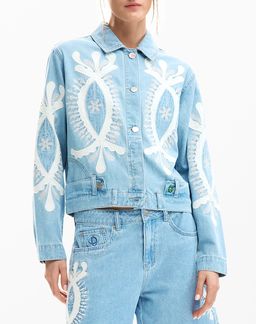
A denim jacket at €179 from Politikos. The patchwork influence from that 1984 original is still visible in Desigual's denim pieces four decades later.
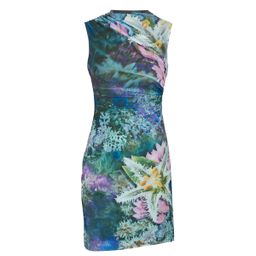
A multicolor dress at €82.80 (10% off). The kind of Desigual dress that converts sceptics — bold enough to be interesting, versatile enough for a Tuesday.
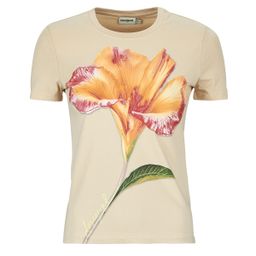
A t-shirt at €27.75 (25% off from €37). The easiest entry point into the brand: throw it on with jeans and you've got more personality than anyone in Primark basics.
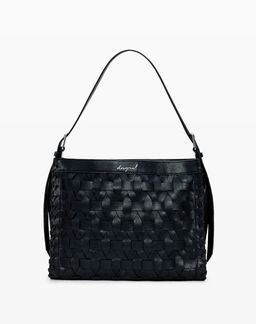
A bag at €115 from Politikos. Desigual bags lean into the print DNA hard, and at this price they compete directly with entry-level designer bags but offer a far more distinctive look.
Browse the full selection and compare prices across all retailers on the Desigual women's page on Stylino.
Frequently asked questions
Who founded Desigual?
Thomas Meyer, a Swiss-born designer, founded Desigual in Barcelona in 1984. He was 20 years old. The brand name was suggested by Spanish filmmaker Isabel Coixet.
What does "Desigual" mean?
It means "different" or "unequal" in Spanish. The name was chosen deliberately to signal that the brand rejected uniformity in fashion — each piece was meant to stand apart.
Is Desigual a luxury brand?
No. Desigual is mid-range, with most items priced between €27 and €135. The Christian Lacroix collaboration line sits at the premium end (€80–€135), but even those pieces are accessible compared to actual luxury fashion. Think of it as affordable creative fashion.
Where is Desigual made?
Designed in Barcelona at the brand's headquarters. Manufacturing takes place primarily in China and India, with some production in other countries depending on the collection. The Lacroix collaboration pieces use premium fabrics sourced from European suppliers like Lenzing (Austria).
Read next
- Our Desigual buying guide for Cyprus: where to buy, full price comparison, and retailer breakdown
- The Desigual size guide: charts, fit tips, and what "runs small" actually means in practice
- Our picks for the best Desigual dresses this summer: eight dresses from €61 to €169
Ready to explore the brand yourself? See all Desigual prices on Stylino, with live prices from Spartoo, Politikos, and Tsakiris Mallas compared in one place.