 Stylino
Dr. Martens Chelsea Boots: 2976 & Beyond
Every Dr. Martens fan eventually hits the same wall. You love the boots. You love the bounce. But sometimes you're running late, and the idea of threading eight eyelets on a 1460 while your coffee gets cold feels like too much ceremony for a Tuesday morning. That's where the Chelsea comes in.
The Dr. Martens 2976 takes everything people love about the brand (the AirWair sole, the yellow welt stitch, the subcultural attitude) and removes the laces entirely. Elastic side panels. Pull on. Walk out. It's the fastest way into a pair of Docs, and arguably the cleanest-looking one too.
Stylino currently tracks several Chelsea and Chelsea-adjacent Dr. Martens boots from retailers that ship to Cyprus, with men's prices ranging from around €130 to €223 and women's from €175 to €230. This guide covers the 2976 and its variants, the history behind the silhouette, and why this might be the DM boot that fits your life better than the icon everyone else is wearing.
Chelsea Boot History: From Victorian England to Docs
The Chelsea boot existed long before Dr. Martens put their spin on it. The original design traces back to the 1850s, when Queen Victoria's shoemaker J. Sparkes-Hall patented an ankle boot with elastic side panels. The idea was simple: a riding boot that slipped on and off without buttons or laces. The design became popular across London, and by the 1960s, the Beatles and the Stones had made it a rock 'n' roll staple.
Dr. Martens entered the picture in the 1970s. They took the Chelsea silhouette and rebuilt it from scratch: AirWair air-cushioned sole underneath, Goodyear-welted construction, yellow contrast stitching around the welt, and their signature chunky profile. The result was a boot that looked sharper than the 1460 but still felt unmistakably like a Doc Martens.
The model number they assigned was 2976, and it's been in continuous production ever since.
The 2976: Elastic Panels, Zero Laces, Full Attitude
Pull a 2976 out of the box and the first thing you notice is how clean it looks compared to the 1460. No eyelets. No lace hardware. Just two elastic side panels, a smooth leather upper, and that telltale yellow stitch running the circumference of the sole.
The elastic panels are the defining feature. They're wide enough to stretch over your ankle as you push your foot in, then contract to hold the boot snug against your leg. A fabric pull tab at the back and front helps with entry. The whole process takes about three seconds.
Underneath, it's the same AirWair sole you'd find on any other Doc Martens boot. Air-cushioned rubber, sealed pockets that absorb impact, and that slightly springy gait that DM wearers recognise after a single step. The sole is heat-sealed to the upper via Goodyear welt, the same construction that gives the 1460 its famous durability.
The result is a boot that carries every bit of the Dr. Martens identity in a more streamlined package. It works with slim trousers, suits, dresses, and jeans alike. Where the 1460 makes a statement, the 2976 makes a suggestion.
2976 Variants: Smooth vs Bex vs Quad vs Leonore
Like the 1460, Dr. Martens has expanded the 2976 into multiple variants. The core shape stays the same; what changes is the sole height and the interior.
2976 Smooth: the original. Classic AirWair sole, thick Smooth leather upper, full break-in required. This is the purest expression of the DM Chelsea, and the version that pairs best with tailored outfits. It sits close to the ground, keeps a low profile, and develops a deep patina with age.
2976 Bex: same leather, taller sole. The Bex platform adds roughly 2cm of height, giving the boot a chunkier stance without going full platform. If you want a bit more visual weight underfoot but still need something you can wear to an office, the Bex hits that middle ground.
2976 Quad: the platform taken further. A 4.5cm stacked rubber sole turns the understated Chelsea into a statement piece. The Quad is heavy (you feel the extra rubber with every step), but the visual impact is considerable. Currently priced around €223 on Stylino through Mybrand.shoes.
2976 Leonore: the winter specialist. Same Chelsea shape, but lined with faux fur for insulation. The Leonore is designed for cold weather comfort, which makes it a surprisingly practical choice for the handful of genuinely chilly weeks Cyprus gets between December and February. If Troodos snow is in your plans, this is the DM boot that makes sense.
Men's Chelsea Options on Stylino
The Chelsea silhouette is where Dr. Martens' men's offering really opens up on Stylino. While the brand's sandals and platforms skew heavily toward women's styles, the Chelsea is balanced.
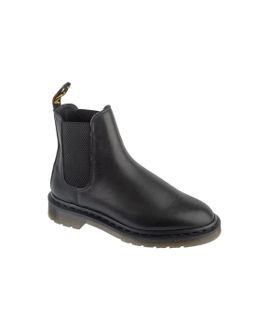
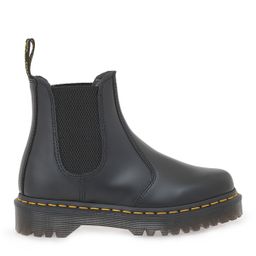
Graeme Chelsea: a chunky, utilitarian take on the Chelsea. Thicker leather, a more aggressive sole profile, and a slightly higher shaft than the 2976. It reads as a work boot crossed with a Chelsea, and it's currently available at around €195 on Mybrand.shoes. Good for anyone who finds the standard 2976 too polished.
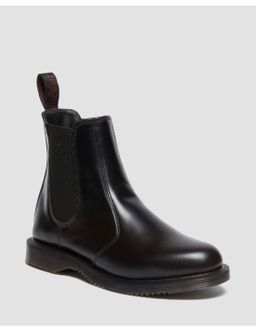
Flora Chelsea: originally designed as a women's style but widely adopted across genders. The Flora has a narrower profile, a more sculpted toe, and sits closer to the ankle. At roughly €130 on Mybrand.shoes, it's also the most affordable Chelsea in the DM lineup available on Stylino. The slimmer fit makes it particularly comfortable for people with narrow feet.
Browse the full men's footwear selection on Stylino for the complete range of Dr. Martens boots available with shipping to Cyprus.
Chelsea vs 1460: Which Boot Suits Your Wardrobe?
This is the question every DM buyer asks at some point. Both boots share the same DNA: AirWair sole, Goodyear welt, yellow stitching, leather upper. The differences are practical rather than philosophical.
The 1460 gives you maximum ankle support and maximum visual impact. Eight eyelets, full lacing, the iconic boot that Pete Townshend wore on stage. It takes longer to put on, takes longer to break in, and commands attention every time you walk into a room. If your wardrobe leans casual, creative, or deliberately rebellious, the 1460 is the right call. Our 1460 boot guide covers every variant in detail.
The 2976 Chelsea gives you speed and subtlety. No lacing, no ceremony. Pull on, go. The sleeker profile works in situations where a 1460 might feel like too much: office settings, dinner reservations, a wedding where you want to wear Docs without the boots dominating the outfit. The trade-off: Chelsea boots offer less ankle support than lace-ups, and the elastic panels will eventually stretch with heavy use.
My honest take? If you're buying your first pair of Dr. Martens, get the 1460. It's the foundational experience. But if you already own a pair of lace-ups and want something you can throw on without thinking, the 2976 is the boot that actually gets worn five days a week. I've watched people in Limassol pair them with summer linen trousers, and it works better than it has any right to.
The No-Lace Advantage
The absence of laces changes more than just the morning routine. It changes how the boot interacts with the rest of your outfit.
Lace-up boots create a visual break at the ankle. They draw the eye, especially with contrasting laces or open-top lacing. Chelsea boots do the opposite: they create a smooth line from trouser to sole. Tucked under slim jeans, a Chelsea boot almost disappears, letting the rest of the outfit breathe.
For people who travel frequently, the pull-on design has a practical edge too. Airport security, quick hotel departures, switching between indoor shoes and outdoor boots. The 2976 handles transitions that would make a 1460 wearer sit down and re-lace.
And the break-in? It's still Dr. Martens, so yes, there's a stiffness period. But the Chelsea typically breaks in faster than the 1460 because there's less leather contact area and no lace-pulled tension across the top of the foot. Two weeks of light wear versus the 1460's three-week average. If you want to skip break-in entirely, check our break-in guide for the Wonder Balsam trick.
Prices on Stylino: What Cyprus Shoppers Pay
Here's what the Chelsea lineup costs right now on Stylino, with prices including delivery to Cyprus:
Men's Chelsea boots: the Flora Chelsea starts at around €130 (Mybrand.shoes), making it the most accessible entry point. The Graeme Chelsea sits at roughly €195. The 2976 Quad, the platform version, tops out at approximately €223. Standard 2976 models fall between €145 and €205 depending on retailer and leather type. Silenzio and Mybrand.shoes carry the widest men's selection.
Women's Chelsea boots: prices start from around €175 for standard versions and climb to €230 for premium models at Tsakiris Mallas. Platform and Bex variants from Mybrand.shoes sit in the €195–€215 range.
These prices consistently come in below the official drmartens.com retail. The Flora Chelsea at €130, for instance, carries an official retail of roughly €170 — a gap of around 23%. As Worn & Wound notes in their DM vs Blundstone comparison, Dr. Martens pricing varies significantly across retailers, which makes cross-checking on a platform like Stylino particularly worthwhile.
Frequently Asked Questions
What is the Dr. Martens 2976?
The 2976 is Dr. Martens' Chelsea boot model: an ankle-height boot with elastic side panels instead of laces. It features the same AirWair air-cushioned sole, Goodyear welt construction, and yellow contrast stitching found on the 1460. The name has been in use since the 1970s when DM first adapted the Victorian-era Chelsea silhouette.
What's the difference between the Chelsea and the 1460?
The 1460 is an 8-eyelet lace-up boot offering maximum ankle support and a bold visual profile. The 2976 Chelsea is a pull-on boot with elastic panels, offering quicker on/off, a sleeker silhouette, and slightly less ankle support. Both share the same sole and construction.
Are Dr. Martens Chelsea boots unisex?
The standard 2976 is sold as unisex in UK sizes 3–13. Dr. Martens also makes women's-specific Chelsea styles like the Flora, which has a narrower last and more tapered toe. Both share the core Chelsea design; the difference is internal width and profile.
Do Chelsea boots need breaking in?
Yes, but less than the 1460. The Chelsea typically needs about two weeks of light wear to soften, compared to three weeks for a lace-up 1460. The absence of lacing reduces pressure across the top of the foot, and models in Virginia or Nappa leather require virtually no break-in at all.