 Stylino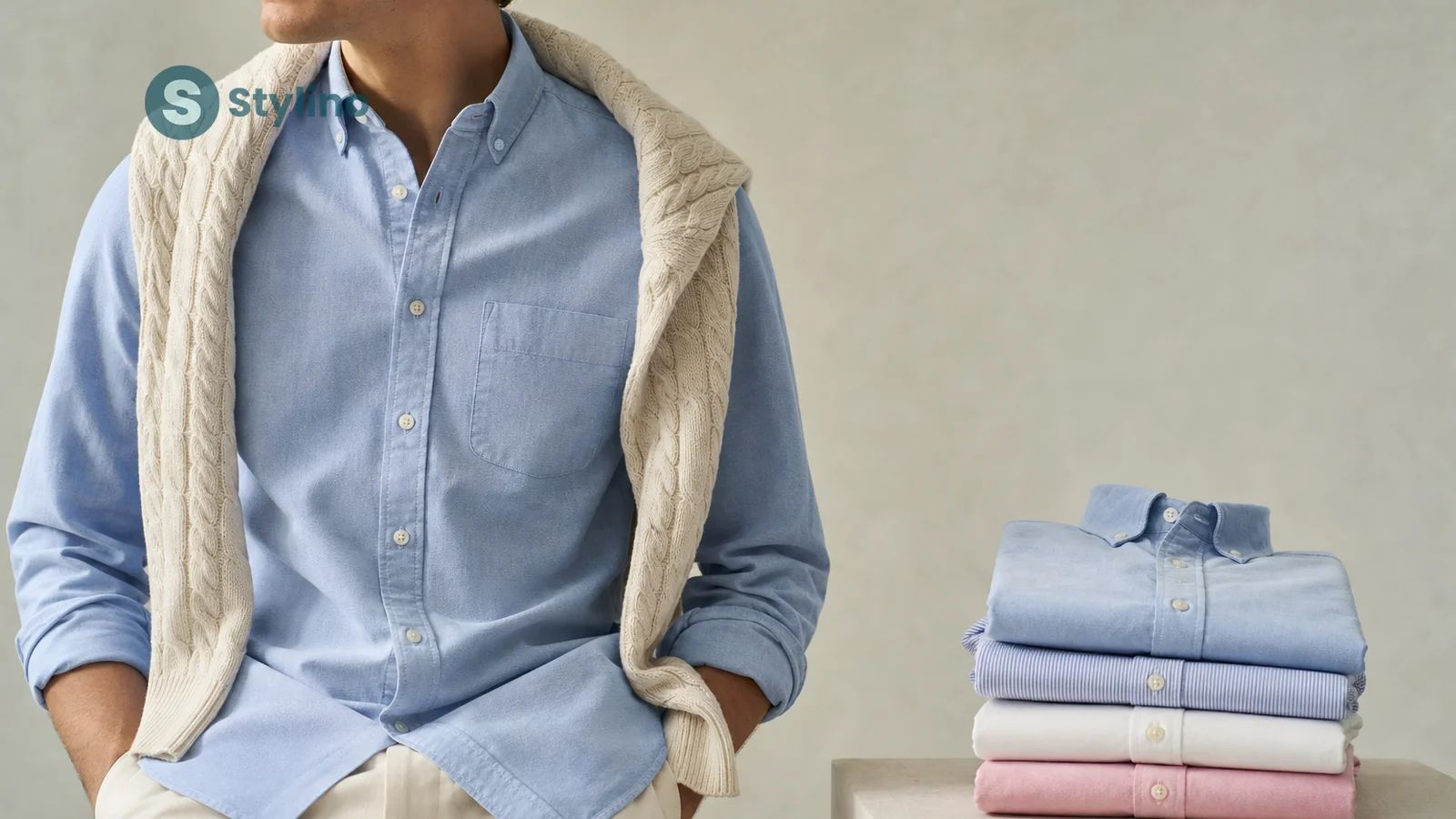
The Gant story: how a New Haven shirtmaker became a global preppy icon
Every shirt has a story. But few brands can trace their DNA back to a single immigrant's journey that reshaped how the world thinks about men's dress shirts. The Gant history starts in 1907, crosses through Yale's campus, passes through a Swedish reinvention, and arrives in 2026 as a $1.3 billion brand available to Cyprus shoppers on Stylino. Here's the full story.
1907: Bernard Gantmacher arrives in America
In 1907, seventeen-year-old Bernard Gantmacher stepped off a boat from Ukraine and into New York City. Like many Eastern European immigrants of his generation, he entered the garment trade — the fastest path from nothing to something in early-20th-century America. Bernard learned the shirt trade from the ground up: cutting, stitching, finishing. By the 1920s, he had established the Par-Ex Shirt Company, a contract manufacturer producing shirts for America's most prestigious menswear brands (per Gant Heritage).
The most important client: Brooks Brothers. Par-Ex became one of their key shirt suppliers, giving the Gantmacher family an inside view of what Ivy League men demanded from their wardrobes — impeccable collar roll, precise proportions, and details that signalled taste without shouting wealth.
1949: Marty and Elliot launch a brand
By the late 1940s, Bernard's sons Marty and Elliot Gantmacher had grown up in the trade. They understood shirts at a molecular level. In 1949, they made their move: rather than continue manufacturing for other labels, they launched their own brand. The surname was shortened from Gantmacher to Gant, and the first Gant-branded shirts appeared in stores. The founding year — 1949 — remains stamped on the brand's shield logo today (per Wikipedia).
Their base: New Haven, Connecticut — home to Yale University and the heart of East Coast preppy culture. It wasn't coincidence. The brothers positioned their shirts where they knew the audience lived.
The inventions that changed shirts forever
What separates Gant from other heritage brands isn't just longevity — it's genuine innovation. According to Ivy Style, Marty and Elliot introduced several features that became industry standards:
- The perfect-roll collar: engineered to roll naturally without collar stays, maintaining shape all day
- The box pleat: a centre-back pleat that allows movement while keeping a clean line from behind
- The locker loop: a fabric loop at the back yoke, originally so Yale students could hang shirts in gym lockers without wrinkling them
- The button tab: a small button beneath the back collar to secure a tie — Elliot Gant won the 1963 Esquire Fashion Design Award for this single detail
These weren't gimmicks. They solved real problems — collar droop, wrinkle prevention, neat tie presentation — and every competing shirtmaker eventually adopted them. Today, when you see a box pleat or locker loop on a shirt from any brand, you're looking at a Gant invention.
Ivy League adoption: the Yale connection
Gant's New Haven location wasn't just geographic convenience — it was strategic. The brand became available at the Yale Co-Op store, the campus institution where students and faculty bought their uniforms for the unspoken dress code of American elite education (per Yale News).
By the mid-1950s, Gant shirts were the East Coast preppy uniform: worn with chinos, penny loafers, and a navy blazer. The brand didn't advertise aggressively — it didn't need to. Its placement in the right stores, on the right campuses, created organic demand. Students didn't just buy Gant shirts — they recommended them to roommates, creating word-of-mouth loops that advertising couldn't replicate. When John F. Kennedy wore button-down collars in the early 1960s, the Ivy League look went national, and Gant rode the wave. The brand became synonymous with a particular version of American masculinity: educated, understated, confident enough to let the clothes speak quietly.
The Swedish chapter: from New Haven to Scandinavia
The most surprising turn in Gant's history happened in the 1980s, when Swedish entrepreneur Pyramidgruppen acquired the brand's European license. Scandinavia's relationship with American preppy style runs deep — clean lines, quality fabrics, and understated branding align naturally with Nordic design sensibility.
Under Swedish management, Gant evolved from a pure shirtmaker into a full lifestyle brand: polos, chinos, knitwear, outerwear, accessories. The expansion worked because the Swedish team maintained the preppy DNA while adapting for European proportions and climate. By the 2000s, Gant had become as much a Nordic staple as a New England one (per Wikipedia).
2008: Maus Frères takes the reins
In 2008, Swiss luxury group Maus Frères — also the owner of Lacoste — acquired full control of Gant (per WWD). The acquisition gave Gant access to Maus Frères' global retail infrastructure and distribution networks while preserving the brand's positioning in the accessible-premium tier.
The Maus Frères ownership explains why you'll sometimes see Gant and Lacoste positioned as sister brands — they occupy a similar market segment (premium but not luxury), target a similar demographic (educated professionals who value quality basics), and share the same parent company's strategic vision. Importantly, the acquisition brought financial stability without diluting the brand's identity — Gant didn't suddenly become a luxury label or a mass-market discount brand. It stayed in its lane: accessible premium with heritage roots.
Gant today: $1.3 billion in American-European fusion
Under CEO Patrik Söderström, Gant positions itself around a dual identity: "American Casualness with European Elegance." The numbers back the strategy — according to Wikipedia, Gant operates through 583 locations across multiple continents with annual revenue of approximately $1.3 billion.
The product range has expanded far beyond shirts: watches, eyewear, footwear, swimwear, accessories. But the shirt remains the brand's north star. Every collection starts with shirting fabric and builds outward — polos reference shirt collar construction, chinos reference shirt-quality cotton finishing, and even Gant's sneakers carry the same clean-line design philosophy that Marty and Elliot established in 1949.
Gant on Stylino: 1,914 products from 6 retailers that ship to Cyprus
For Cyprus shoppers, Gant is available through six retailers that ship to Cyprus and that Stylino tracks: John Andy, Hionidis, Silenzio, Vardas, Gruppo Mossialos, and Kiriakos Gofas. The catalogue is deep — 1,914 products as of May 2026 — covering the full range from €10 accessories to €445 watches.
The breakdown is overwhelmingly menswear (97%), which reflects Gant's historical DNA as a men's shirtmaker. Categories span shirts, polo shirts, T-shirts, chinos, swimwear, sneakers, watches, and accessories. Prices start as low as €10 for branded socks and accessories at John Andy, with the core clothing range (shirts, polos, chinos) sitting between €52 and €130, and premium watches from Kiriakos Gofas reaching up to €445. Whether you want the heritage Oxford button-down or a summer piqué polo, you can compare prices across all six retailers on the Gant.
Read next
- Our picks from the current catalogue: Best Gant picks in Cyprus 2026: shirts, polos & chinos for every occasion
- Gant vs Tommy Hilfiger: which brand wins?
- The Oxford shirt explained: from 1949 invention to essential
Explore the full Gant collection on Stylino
Head to the Gant to compare prices across all six retailers that ship to Cyprus. From the heritage Oxford shirts that started it all to today's seasonal swimwear, every Gant product — all 1,914 of them — is in one place with live pricing.