 Stylino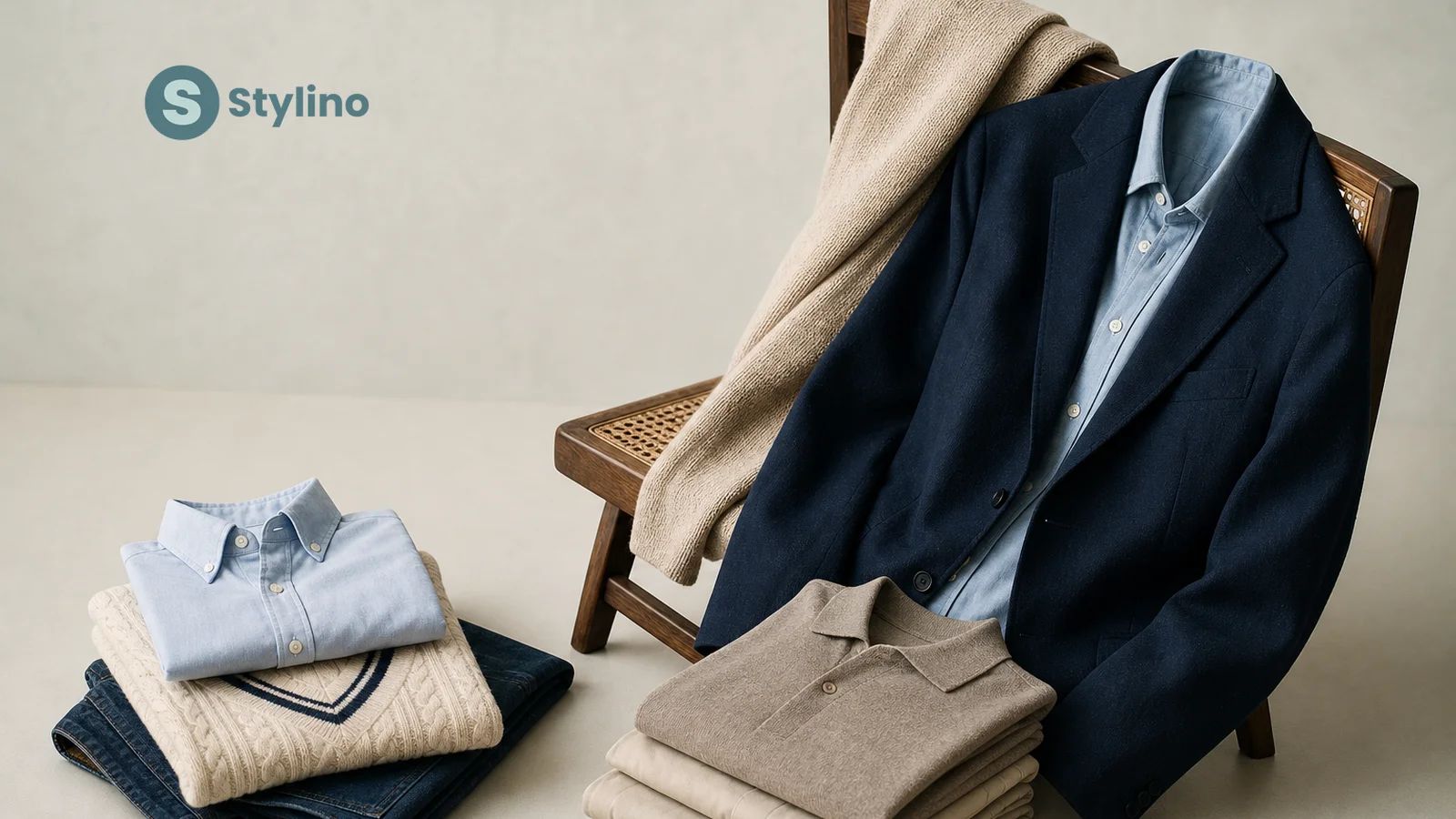
Gant vs Boss: smart-casual from New Haven to Metzingen
If you've been weighing Gant vs Boss for your next smart-casual wardrobe investment, you're comparing two brands that occupy remarkably similar price territory — yet arrive there from opposite directions. Gant brings American campus-preppy roots refined through decades of Scandinavian ownership. Boss brings a century of German tailoring distilled into a modern minimalist aesthetic. Both sit comfortably in the €60–€250 range for polos, chinos, knitwear, and lightweight jackets — the core of any smart-casual rotation. Both are available to Cyprus shoppers through retailers that ship to Cyprus and that Stylino tracks. So which one actually deserves your money?
This comparison breaks down styling DNA, price positioning, quality, and fit so you can decide before you buy. If you want the raw catalogue, the Gant lists all 1,875 currently tracked Gant products and the Boss shows the full Boss range — both with live prices and cross-retailer comparison.
Brand DNA: New Haven prep vs Metzingen tailoring
The founding stories tell you almost everything about where each brand's instincts lie.
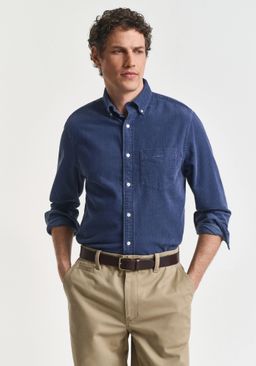
Gant was founded in 1949 in New Haven, Connecticut, by Bernard Gantmacher (per Wikipedia). The brand started as a shirtmaker supplying Ivy League campus shops — Yale was down the road — and built its reputation on the button-down Oxford shirt. Gant changed hands several times: PVH (Calvin Klein's parent) owned it for a spell, and since 2008 it has been owned by Swiss-based Maus Frères, with creative direction rooted in Stockholm. That Swedish lens softened the preppy edge into something more Scandinavian-clean, but the New Haven DNA — relaxed shoulders, soft collars, washed cottons — remains the throughline.
Hugo Boss was founded in 1924 in Metzingen, a small town in Baden-Württemberg, Germany (per Wikipedia). The brand's roots are in tailoring and workwear manufacturing. Over the following century, Boss evolved into one of Europe's defining menswear houses, synonymous with clean-cut suiting and structured silhouettes. The brand restructured its lines in 2022, consolidating around two labels: BOSS (the smart-casual and tailoring mainstay) and HUGO (younger, streetwear-leaning). For this comparison we focus on the BOSS line, which competes directly with Gant in the smart-casual segment.
The takeaway: Gant's instinct is to make you look like you belong at a New England sailing club. Boss's instinct is to make you look like you just left a corner office in Düsseldorf. Both are valid — but they dress very different versions of "smart-casual."
Styling DNA: preppy campus-casual vs European minimalist
This is where the two brands diverge most sharply. Understanding the styling philosophy helps you pick the one that matches your existing wardrobe.
Gant's styling vocabulary leans on:
- Button-down Oxford shirts in washed, slightly rumpled cottons
- Rugby shirts and half-zip knits
- Chinos with a relaxed, slightly wider leg
- Cable-knit sweaters and Shetland-inspired knitwear
- Colour palettes anchored in navy, forest green, burgundy, and cream
- Nautical touches: anchor motifs, striped tees, deck-shoe-compatible styling
Boss's styling vocabulary leans on:
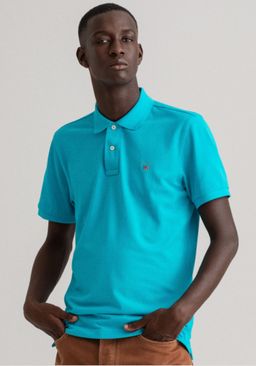
- Slim-fit polos in mercerised or piqué cotton
- Tailored chinos with a tapered, structured leg
- Fine-gauge knitwear in merino or blended yarns
- Bomber jackets and clean-lined lightweight coats
- Colour palettes heavy on black, charcoal, navy, and white — with occasional camel or olive
- Minimalist branding: small chest logos, tone-on-tone details
The practical implication for Cyprus shoppers: Gant pieces layer well for the transitional months (October–November, February–March) when Mediterranean mornings are cool but afternoons are warm. Boss pieces work better for evening events, business-casual dinners, and any occasion where "smart" outweighs "casual" in the dress code.
Price positioning: the €60–€250 overlap
Both brands compete in the same broad price band, but they distribute their ranges differently within it.
| Category | Gant typical range | Boss typical range |
|---|---|---|
| Polos | €60–€90 | €70–€110 |
| Oxford / dress shirts | €80–€120 | €90–€140 |
| Chinos | €90–€130 | €100–€150 |
| Knitwear (cotton/merino) | €100–€160 | €110–€180 |
| Lightweight jackets | €150–€250 | €180–€300 |
| T-shirts (premium) | €35–€55 | €40–€65 |
Boss sits roughly 15–25% higher piece-for-piece. That premium buys you sleeker construction and more structured tailoring — whether it's worth it depends on whether you value the sharper silhouette or prefer the relaxed drape that Gant offers at a lower entry point.
For live, up-to-date prices on both brands from retailers that ship to Cyprus, compare directly on the Gant and the Boss. Prices shift seasonally — Greek retailers often run markdowns in January and July that can bring Boss pieces into Gant's territory.
Quality & construction: Oxford cloth vs stretch blends
Both brands deliver solid quality for their price tier, but the construction philosophies differ in ways you can feel.
Gant builds its identity on traditional fabrics. The flagship Oxford shirt uses a heavier-weight Oxford cloth — slightly nubby, breathable, and designed to soften with each wash. Cotton is the dominant fibre across the range: regular cotton, washed cotton, and brushed cotton for colder months. Gant knitwear leans on lambswool, Shetland wool, and cotton-cashmere blends. The construction is robust but relaxed — generous seam allowances, soft collars that don't need collar stays, and buttons that feel substantial.
Boss leans on performance-enhanced fabrics. Polos and tees frequently use mercerised cotton (treated for sheen and smoothness) or cotton-elastane blends for a clean fit that doesn't stretch out. Boss knitwear often includes viscose, polyamide, or silk blends to achieve a finer gauge and smoother drape. Chinos typically incorporate 2–3% elastane for stretch. The construction is precise — slimmer seam allowances, structured collars, and a more tailored finish throughout.
Neither approach is objectively better. Gant's traditional fabrics age more gracefully and reward years of wear with a broken-in patina. Boss's blended fabrics maintain their "just bought it" look longer and resist creasing — useful if you need to look sharp through a long day.
Fit & silhouette: relaxed vs structured
Fit is where most buyers make their final decision, so here's what to expect from each brand's standard sizing.
Gant cuts on a "regular" baseline that skews slightly relaxed. Shirts have room in the chest and a longer tail designed to be worn untucked. Chinos sit at the natural waist with a straight-to-slightly-tapered leg. The overall silhouette is designed for ease — you shouldn't feel restricted reaching for something on a high shelf or sitting cross-legged. Gant also offers a "slim fit" range, but even their slim is more moderate than many competitors' interpretations.
Boss cuts on a "slim" baseline. Shirts are shorter in the body (designed for tucking, but also clean untucked), narrower through the torso, and have shorter sleeves that hit closer to mid-bicep. Chinos taper more aggressively below the knee. The overall silhouette is designed for definition — you'll look trimmer, but you'll also notice the garment if you've had a large lunch. Boss also offers a "relaxed" line, but it's closer to what most brands call "regular."
The sizing implication: if you're between sizes, size up in Boss, size down in Gant. A medium in Gant and a medium in Boss can feel like a full size apart.
Side-by-side comparison
| Dimension | Gant | Boss |
|---|---|---|
| Founded | 1949, New Haven CT | 1924, Metzingen, Germany |
| Current HQ | Stockholm, Sweden | Metzingen, Germany |
| Style DNA | Preppy, campus-casual, nautical | European minimalist, tailored smart-casual |
| Core fabrics | Oxford cloth, lambswool, washed cotton | Mercerised cotton, stretch blends, fine-gauge knits |
| Fit baseline | Regular / relaxed | Slim / structured |
| Price band | €60–€250 | €70–€300 |
| Best for | Weekend brunch, sailing club, layered transitional looks | Business-casual, evening smart-casual, clean minimal wardrobes |
| Colour palette | Navy, forest green, burgundy, cream | Black, charcoal, navy, white |
| Logo approach | Shield emblem, moderate visibility | Small "BOSS" text, understated |
| Cyprus availability | 1,875 products via retailers that ship to Cyprus | Available via retailers that ship to Cyprus |
Which brand suits your wardrobe?
There's no universal winner here — only a better fit for your personal style and the occasions you dress for most often.
Choose Gant if:
- Your smart-casual leans more casual than smart
- You prefer soft, textured fabrics that improve with wear
- You layer a lot — knit over shirt over tee
- Your colour palette gravitates toward earth tones and rich colours
- You want a slightly lower entry price for equivalent garment categories
Choose Boss if:
- Your smart-casual leans more smart than casual
- You need pieces that transition from office to evening without changing
- You prefer clean, monochrome outfits with minimal layering
- You value a structured fit that creates a sharp silhouette
- You're willing to pay a 15–25% premium for sleeker construction
Or mix both: Many shoppers find the sweet spot is a Gant-heavy casual rotation (weekends, travel, relaxed socialising) paired with Boss "sharpeners" for the occasions where first impressions matter. A Gant Oxford under a Boss blazer is one of the most versatile smart-casual combinations in this price tier.
Frequently asked questions
Read next
- Gant buying guide for Cyprus shoppers
- Gant vs Tommy Hilfiger: which preppy brand wins?
- Gant vs Ralph Lauren: the preppy showdown
Compare Gant and Boss prices on Stylino
Ready to shop? Browse the full live catalogues — with cross-retailer price comparison, price history, and real-discount labels — on the Gant and the Boss. Both hubs show every product currently available from retailers that ship to Cyprus, so you can compare piece-for-piece before committing.