 Stylino
The history of Geox: from a wine-country idea to a global shoe brand
Every shoe brand has an origin story. Few begin with a Swiss Army knife and a pair of overheated feet in the Nevada desert. The history of Geox starts in the early 1990s, when an Italian winemaker named Mario Moretti Polegato had an idea so simple it would reshape how the world thinks about shoe comfort. This Geox brand story traces three decades of growth, technology, and expansion — and explains why breathable-sole technology is especially relevant for Cyprus shoppers navigating Mediterranean summers. Explore the full Geox range on Geox.
1995: the eureka moment in Nevada
Mario Moretti Polegato was not a shoe designer. He was a winemaker from Montebelluna, in the Veneto region of northeastern Italy — a town with deep roots in footwear manufacturing but not, at that point, in Polegato's professional life. The pivotal moment came during a trip to Reno, Nevada, where Polegato was attending a wine conference (BBC News).
Walking in the desert heat in rubber-soled sneakers, his feet became unbearably hot. In frustration, he pulled out his Swiss Army knife and cut holes into the soles — and felt immediate relief. The improvised ventilation worked, but obviously left the shoes vulnerable to water. The question that followed was deceptively simple: could you build a rubber sole that breathes without letting water in?
Back in Italy, Polegato spent three years developing the answer. He created a rubber sole perforated with micro-holes, sealed from below by a special membrane that allows water vapour to escape while blocking liquid water from entering (geox.biz). He patented the technology immediately and offered it to established brands — Nike, Adidas, Puma, Timberland — but every one of them turned him down (BBC News).
Undeterred, Polegato founded Geox in 1995, starting with just five employees from his home village.
The patented breathing system
The core Geox technology — branded as the Respira system — works on a straightforward principle. The rubber sole contains micro-perforations covered by a microporous membrane. This membrane's pores are large enough to let water vapour molecules pass through (allowing sweat to evaporate) but too small for liquid water droplets to penetrate (keeping rain and puddles out) (geox.biz).
The practical effect: feet stay drier and cooler than in conventional rubber-soled shoes, without sacrificing waterproofing. It's the same principle used in outdoor membranes like Gore-Tex, applied to the sole rather than the upper.
The name itself encodes the mission: "Geo" from the Greek word for earth, and "X" representing technology — a brand literally named for the meeting point between nature and innovation (geox.biz).
From Montebelluna to the Milan Stock Exchange
Geox's first commercial test was a children's shoe range — a deliberate choice, since kids' feet sweat more and parents are acutely aware of comfort (geox.biz). The kids' line sold well enough to fund expansion into men's and women's collections.
Growth was rapid. By the early 2000s, Geox had moved from a family workshop in Montebelluna to a multinational operation. In November 2004, the company went public on the Milan Stock Exchange (Borsa Italiana) with a valuation of approximately €1.2 billion — the IPO was oversubscribed, and the stock surged 19% on its first day of trading (Wikipedia).
The listing funded international expansion across Europe, North America, and Asia, transforming a regional Italian brand into a global footwear company.
Key milestones: Amphibiox, Spherica, Aerantis
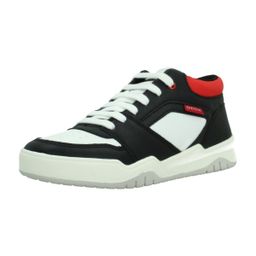
Geox has built its product evolution around a series of technology platforms, each extending the original breathing concept:
Amphibiox — the all-weather range. Amphibiox incorporates the breathable membrane not just in the sole but throughout the upper, creating fully waterproof and breathable footwear designed for rain and winter conditions (Geox Hi-Tech Ranges). The kids' Amphibiox line — with over 70 waterproof styles — became a staple for parents across Europe.
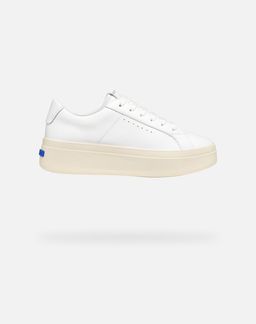
Spherica — the cushioning platform. Spherica combines the Respira breathing system with a Zero Shock cushioning system, targeting consumers who want both breathability and premium underfoot comfort (Geox Hi-Tech Ranges). On Stylino, Spherica-tier sneakers from retailers that ship to Cyprus currently start at €155.
Aerantis — active ventilation. Aerantis uses a dynamic ventilation system activated by the wearer's movement, actively boosting airflow with each step (Geox Hi-Tech Ranges). It's the technology most suited to warm-climate wear.
Each platform built on the original breathing-sole patent, extending it from a single innovation into a full product architecture.
Sustainability: recycled materials and carbon-neutral goals
Geox's sustainability push centres on materials and energy. Key initiatives include:
- ECONYL recycled nylon — sourced from reclaimed fishing nets, carpet scraps, and industrial plastic waste, used across footwear and clothing lines (Geox Sustainability).
- Recycled polyester — made from post-consumer PET bottles, replacing virgin polyester in an increasing share of products.
- Leather Working Group membership — Geox adheres to LWG standards for sustainable leather manufacturing, the largest recognised certification in the industry.
- Fur Free Alliance — the brand excludes animal fur from all products.
On the energy side, Geox uses over 80% renewable energy sources for its electricity needs and manages all waste in Italy through recycling or recovery (The Spin-Off). The company has launched a carbon footprint quantification project aimed at organisational carbon neutrality, with plans to commit to Science Based Targets initiative (SBTi) decarbonisation targets.
Geox today: a global company with Italian roots
As of 2024, Geox operates over 240 company-owned stores and approximately 280 franchised outlets worldwide, plus thousands of multi-brand retail points across more than 100 countries (Wikipedia). The company's R&D laboratory remains in Montebelluna, Italy, where its portfolio of over 60 patents continues to expand.
Revenue is distributed across Italy (28%), wider Europe (45%), North America (4%), and other regions (23%). Footwear accounts for approximately 90% of sales, with clothing making up the remaining 10%.
In 2023, Penélope Cruz became Geox's first global brand ambassador, signalling the brand's continued push to combine technology credibility with fashion appeal (Wikipedia).
Why Geox matters for Cyprus shoppers
Cyprus summers are long, hot, and humid — exactly the conditions where conventional shoes become uncomfortable. Geox's breathing-sole technology addresses this directly: the vapour-permeable membrane keeps feet measurably cooler, which matters when daily temperatures routinely exceed 35°C from June through September.
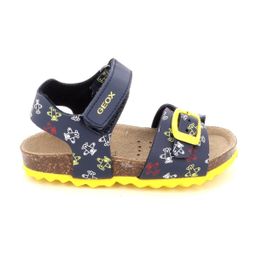
On Stylino, Geox is available from multiple retailers that ship to Cyprus, with prices ranging from under €25 for kids' sandals to €159 for premium sneakers. The Aerantis active-ventilation line and the Spherica cushioning platform are particularly relevant for Mediterranean summers — both prioritise airflow without compromising weather protection.
Read next
- our Geox breathing technology explainer
- our best Geox shoes for Cyprus 2026 buying guide
- our Geox Spherica review
Discover the full Geox collection on Geox — compare live prices across retailers that ship to Cyprus, track price drops, and find the best deals on breathable footwear built for Mediterranean summers.