 Stylino
The history of Mayoral: 85 years of dressing kids worldwide
If someone asks "who founded Mayoral?" the answer starts in a small village in southern Spain, more than eight decades ago. The Mayoral brand story is one of those rare trajectories where a family workshop making socks and stockings eventually becomes a global children's fashion group present in over 100 countries. This is the full Mayoral history — from a post-war knitting machine in Málaga to a €370 million group dressing kids, women and men across five continents — and why it matters if you're shopping for children's clothing in Cyprus today.
1941: a knitting workshop in southern Spain
The Mayoral Group traces its origins to a small workshop in Yunquera, a village in the Serranía de Ronda mountains near Málaga, dedicated to manufacturing socks and stockings. After the Spanish Civil War, in 1941 the activity was resumed in Málaga, where one of the first hand-knitting machines was installed. What began as a modest textile operation would spend the next two decades building the craft knowledge and production capacity that later enabled a pivot into children's fashion.
The growth decades: from small workshop to national brand
In 1966, Rafael Domínguez de Gor — a textile and industrial engineer and son of the previous president — took over the company's management. Under his leadership the focus shifted decisively towards children's clothing. The company evolved from basic "casual clothing" production into a fashion-forward distributor by 1973, building structured collections organised by colour families and complete looks rather than selling individual garments.
By the end of the 1980s, Mayoral had become the largest manufacturer of children's fashion in Spain (1988). The foundations for international growth were already being laid.
1980s–1990s: international expansion begins
Having dominated the Spanish domestic market, Mayoral launched into international markets in 1992. Four years later, the first Mayoral-branded shop opened (1996), marking a strategic shift from wholesale-only distribution to a retail presence the company would eventually scale to hundreds of locations.
The international expansion model combined owned subsidiaries in key markets with a network of sales agents and franchise partners — a model that allowed rapid geographic reach without sacrificing the family-business culture that still defines the company internally.
2000s: 100+ countries, 9,000+ points of sale
The pace accelerated in the 2000s. In 2007, Manuel Domínguez de la Maza — third generation of the founding family — took over as general manager (and later became president). Under his leadership, Mayoral pushed into digital retail (online shop launched in Spain and Portugal in 2013), upgraded its logistics infrastructure with the automated Mayoral 1 warehouse (2011), and expanded the product universe beyond clothing.
Today's scale according to the corporate dossier: 23 subsidiaries, 200 sales agents, 380 own shops and franchises, 9,000 points of sale worldwide, a team of 2,200 employees, and commercial presence in more than 100 countries. Annual output sits at around 28 million garments across 3,000 designs per season.
Sub-brand launches: Abel & Lula, Mayoral Shoes and more
Part of Mayoral's growth has been deliberate portfolio expansion beyond the core kids' clothing lines:
- Mayoral Newborn (2008) — a dedicated line for 0–18 months with premium fabrics designed for sensitive skin and gift-set presentation.
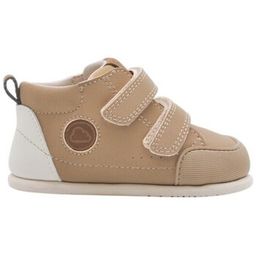
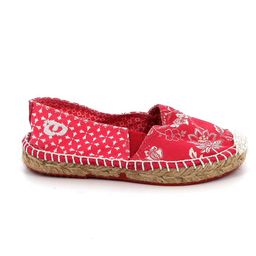
- Mayoral Shoes (2012) — an in-house footwear line spanning sizes 18–40, including the Barefoot collection and the First Steps line with leather-lined lasts.
- Abel & Lula (2019) — a standalone premium brand for children's occasion-wear (baptisms, communions, weddings), covering babies 6–36 months and girls up to 16, boys up to 8.
- Boston and Hug & Clau (2021) — acquired Spanish brands extending the group into men's and women's adult fashion respectively.
Each sub-brand operates with its own design team and seasonal cycle, which is why the price, fabric weight and construction vary significantly across the Mayoral family — even when pieces sit side by side at the same retailer.
Key innovations: capsule collections and sustainability
A team of over 100 designers at the Málaga headquarters produces two full collections per year — each built around structured looks and colour families rather than standalone pieces. Every season introduces approximately 3,000 new designs across all age ranges.
On the sustainability front, the company's #ecofriends initiative has driven measurable commitments: 50% of Mayoral's collections are now made from sustainable materials (organic cotton, recycled polyester, LENZING™ ECOVERO™ viscose, recycled rubber soles), with a stated target of reaching 60%. The company joined the Better Cotton programme in 2023 and partnered with logistics providers Maersk and DHL Express to reduce the carbon footprint of its supply chain through biofuel shipping and Sustainable Aviation Fuel.
"Mayoral makes friends" — the brand philosophy
The slogan "Mayoral makes friends" is not just a tagline — the corporate dossier describes it as the brand's DNA, present across collections, communication and retail design for over eight decades. The philosophy positions Mayoral as a socially active, family-oriented company where the value of friendship guides both product design (cheerful, comfortable, functional clothing kids actually live in) and corporate behaviour (partnerships with Aldeas Infantiles SOS, the San Telmo International Institute, and the Malaga Foundation).
This positioning matters commercially because it keeps Mayoral firmly in the "everyday wardrobe" space rather than chasing the premium luxury tier — which is exactly why the brand's price bands remain accessible to most families.
Mayoral today: global presence, R&D in sustainable fabrics
As of 2024, Mayoral opened 50 new points of sale and expanded retail operations to six new international markets, including its first shop in Chile. The third logistics centre (Mayoral C3), a 15,500 m² high-rise warehouse next to the existing distribution hub, became fully operational — ensuring capacity for medium- and long-term growth. The company's three logistics centres now incorporate solar panels covering 45% of the company's energy needs, reducing its carbon footprint by an estimated 762 tonnes of CO₂ per year.
On the R&D side, Mayoral is actively exploring artificial intelligence for product development and customer service, while continuing to expand the share of sustainable fabrics (TENCEL™ Lyocell, recycled fibres, sustainable tanned leather) across its seasonal lines.
Why Mayoral matters for Cyprus families
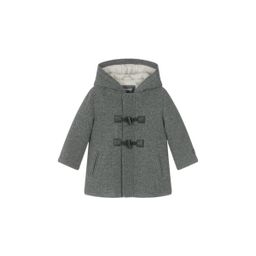
For families in Cyprus, Mayoral offers something specific: a deep, well-structured children's wardrobe — from newborn to teen — available through multiple retailers that ship to Cyprus. On Stylino, we currently track over 1,500 Mayoral products across retailers like Politikos, Spartoo and Serafino Shoes, with prices starting from around €5.50 for baby basics and reaching €48–€66 for occasion dresses and junior outerwear.
The brand's combination of 85 years of manufacturing heritage, structured age-banded collections and an increasingly transparent sustainability track record makes it a benchmark in the children's fashion segment — not the cheapest option, but a consistently well-made one with enough retailer competition in Cyprus to keep prices competitive.
Explore the full Mayoral — live prices, real discount tracking and side-by-side retailer comparison, all in one place.