 Stylino
How to Authenticate a Coach Bag: Step-by-Step Guide
Coach is one of the most counterfeited handbag brands on the planet. If you're shopping pre-owned (and with 266 pre-owned Coach bags on Stylino starting at €79, plenty of Cyprus shoppers are), knowing how to verify authenticity isn't optional. It's the difference between a smart purchase and an expensive regret.
The good news: Coach bags have distinctive features that counterfeiters consistently get wrong. This guide walks through every checkpoint, from the creed patch to the hardware weight, so you can shop with confidence whether you're buying through the Coach hub on Stylino, a consignment store, or a secondhand marketplace.
Why authentication matters
Counterfeit Coach bags flood online marketplaces. According to LegitApp's authentication guide, Coach ranks among the top five most-counterfeited handbag brands globally, alongside Louis Vuitton, Gucci, Chanel, and Prada. The accessible price point of genuine Coach (€295–€695 retail) ironically makes it a prime target: fakes can sell at seemingly credible discount prices without raising immediate suspicion.
For Cyprus shoppers browsing retailers that ship to Cyprus, the risk is lower when buying through established platforms. The Luxury Closet, whose 266 Coach products appear on Stylino, authenticates every item before listing. First Class Watches sells brand-new Coach watches directly. But if you ever venture beyond these trusted channels (and anyone who's scrolled through Facebook Marketplace in Limassol knows the temptation), knowing what to look for yourself is invaluable.
Step 1: Check the creed patch
Every authentic Coach bag has a leather creed patch sewn inside, a small rectangle stamped or heat-embossed with "COACH" and production details. On mainline bags, this patch is genuine leather with cleanly heat-embossed text you can feel with your fingertips. On fakes, the creed patch is often vinyl or thin faux leather, and the text may be printed with ink rather than embossed. Look at the serial number format: it should follow either the older format (a two-letter factory code plus a four-digit style number) or the newer alphanumeric string. If the serial number is missing entirely, that's an immediate red flag.
Step 2: Decode the serial number
The serial number on the creed patch tells you where the bag was made and what style it is. According to ShopGoodwill's serial number guide, the format has changed across eras. Pre-2014 bags use a format like "F0S-9648" where "F" indicates a factory/outlet piece, the two digits after it reference the production month and location, and the numbers after the dash are the style number. Take the style number, search for "Coach" plus those digits online, and verify the images match your actual bag. If the results show a completely different silhouette, walk away.
Step 3: Inspect the stitching
Coach uses high-quality thread and consistent stitch counts. Run your finger along every seam: the stitching should be even, with no loose threads, skipped stitches, or irregular spacing. Authentic Coach bags typically have 8–10 stitches per inch. Pay particular attention to handle attachments and flap closures where multiple pieces of leather meet. Counterfeit bags almost always have inconsistent stitching, tighter in some spots, looser in others. It's the one thing knockoff factories never quite manage to get right.
Step 4: Examine the hardware
Genuine Coach hardware is solid brass or nickel, with noticeable weight. Pick up a zipper pull. Does it feel substantial, or light and hollow? Authentic zippers are made by YKK and pull smoothly without catching. Any engraved "COACH" text on hardware should be clean and precise, not shallow or blurry. Tarnishing on pre-owned hardware is normal and expected; cheap plating that flakes off in patches is not. The signature Coach toggle (Bonnie Cashin's 1960s invention) should feel hefty enough to use as a paperweight.
Step 5: Assess the leather quality
Coach's mainline bags use glovetanned leather: soft, supple, and designed to develop character with use. Run your hand across the surface. Real glovetanned leather feels almost buttery and warms to your touch within seconds. Crossgrain leather (used on outlet bags) is firmer and more structured but still genuine. Fakes often use bonded leather or PU that feels plasticky, stays cool to the touch, and has an artificial chemical smell. According to Meyzy's authentication guide, one of the quickest tells is the smell test: real Coach leather has a warm, rich scent, while counterfeit bags smell of chemicals or glue.
Step 6: Look for modern security features
Post-2022 Coach bags increasingly include QR codes or NFC chips embedded in the lining. Scanning the QR code with your phone should redirect to Coach's official product page. NFC chips can be read with any smartphone and verify the bag's serial number against Coach's database. Older bags won't have these features, which is perfectly normal, but if a bag claimed to be from 2023 or later has no digital authentication, that's worth questioning.
Common fake Coach red flags
A few patterns that almost always indicate a counterfeit:
Ink-printed creed patch. The text should be heat-embossed or stamped, never printed with ink. If you can see ink sitting on the surface rather than pressed into the leather, it's fake.
Misspellings or off-centre text. "Coach" spelled as "Couch" or "Coash" exists in the wild. I wish I were joking. Brand name placement should be centred and consistent.
Lightweight hollow hardware. If the zipper pulls feel like toy parts, the bag is fake. Authentic Coach hardware has genuine weight to it.
Uneven or looping stitching. One of the most reliable checks. Counterfeit operations prioritise speed; careful stitching requires time that cuts into their margins.
Chemical smell. Open the bag and breathe in. Genuine leather smells like leather. PU leather smells like a factory floor. Trust your nose on this one.
No dust bag or a flimsy one. Coach includes a cotton dust bag with every retail purchase. Fakes often come in thin polyester bags or none at all, though a missing dust bag on a pre-owned piece is completely normal.
How authentication works on Stylino
When you browse Coach bags on Stylino, the authentication burden falls on the retailer, not on you. The Luxury Closet, which supplies 266 of the 311 Coach products tracked on Stylino, runs a multi-step verification process before any bag reaches their listings: expert inspection of materials, hardware, stitching, serial numbers, and overall construction.
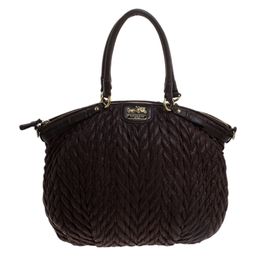
Every listing includes condition ratings (excellent, good, fair) based on the retailer's assessment. You can also browse women's clothing and shoes to compare Coach alongside other authenticated luxury brands at similar price points.
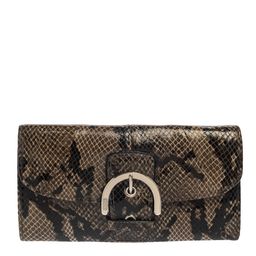
First Class Watches, the other Coach retailer on Stylino, sells brand-new watches directly, so authentication is a non-issue for those 44 pieces.
Professional authentication services
If you're buying from private sellers on eBay, Vinted, or Facebook Marketplace, consider a professional authenticator before handing over any money:
Entrupy uses AI and microscopic imagery to authenticate luxury goods. You photograph the bag with their app, and their algorithm compares surface patterns against a database of genuine items. Results come in 5–15 minutes. Cost: around €10–€15 per authentication.
Real Authentication provides expert human analysis with written certificates. Turnaround is 24–48 hours. More thorough than automated options, especially for older or rare Coach styles where AI databases have fewer reference points.
LegitApp combines AI screening with expert human review. Useful for quick spot-checks when browsing secondhand platforms.
These services make most sense for high-value pieces. If you're considering a pre-owned Tabby at €300+ from an unverified seller, spending €15 on authentication is cheap insurance. For a €79 hobo bag on Stylino that's already been verified by The Luxury Closet, you can skip it.
Coach serial number decoder
Coach has changed its labelling system multiple times, which confuses even experienced buyers. Here's the quick reference:
Pre-2014: Leather creed patch with heat-embossed text. Serial number format: factory code (letter plus two digits) plus dash plus style number (four or five digits). An "F" prefix in the factory code means the bag was manufactured for Coach Factory/Outlet, not mainline retail.
2014–2016 transition: White fabric tags replaced leather creed patches on some models. Style number plus colour code printed on the tag. The leather creed patch may still appear but without the serial number.
Post-2016: Style and colour codes on interior tags. Heat-embossed "COACH" on exterior hardware or leather became more prominent as an authenticity signal.
Post-2022: QR codes and NFC chips added to newer styles for digital verification.
A bag without a serial number isn't automatically fake. Some vintage Coach pieces from the 1970s and 1980s predate the serial number system entirely. But anything manufactured in the last 30 years should have some form of identification inside.
Read next
- Coach Bags in Cyprus: Prices, Retailers & How to Compare, the full buying guide covering all purchase channels
- Coach Outlet vs Mainline: What's the Real Difference?, material and design differences decoded
- Coach Bags on Sale: How to Find the Best Deals, where to find genuine Coach discounts
Shop authenticated Coach bags from trusted retailers that ship to Cyprus. Visit the Coach hub on Stylino to browse all 311 products with live prices and condition ratings.