 Stylino
The Ralph Lauren Story: From a Tie Drawer to a Fashion Empire
Most fashion empires start with a trust fund, a family connection, or at least a design degree. Ralph Lauren had none of those. He had wide neckties, a drawer in someone else's office, and a stubborn conviction that Americans wanted to dress like they had old money, even if they didn't. Fifty-eight years later, the Polo Ralph Lauren name sits on everything from €31 socks to €645 leather bags, tracked across eight retailers on Stylino alone.
This is the story behind the pony logo you see on every second polo shirt at a Limassol marina.
The Bronx Kid With Big Dreams
Ralph Lauren was born Ralph Lifshitz on October 14, 1939, in the Bronx, New York. His parents were Ashkenazi Jewish immigrants from Belarus. Nothing about his childhood screamed "future fashion mogul." He grew up in a modest apartment, sharing a room with his brother, buying his own clothes from the age of twelve with money earned working after school.
He attended DeWitt Clinton High School, graduating in 1957. His yearbook ambition: "millionaire." While his classmates headed to four-year universities, Lauren enrolled at Baruch College to study business. He dropped out after two years. College bored him. Clothes didn't.
His early jobs tell the real story of his education. He worked as a sales assistant at Brooks Brothers, absorbing the preppy aesthetic that would define his future brand. He sold gloves at a department store. He did a stint in the Army. And somewhere in those years, he developed an obsession with a very specific kind of American elegance: the Ivy League professor's tweed jacket, the rancher's worn leather belt, the Newport sailing crew's faded cotton.
Nobody taught him to design. He taught himself to see.
A Single Drawer in the Empire State Building (1967)
In 1967, at twenty-seven years old, Lauren convinced Beau Brummell Neckwear to let him sell his own line of ties under their umbrella. His workspace? A single drawer in their Empire State Building showroom. Not a studio. Not a workshop. A drawer.
The ties were wide when everyone else's were narrow. They were colourful when the market wanted conservative. Bloomingdale's initially turned them down, asking him to make them narrower with a smaller logo. He refused. He told the buyer that his ties didn't need the Bloomingdale's label. They needed his name.
That stubbornness paid off. Within months, a Bloomingdale's buyer changed his mind. By year's end, department stores across Manhattan stocked the ties. Lauren named his brand "Polo" after his love of the sport's association with old-world elegance: horses, open fields, inherited wealth. A sport he never played, selling a fantasy he never lived but could articulate better than anyone who did.
In 1968, he launched a complete men's collection. No formal training. No pattern-making background. Just an instinct for what the American man wished he looked like.
The Polo Shirt That Changed Everything (1972)
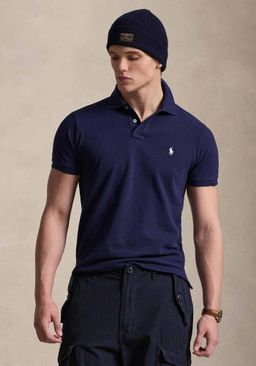
Five years in, Ralph Lauren had a respectable menswear label. But in 1972, he introduced the piece that would become the brand's permanent signature: a cotton mesh polo shirt with a small embroidered polo player on the left chest.
The logo itself first appeared in 1971, stitched onto the cuffs of women's shirts. By 1972, it migrated to the chest of the men's polo, and the effect was immediate. The shirt cost more than competitors. It communicated something specific. Wearing that pony said you belonged to a world of country clubs, sailing regattas, and Hamptons weekends. Or at least wished you did.
What's remarkable about the mesh polo is how little it has changed since. The cotton piqué construction, the mother-of-pearl buttons, the "tennis tail" hem (back slightly longer than front), the three-dimensional embroidered pony: all essentially the same as the original 1972 design. Over fifty years of production, and the formula works too well to touch.
If you walk into any café in Nicosia on a Friday evening, count the polo shirts. A decent percentage will carry that pony. The brand prints money one embroidered horse at a time.
Going Global
The 1970s and 1980s turned a successful American label into a global lifestyle brand.
1974: Ralph Lauren designed the men's wardrobe for the Robert Redford adaptation of The Great Gatsby. The film's linen suits and white flannel trousers became synonymous with a certain kind of American aspiration. It was the most effective product placement of its era, and Lauren didn't pay a cent for it.
1981: The first international store opened in London, on New Bond Street. European expansion had begun.
1983: The Home collection launched. Bedsheets, towels, paint colours. Lauren wasn't selling clothes anymore. He was selling an entire lifestyle, bedroom to boardroom.
1986: The Rhinelander Mansion on Madison Avenue in New York became Ralph Lauren's flagship store. A renovated 1898 townhouse, it looked nothing like a retail space. It looked like a wealthy family's home that happened to sell clothing. That was exactly the point.
1997: Ralph Lauren Corporation went public on the New York Stock Exchange under ticker RL. The IPO valued the company at over $3 billion. The Bronx kid who wanted to be a millionaire had become a billionaire.
Through all of this, the brand's identity never wavered. While competitors chased trends, Lauren kept selling the same fantasy: an imagined American aristocracy of weathered wood, polo ponies, and perfectly faded denim. That consistency built one of the most recognizable brand identities in fashion history.
The Brand Today
Ralph Lauren Corporation in 2026 is a publicly traded S&P 500 constituent with multiple sub-brands, each serving a different market tier:
- Purple Label sits at the top. Italian tailoring, handmade construction, four-figure price tags. You won't find it on Stylino; it barely exists outside a handful of flagship stores.
- RRL (Double RL) is the collector's choice. Named after Ralph and Ricky Lauren's ranch in Colorado, it channels vintage Americana and Japanese denim craftsmanship.
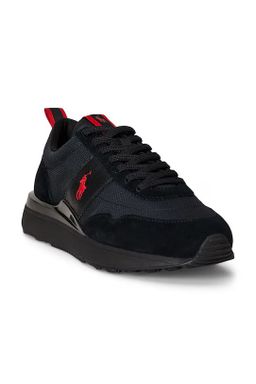
- Polo Ralph Lauren (Blue Label) is the mainstream flagship. This is what 95% of shoppers buy, and what fills the 2,563 products tracked on Stylino. The polo shirts, the sneakers, the Oxford shirts, the chinos.
- Lauren Ralph Lauren (Green Label) is a women's department-store line at a lower price point.
- Outlet is made-for-factory-outlet: lighter fabrics, simplified construction. Not mainline product on discount.
The Spring/Summer 2026 collection carries the theme "Sport & Style," pulling from tennis, polo, motorsport, and nautical traditions. A campaign shot by David Sims unfolds across three chapters: A World of Speed, By the Sea, and On the Green. There's a new MLB collaboration (Yankees, Dodgers, Cubs, Phillies, Red Sox, Blue Jays), plus key pieces like linen sport coats, cricket sweaters, and the new Polo Play bag.
At 86, Ralph Lauren still serves as Executive Chairman and Chief Creative Officer. The kid from the Bronx never retired.
Ralph Lauren on Stylino
For Cyprus shoppers, Polo Ralph Lauren is accessible through eight retailers that ship to the island. No boutique to visit, no waiting for holiday trips to London or Athens. The full range is online.
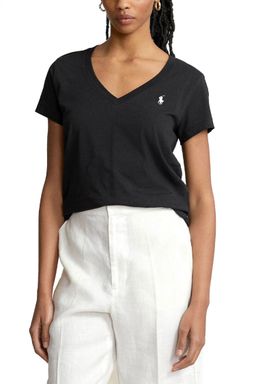
Stylino currently tracks 2,563 Polo Ralph Lauren products across those retailers. The price range runs from €25 (socks and underwear) to €645 (leather shoulder bags from Nugnes 1920). The average sits at €113, with most shoppers landing in the €65–€150 range for polo shirts, sneakers, and t-shirts.
The retailers include Spartoo (widest range, frequent sales), Rodanos (strong colour selection), Silenzio and Hionidis (premium and basics, respectively), Nugnes 1920 (luxury Italian retailer), Tsakiris Mallas (footwear specialist), Clodist, and BigBlu. Prices can vary 15–25% on identical items across retailers, so comparison shopping through the Polo Ralph Lauren hub genuinely saves money.
If you've ever spotted someone at a Paphos fish taverna wearing a cotton mesh polo with the pony emblem, here's what they paid: probably between €68 and €135, depending on where they shopped. On Stylino, you can check what they should have paid.
Read next
- our Polo Ralph Lauren Cyprus buying guide — where to find the best prices across all 8 retailers
- our Polo Ralph Lauren size guide — how Classic, Custom Slim, and Slim Fit actually differ