 Stylino
Vegan Birkenstocks — Complete Guide to Animal-Free Comfort
You can wear Birkenstocks without any animal products touching your feet. That surprises people. The brand's image is so tied to natural leather and suede that many assume every pair contains animal-derived materials. It doesn't. Birkenstock has offered a dedicated vegan line since 2017, and the options have expanded significantly since.
The cork-latex footbed that defines every Birkenstock was never made from animals in the first place. Cork comes from tree bark. Latex is harvested from rubber trees. Jute is a plant fibre. The only animal component in a traditional Birkenstock is the upper strap material and sometimes the footbed lining. Swap those for synthetics, and you have a fully vegan sandal with the same arch support, the same heel cup, the same toe bar.
This guide covers what "vegan" actually means in Birkenstock's context, which materials replace leather, how to spot vegan models when shopping, and whether they hold up against their leather counterparts under Cyprus's summer sun.
What Makes a Birkenstock Vegan?
A Birkenstock earns the "vegan" label when every single component is free from animal-derived materials. That includes the upper straps, the buckle lining, the footbed surface, the adhesives, and the sole. According to Birkenstock's official vegan collection page, their vegan models replace natural leather with synthetic alternatives while keeping the same structural footbed.
The distinction matters because Birkenstock's standard models use suede as the footbed lining, the soft surface your foot sits on. In vegan versions, that gets swapped for a microfibre lining that mimics suede without any animal input. The functional difference is minimal. Both wick moisture. Both develop a slight patina from wear. The microfibre just doesn't come from a cow.
Birkenstock also confirms that 98% of their adhesives are water-based, which matters for strict vegans who care about animal-testing in chemical production. It's a detail most brands don't bother disclosing.
Vegan Materials Explained: Birko-Flor, Birkibuc, and More
Birkenstock uses several synthetic materials across its vegan range. Each has a different look and feel.
Birko-Flor is the most common. It's a PVC-based synthetic with a soft felt backing that sits against your skin. The outer surface can be smooth (mimicking patent leather), matte, or metallic. Birko-Flor doesn't absorb sweat, doesn't crack in heat, and wipes clean with a damp cloth. It's the material you'll find on the vegan Arizona, Gizeh, and Madrid. On Stylino, Birko-Flor models for women start around €50.
Birkibuc mimics the look and texture of nubuck leather. Slightly rougher than Birko-Flor with a casual, worn-in feel. Softer to the touch and breathes a bit better, though it shows scuff marks more easily.
Microfibre lining replaces the traditional suede on the footbed surface. It's what your foot actually contacts during wear. Functionally similar to suede in that it absorbs a small amount of moisture and develops a foot impression over time, but entirely synthetic.
Textile and canvas uppers appear on select seasonal styles. Less common but fully vegan and the most breathable option for peak summer.
EVA (ethylene-vinyl acetate) is used for the fully synthetic Essential line. No cork, no jute, no leather. Just moulded foam from heel to toe. These are Birkenstock's lightest and cheapest sandals, and they happen to be vegan by default because there's nothing natural left in them.
The Footbed Is Already Vegan
Here's what catches people off guard: the famous Birkenstock footbed contains zero animal products in either the standard or vegan versions. The four-layer construction is entirely plant-based and mineral-based:
- Cork: harvested from the bark of cork oak trees every nine years without killing the tree
- Natural latex: tapped from rubber trees, mixed with the cork for flexibility
- Jute: a plant fibre layer that wicks moisture and adds structural rigidity
- EVA sole: synthetic shock-absorbing base
The only animal component in a standard Birkenstock sits on top of this footbed: a thin suede lining. In vegan models, that gets replaced with microfibre. The footbed underneath, the part that provides all the arch support and comfort Birkenstock is known for, was plant-based all along.
This means the vegan version doesn't sacrifice any of the orthopaedic benefits. The cork still moulds to your foot shape over 1–2 weeks of wear. The deep heel cup and raised toe bar still guide your natural gait. The arch contour still supports your medial arch. You're getting identical biomechanics.
How to Identify Vegan Birkenstocks
Two visual markers make it straightforward.
The green logo stamp. Vegan Birkenstocks carry a green version of the Birkenstock logo on the footbed, replacing the standard brown or black stamp. If you see green, the shoe is vegan.
The "Vegan" tag. On product pages and boxes, Birkenstock marks vegan models explicitly. On Stylino's Birkenstock catalogue, you can filter by material to narrow results.
The simplest rule: if the upper is listed as Birko-Flor, Birkibuc, or textile, and the lining is microfibre, it's vegan. If the upper is "natural leather", "oiled leather", "suede", or "nubuck", it contains animal products.
When ordering online from retailers that ship to Cyprus, double-check the material description. Spartoo and Mybrand.shoes both list materials in the product details. A few moments reading the spec sheet saves you a return.
Best Vegan Models
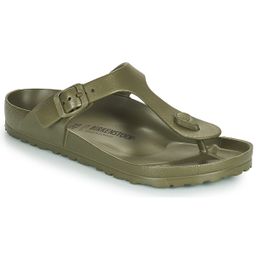
Arizona Birko-Flor is the obvious starting point. Two adjustable straps, available in every colour from classic black to seasonal pastels. The Arizona in Birko-Flor is Birkenstock's highest-volume vegan sandal globally, and for good reason: it's the most versatile. Grab it in black and you've covered everything from beach walks in Protaras to a casual dinner in Limassol's old town. Prices on Stylino for men's and women's Arizona Birko-Flor typically range from €50–€80 depending on colour and retailer.
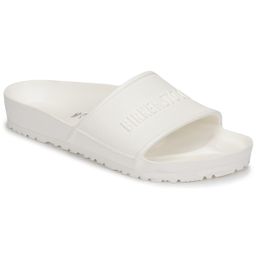
Gizeh Birko-Flor is the toe-post option. Same Birko-Flor upper but in a thong design that sits between the big toe and second toe. More feminine in profile, popular for summer dresses and shorts. The Gizeh's slim strap profile makes it one of the dressier vegan options.
Madrid Birko-Flor strips things down to a single strap. It's the most minimalist Birkenstock design and works well when you want the footbed benefits without any visual bulk. The single-strap design also means less material and typically a slightly lower price point.
EVA Arizona goes fully synthetic. No cork, no jute, just moulded EVA foam. Lightweight, waterproof, and practically indestructible. It's the sandal you throw in your beach bag for Nissi Beach without worrying about saltwater or sand damage. Starting from around €36 on Stylino, EVA models are also the most affordable genuine Birkenstocks available to Cyprus shoppers.
EVA Essentials: The Fully Synthetic Option
The EVA line deserves its own section because it's fundamentally different from cork-footbed Birkenstocks.
Standard Birkenstock sandals (vegan or not) use a cork-latex footbed that moulds to your foot over time. EVA models skip the cork entirely. The entire sandal is injection-moulded from a single piece of EVA foam. No breaking-in period. No gradual customisation. Uniform cushioning from the first wear.
What you gain: genuinely waterproof, about 40% lighter than cork versions, machine-washable, and cheap. What you lose: the personalised fit that comes from cork moulding and long-term durability. Cork Birkenstocks last 5–10 years. EVA models realistically last 1–3 years of regular wear.
For Cyprus specifically, EVA has a real advantage during the peak summer months. Walking across a hotel pool deck, rinsing off at a beach shower, hitting Ayia Napa's waterfront bars — cork doesn't love sustained water exposure. EVA thrives in it. Many regulars here keep a pair of cork Arizonas for daily wear and a pair of EVA Arizonas for anything involving water.
Vegan Durability: Birko-Flor vs Natural Leather
The honest comparison. Birko-Flor is durable, but it doesn't age the same way leather does.
Natural leather Birkenstocks develop a patina and soften over time. After two summers, leather straps look better than they did new. After five, they're distinctly yours.
Birko-Flor doesn't do that. It maintains its original appearance longer, which is either a benefit (it looks new) or a drawback (it never develops character), depending on your perspective. After 3–4 years of regular wear, Birko-Flor can start to peel where the PVC separates from the felt backing at flex points near the buckle. Leather straps rarely fail this way.
The footbed lifespan is identical regardless of upper material: 5–10 years before the cork compresses past the point of useful support.
Bottom line: expect about 70–80% of the lifespan from Birko-Flor compared to natural leather. Since vegan models often cost 15–30% less, the maths works in the vegan model's favour.
Sustainability: More Than Just Vegan
Birkenstock's sustainability story goes deeper than skipping leather. According to the Birkenstock Group's corporate sustainability reporting, the company uses 98% water-based adhesives across all production, reducing volatile organic compound emissions compared to solvent-based alternatives.
Cork harvesting is inherently sustainable. The bark regenerates, and cork forests sequester significant carbon. A single cork oak tree can be harvested approximately 15–16 times over its 150–200 year lifespan. Birkenstock sources cork primarily from Portugal and North Africa, where cork forests support entire ecosystems. The jute and natural latex are also renewable crops.
Where the sustainability narrative gets more complicated is the synthetics. Birko-Flor is PVC-based, which involves petrochemicals. EVA is a petroleum-derived foam. Neither is biodegradable. The vegan Birkenstock trades animal welfare for petrochemical use. That's a trade-off worth knowing about, not a dealbreaker for most people, but worth acknowledging. A Birkenstock lasting 5–7 years does replace 3–5 pairs of cheap synthetic sandals that would have gone to landfill.
Vegan Birkenstocks Available on Stylino
Cyprus shoppers can browse vegan Birkenstock models through Stylino's Birkenstock page. Over 1,100 Birkenstock products are listed from Spartoo (~85%), Mybrand.shoes, SportsPoint, and Mandellos Sports.
Vegan-friendly models span a wide price range:
- EVA sandals and mules: from €36, the cheapest genuine Birkenstock footwear on the platform
- Birko-Flor sandals (Arizona, Gizeh, Madrid): typically €50–€80
- Birko-Flor platforms (Papillio line): from €43
Set up a Stylino price alert on the specific model and colour you want. Prices shift between retailers, and Spartoo occasionally marks down last-season colourways by 10–20%.
Read next
- our Birkenstock sandals guide covering Arizona, Gizeh, Madrid, and more
- the Birkenstock brand story, tracing 250 years from Johann Adam to LVMH
- our complete Birkenstock buying guide for Cyprus
Are all Birkenstock sandals vegan?
No. Many Birkenstock models use natural leather, oiled nubuck, or suede for the upper straps and suede for the footbed lining. Only models specifically labelled as vegan (identifiable by the green logo stamp on the footbed) are free from all animal-derived materials.
What is Birko-Flor made of?
Birko-Flor is a PVC-based synthetic material with a soft felt backing. The outer surface can be smooth, matte, or metallic. It's Birkenstock's primary vegan upper material, designed to mimic the appearance of leather without using any animal products. It's durable, easy to clean, and doesn't absorb sweat.
Are vegan Birkenstocks as comfortable as leather ones?
Yes, in terms of footbed support. The cork-latex footbed (which provides all the arch support, heel cupping, and toe bar) is identical in both vegan and leather models. The only difference is the strap material and footbed surface lining. Microfibre lining in vegan versions performs similarly to suede for moisture management and foot feel.
Do vegan Birkenstocks last as long as leather?
Birko-Flor uppers typically last about 70–80% as long as natural leather straps before showing wear at flex points. The cork-latex footbed, however, lasts equally long in both versions (5–10 years). For overall sandal lifespan, expect 3–5 years of regular wear from a vegan model versus 5–7+ from leather, depending on care and usage intensity.