 Stylino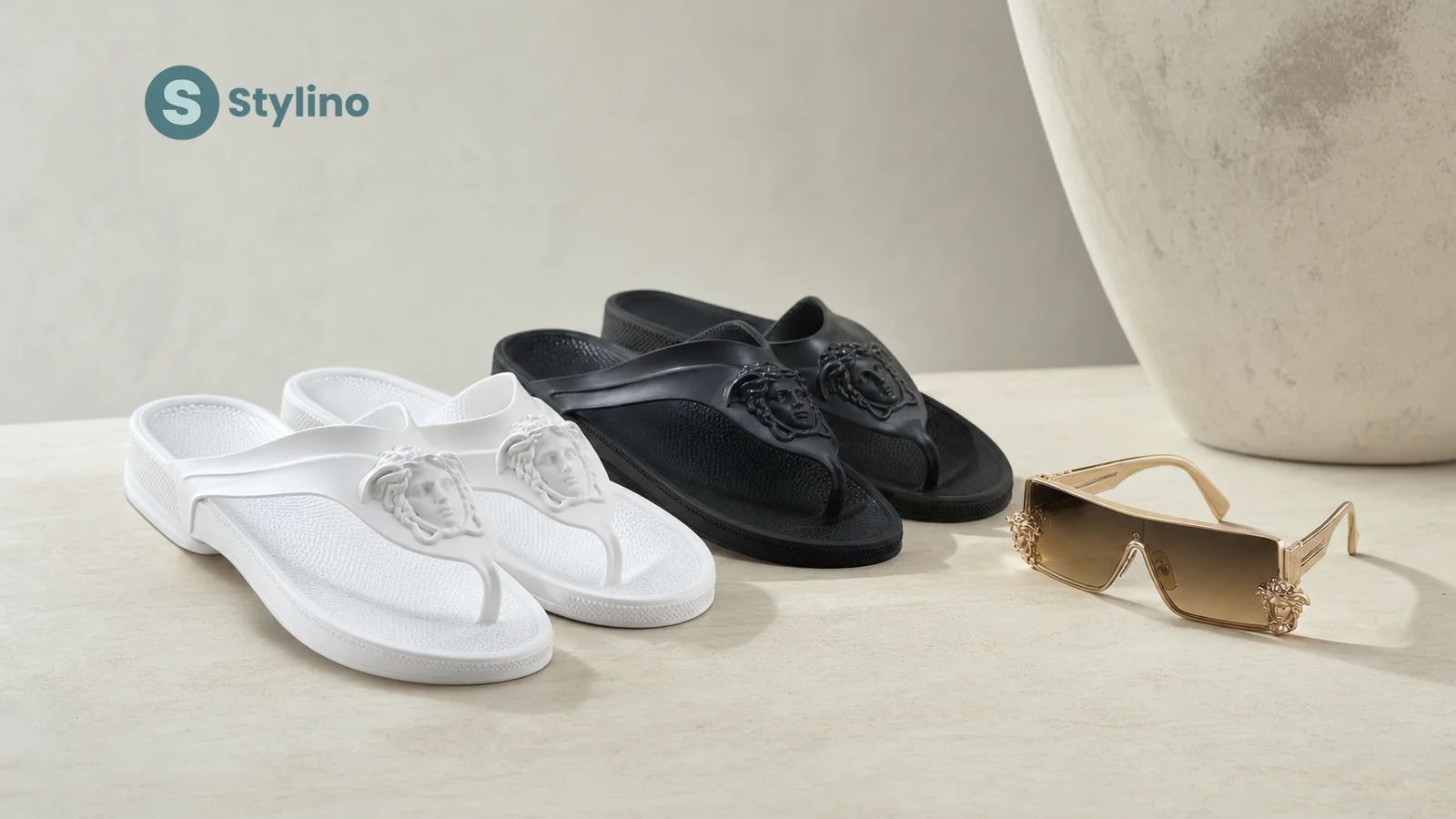
Versace has always been a house that understands spectacle. That much was clear again when Miley Cyrus celebrated the unveiling of her Hollywood Walk of Fame star in an Atelier Versace fall 2015 dress selected by Donatella Versace, as reported by Vogue and ELLE. But the story of Versace starts long before that red-carpet-era image: in southern Italy, in family craft, and in a brand language that has remained instantly recognizable for decades.
For shoppers in Cyprus and Greece, the label still carries that same charge. The question is not just why Versace looks luxurious, but how it built a visual identity so strong that one archival gown can still define a modern celebrity ceremony.
The founding moment
Gianni Versace was born on December 2, 1946, in Reggio Calabria, Italy, a detail widely documented in biographical records including Encyclopaedia Britannica. His early exposure to fashion came through his mother, Francesca, who ran a dressmaking business. That origin matters: Versace did not emerge from abstract branding first, but from construction, fabrication, and the discipline of making clothes.
The company itself took shape in Milan in 1978, when Gianni Versace founded Gianni Versace S.r.l. and presented his first women’s collection, according to the house’s official history at Versace. Milan was not incidental. By the late 1970s, it had become a central engine of Italian ready-to-wear, and Versace entered that world with a point of view that was already distinct: sensual, graphic, and unapologetically theatrical.
The brand’s famous Medusa emblem also has a precise geographical logic. Gianni Versace reportedly drew inspiration from the ancient ruins of Reggio Calabria, where classical imagery was part of the visual landscape. The Medusa was not chosen at random; it signaled seduction, mythology, and a kind of dangerous beauty that would become central to the house identity. The official Versace brand page still reflects that visual legacy in the way the label presents accessories and statement pieces today.
What distinguishes this founding story is that it was never simply about making luxury clothing. From the beginning, Versace was building a total image system: fashion, celebrity, classical references, and a highly controlled sense of drama.
Signature innovation
If there is one thing Versace changed, it was the relationship between fashion and visibility. Gianni Versace understood that clothing could function almost like stage design: metallic surfaces, body-conscious cuts, baroque prints, and hardware that made garments feel engineered rather than merely decorated.
One of the clearest examples is the house’s association with Oroton, a metal mesh fabric developed and used in the 1980s to create liquid, armor-like dresses. According to the Victoria and Albert Museum, Versace became known for combining historical references with technical experimentation, especially in ways that emphasized movement and the body. That combination—ancient and futuristic, opulent and precise—became the brand’s calling card.
Just as important was Versace’s role in merging fashion with celebrity culture at a new level. Gianni dressed performers, models, and actresses in a way that made the wearer part of the brand mythology. Decades later, the same logic still applies. When Cyrus appeared in vintage and atelier Versace for her star walk event, the coverage did not treat the gown as incidental styling; it treated the dress as a continuation of the house narrative, a point emphasized by both Vogue and ELLE.
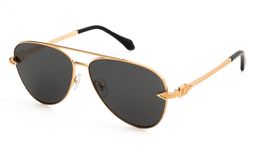
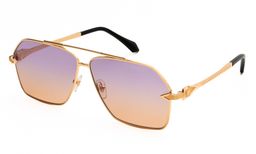
In accessories, that visual language translates especially well. A pair of sculptural gold frames, for example, carries the same codes as the ready-to-wear: bold hardware, assertive lines, and a confidence that reads instantly as Versace. You can see that clearly in Men's Sunglasses Versace Gold, which illustrate how the house’s glamour-first identity moved beyond runway clothing into everyday luxury accessories.
The codes that made Versace unmistakable
- Medusa iconography rooted in classical imagery
- Baroque motifs and high-contrast ornamental prints
- Metal detailing and hardware-forward design
- A body-conscious approach to silhouette
- Deep ties to music, performance, and celebrity image-making
This is why Versace is so often described not just as a brand, but as an era marker. Certain Versace pieces do not merely belong to a season; they define how that moment is remembered.
How the brand evolved
The biggest turning point came in 1997, when Gianni Versace was killed in Miami Beach on July 15, a date documented by sources including Britannica. After his death, Donatella Versace took on the creative leadership of the house, while Santo Versace remained central on the business side. That transition is one reason the question of continuity matters so much with Versace: unlike labels that become unrecognizable after a founder, this one stayed visibly tied to the family.
Under Donatella, the brand sharpened its image for a new media age. The house retained the signatures—sex appeal, metal, print, celebrity—but adapted them to changing tastes, from red-carpet dressing to accessories and eyewear. Her role in handpicking Miley Cyrus’s Atelier Versace gown for the Walk of Fame moment, as Vogue noted, shows how active that authorship still is. Donatella does not simply preserve the archive; she curates the brand’s public memory.
There were also major corporate shifts. In 2018, Michael Kors Holdings acquired Versace for €1.83 billion, and the group later became Capri Holdings. Then, in 2025, Prada announced an agreement to acquire Versace from Capri Holdings, a development that places the house in yet another significant chapter of Italian luxury consolidation.
For shoppers, this evolution explains why Versace can feel both archival and current at once. The house has moved through family leadership, global expansion, and ownership changes without abandoning its core visual DNA.
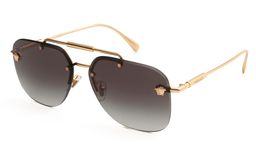
A good example of that continuity sits in categories like eyewear and summer footwear. Pieces such as Women's Sunglasses Versace Gold or Men's Flip Flops Versace White are not runway gowns, obviously—but they still express the brand’s preference for visibility over understatement.
What it means for shoppers today
For today’s shopper, Versace is best understood as a codes-driven brand. You are not buying into minimalism or anonymity. You are buying into a house with an established visual vocabulary—gold, black, Medusa, baroque, high-impact silhouettes—and decades of cultural memory behind it.
That matters because luxury shopping has become crowded with labels that lean on vague prestige. Versace is different: even at accessory level, the brand tends to announce itself clearly. In practical terms, that means Versace works best for shoppers who want statement value, not stealth wealth.
There is also a useful distinction between runway mythology and real-life buying. Most people will encounter Versace not through atelier gowns but through accessories, eyewear, slides, and logo-driven essentials. That is where the house’s identity becomes wearable without losing its character. For example, Men's Flip Flops Versace Black show how the brand’s graphic confidence translates into everyday resort dressing.
If you are comparing luxury accessory houses, it also helps to read across categories. Our related guide to Fendi sunglasses is useful here because it highlights a different Italian strategy: more logo-play and fashion wit, versus Versace’s more overt glamour and mythic intensity.
Versace at a glance for modern buyers
| Brand trait | What it means in practice | Where shoppers feel it most |
|---|---|---|
| Strong house codes | Immediate recognizability | Sunglasses, slides, logo accessories |
| Celebrity heritage | High cultural visibility | Red-carpet references, archival appeal |
| Italian luxury roots | Design identity tied to Milan fashion history | Premium accessories and statement pieces |
| Family legacy, then corporate evolution | Continuity with adaptation | Archive-inspired modern collections |
The key is to buy Versace for what it actually does best. Not discretion. Not normcore polish. But confidence, image, and a very specific kind of Italian fashion drama.
Conclusion
Versace remains one of the rare luxury houses whose identity was sharply defined at birth and still reads clearly today. From Gianni Versace’s 1978 founding in Milan to Donatella’s stewardship and modern celebrity moments like Miley Cyrus’s star ceremony, the brand has kept returning to the same promise: fashion as presence.
For shoppers now, that consistency is exactly the point. Versace is not simply a name with history; it is a house whose symbols still mean something the moment you see them.
Is Versace still family-owned?
No. Versace began as a family-led company founded by Gianni Versace in 1978, and the Versace family remained central after his death in 1997. However, the company was acquired by Michael Kors Holdings in 2018, later Capri Holdings, and Prada announced an agreement to acquire Versace in 2025. Family influence shaped the brand deeply, but it is not family-owned today.
Where are Versace products made?
Versace is an Italian luxury house founded in Milan, and many of its products are associated with Italian manufacturing. Exact production country can vary by category and item, so shoppers should check the product label or listing details for the specific piece they are considering.
Why is the Medusa logo so important to Versace?
The Medusa reflects Gianni Versace’s connection to classical imagery from his native Reggio Calabria. It became the ideal symbol for the house because it suggests attraction, power, and unforgettable visual impact—qualities that define the brand’s design language.