 Stylino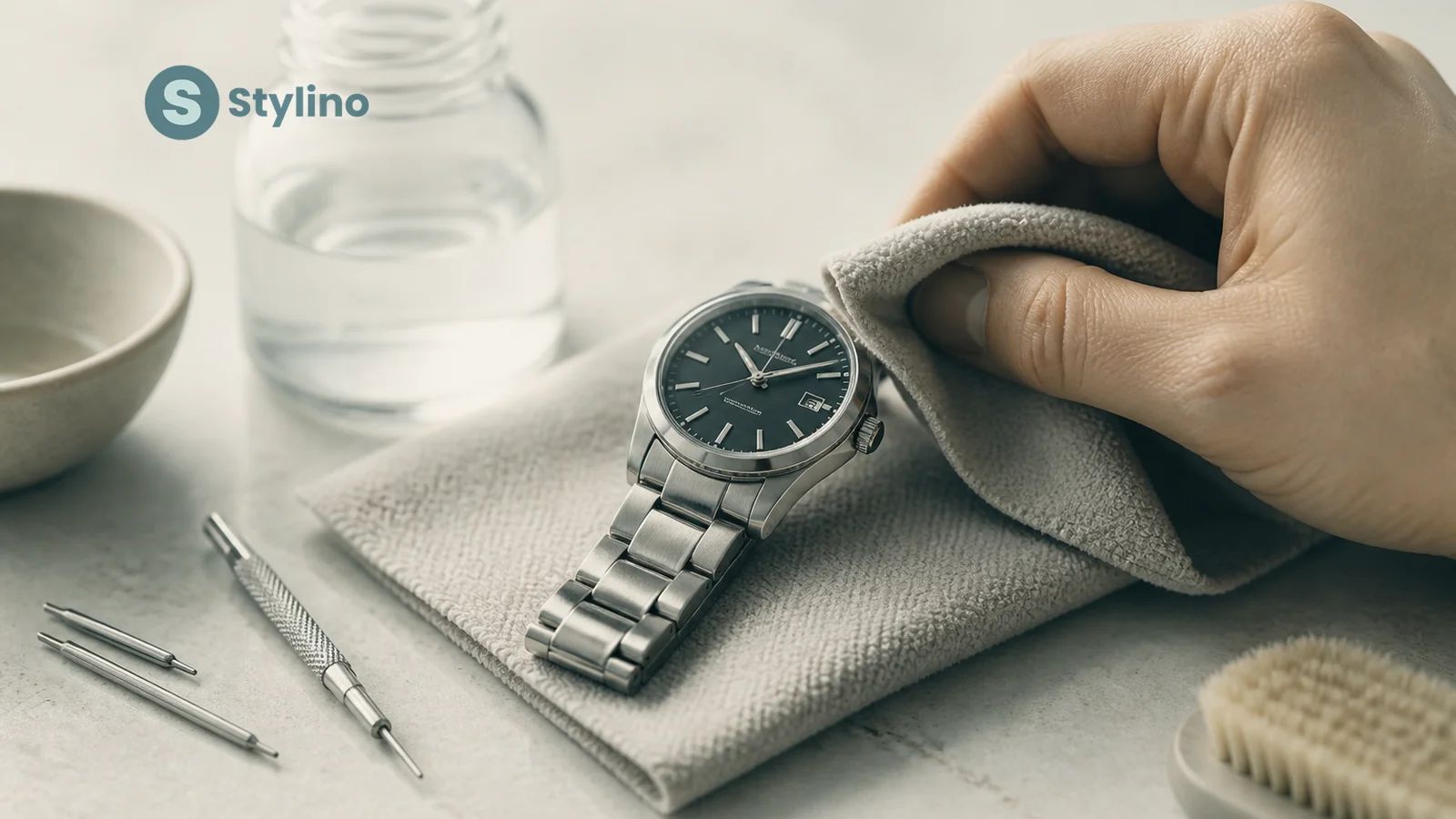
Watch care 101: maintain your timepiece so it lasts
Whether you've just picked up your first Swatch or you're maintaining a collection of dress watches, proper care is what separates a timepiece that lasts a decade from one that deteriorates in two years. The good news: watch care isn't complicated. A few daily habits, the right cleaning technique for your watch's materials, and knowing when to seek professional help will keep any watch — quartz or mechanical — running accurately and looking sharp for years.
For Cyprus shoppers, there's an extra layer to consider. The Mediterranean climate — intense summer heat, high humidity, saltwater exposure, and daily sunscreen use — creates specific challenges that watch owners in cooler climates never face. This guide covers universal best practices and the Cyprus-specific precautions that protect your investment.
Browse the full range of watches available to Cyprus shoppers on the watches.
Step 1: build daily care habits
The foundation of watch longevity is what you do every day after you take your watch off:
Wipe down after every wear. Use a soft, lint-free microfibre cloth to remove sweat, oils, and dust from the case, crystal, and bracelet. Skin oils are mildly acidic and will corrode metal finishes over time if left to accumulate. This takes 15 seconds and prevents 80% of cosmetic degradation.
Avoid chemical contact. Remove your watch before applying perfume, cologne, sunscreen, hand sanitiser, or household cleaning products. These chemicals attack gaskets, degrade strap materials, and can cloud crystal coatings. According to the Federation of the Swiss Watch Industry, chemical exposure is among the most common causes of premature seal failure.
Mind impact and magnets. Avoid placing your watch directly on hard surfaces (crystal-down). Keep it away from speakers, laptop lids, and magnetic phone cases — strong magnetic fields can affect timekeeping accuracy, particularly in mechanical movements. Even quartz watches can experience temporary rate deviations when exposed to magnets above 60 gauss.
:::product{id=319563 fallback="category:watches sort:price_asc"}
Step 2: clean your watch properly
Cleaning frequency depends on how often you wear the watch and the conditions it faces. A weekly light clean and a monthly deeper clean work well for daily-wear watches in Cyprus's climate.
For the case and metal bracelet:
- Dampen your microfibre cloth with lukewarm water (never hot)
- Wipe the case, bezel, and bracelet links
- For stubborn grime between bracelet links, use a soft-bristle toothbrush with a drop of mild soap
- Rinse briefly under lukewarm running water — but ONLY if your watch has at least 30m/3ATM water resistance
- Dry thoroughly with a clean cloth, paying attention to crevices where moisture can hide
For quartz watches (like Swatch): these are sealed units with no user-serviceable parts. External cleaning is all you need between battery changes. Never attempt to open the caseback yourself — you'll compromise the water-resistance seal.
For mechanical watches: the same external cleaning applies, but be aware that mechanical movements are more sensitive to shock during cleaning. Don't tap the watch against the sink or use ultrasonic cleaners at home — leave those to professionals.
Step 3: understand and preserve water resistance
Water resistance is the most misunderstood specification on any watch. The rating on your caseback is tested under static laboratory conditions — real-world exposure (moving water, temperature changes, aging seals) reduces effective resistance significantly.
What the ratings actually mean in practice:
| Rating | Lab test | Real-world safe for |
|---|---|---|
| 30m / 3 ATM | Splashes | Rain, handwashing — NOT swimming |
| 50m / 5 ATM | Brief immersion | Swimming, shower — NOT diving |
| 100m / 10 ATM | Sustained pressure | Snorkelling, water sports — NOT scuba |
| 200m+ / 20 ATM | Deep immersion | Recreational diving |
Saltwater precautions for Cyprus summers:
- After any sea exposure, rinse the watch under fresh lukewarm water within an hour
- Saltwater is corrosive — dried salt crystals accelerate pitting on steel and eat through plating
- Never press the crown or any pushers while the watch is wet; this forces water past the seals
- Have water-resistance tested annually if you swim with your watch regularly — gaskets degrade naturally and lose ~5% of their sealing capacity per year according to industry standards from the Federation of the Swiss Watch Industry
Step 4: store your watch correctly
How you store a watch overnight — and especially during extended periods of non-wear — dramatically affects its condition.
Daily storage:
- Lay the watch on a soft surface (felt, microfibre) or in a watch roll/box
- Keep it away from direct sunlight, which fades dial colours and degrades leather straps
- Avoid bathroom storage — humidity accelerates corrosion and can fog crystals
Long-term storage (weeks or months):
- Store in a cool, dry place with stable temperature — avoid attics, garages, or any space that gets Cyprus summer heat (which can exceed 40°C)
- Place silica gel packets in your watch box to absorb moisture
- For mechanical watches: let them run down naturally; storing them wound causes unnecessary stress on the mainspring
- For quartz watches stored longer than 6 months: have the battery removed by a professional to prevent leakage damage
Avoid these storage mistakes:
- Near speakers, laptops, or tablets (magnets)
- Stacked on top of other watches without separators (scratching)
- In sealed plastic bags (traps moisture, promotes condensation)
Step 5: battery replacement and service intervals
Every watch needs periodic professional attention. The intervals differ significantly between quartz and mechanical:
Quartz watches (Swatch, Casio, OOZOO, fashion watches):
- Battery replacement: every 2–4 years (you'll notice the seconds hand jumping in 2-second intervals as the battery weakens)
- Water-resistance retest: every 2 years if you expose it to water
- Full service (seal replacement, cleaning): every 5–7 years
- Per Swatch's official care guide, their watches use long-life batteries rated for approximately 3 years of continuous use
Mechanical watches (automatic or hand-wound):
- Full service (disassembly, cleaning, re-lubrication): every 4–6 years
- Water-resistance retest: annually if used in water
- Crystal/glass replacement: as needed (immediately if cracked — moisture entry will damage the movement)
Warning signs that your watch needs professional attention:
- Losing or gaining more than 15 seconds per day (quartz) or 30 seconds per day (mechanical)
- Moisture or condensation visible under the crystal
- Crown feels loose, gritty, or doesn't screw down properly
- Bracelet clasp doesn't close securely
:::
Material-specific care: steel, ceramic, silicone, and leather
Different strap and case materials demand different approaches:
Stainless steel (brushed or polished):
- Most durable and forgiving material
- Clean with soap and water; dry thoroughly in bracelet crevices
- Brushed finishes hide scratches better than polished; minor scratches can be buffed out professionally
- In Cyprus's salt air, wipe down more frequently to prevent surface pitting
Ceramic:
- Extremely scratch-resistant but can shatter on hard impact
- Clean with a damp cloth — no abrasives needed
- Hypoallergenic and colour-stable; won't fade in sunlight
- Handles heat and humidity well — excellent for Mediterranean climates
Silicone/rubber straps:
- Rinse after sweat or saltwater exposure
- Wash monthly with mild soap to prevent odour buildup
- Keep away from oils and solvents (including sunscreen)
- Replace every 1–2 years if worn daily in summer — UV exposure causes hardening and cracking
Leather straps:
- The most climate-sensitive material — leather and Mediterranean summers are not natural allies
- Never submerge in water; blot dry immediately if splashed
- Rotate with a second strap to allow drying between wears
- Apply leather conditioner every 2–3 months to prevent cracking
- Accept that leather straps are consumable: expect 12–18 months of daily wear in Cyprus's climate before replacement is needed
- Store away from direct sunlight to prevent colour fading
Mediterranean climate: the Cyprus-specific challenges
Living in Cyprus means your watch faces conditions that accelerate wear:
Summer heat (35–42°C): extreme temperatures soften adhesives, expand metal components, and stress gaskets. Avoid leaving watches in parked cars (interior temperatures can exceed 70°C) or in direct sun on beach towels.
Humidity (60–80% in coastal areas): promotes condensation inside cases with aging seals and accelerates corrosion on exposed metal. A dehumidified watch box is worth the investment if you live near the coast.
Saltwater and chlorine: both are corrosive. Always rinse with fresh water after pool or sea exposure. Chlorinated pool water is arguably worse than seawater for rubber seals.
Sunscreen, salt spray, and sand: the trifecta of strap destruction. Sand particles trapped under a bracelet or between case and bezel act as abrasive compounds every time you move your wrist. Rinse thoroughly after beach visits.
When to see a professional watchmaker
Some maintenance is DIY. Some isn't. Here's the boundary:
You can handle:
- Daily wiping and cleaning
- Strap changes (quick-release bars make this tool-free on most modern watches)
- Identifying when a battery needs replacing
Always go to a professional for:
- Battery replacement (they'll reseal the caseback properly)
- Water-resistance testing
- Crystal replacement
- Any mechanical movement service
- Crown or pusher issues
- Condensation under the crystal (this is urgent — moisture damages movements within days)
For Cyprus shoppers, most local jewellers offer basic battery replacement and strap fitting. For mechanical watch servicing or water-resistance certification, ensure your watchmaker has the appropriate pressure-testing equipment — not every shop does.
Frequently asked questions
How often should I service my watch?
Quartz watches need a battery change every 2–4 years and a full service (seal replacement, movement check) every 5–7 years. Mechanical watches should be fully serviced every 4–6 years, which includes complete disassembly, cleaning, and re-lubrication. If you swim with your watch regularly, add an annual water-resistance test regardless of movement type.
Can I wear my 30m water-resistant watch swimming?
No. A 30m (3 ATM) rating only covers static pressure equivalent to splashes and rain. For actual swimming, you need at least 50m (5 ATM) — and for sea swimming in Cyprus, 100m (10 ATM) is recommended since wave impact and arm movement create pressure spikes beyond static ratings.
Does the Mediterranean climate damage watches faster?
It accelerates certain types of wear. Heat degrades seals faster, humidity promotes internal condensation, and saltwater/sunscreen attack external materials. A watch that might last 7 years between services in Scandinavia may need attention every 4–5 years in Cyprus. Consistent daily care (wiping, rinsing after sea exposure) largely offsets this.
Should I remove my watch before applying sunscreen?
Yes, always. Sunscreen chemicals — particularly avobenzone and oxybenzone — are aggressive toward rubber gaskets, silicone straps, and plated finishes. Apply sunscreen, wait 10–15 minutes for it to absorb, then put your watch back on. This single habit prevents the most common type of cosmetic damage we see in Mediterranean climates.
How do I know if water has entered my watch?
The clearest sign is condensation or fogging visible under the crystal, especially after temperature changes (like moving from air conditioning to outdoor heat). Other signs include erratic timekeeping, a dial that appears slightly discoloured, or a musty smell. If you suspect water ingress, take the watch to a professional immediately — within 24–48 hours if possible, before corrosion sets in.
Read next
- Swatch buying guide for Cyprus shoppers
- Watch gift guide: the best timepiece gifts for 2026
- Best watches under €200 in Cyprus
Compare watch prices on Stylino
Proper care keeps your watch running for years — and Stylino helps you find the right watch in the first place. Browse the full selection of watches from retailers that ship to Cyprus, compare prices across multiple stores, and set alerts for price drops on the pieces you're watching.