 Stylino
Birkenstock Boots & Shearling Guide — Winter Warmth with Cork Comfort
Most people hear "Birkenstock" and picture summer sandals on a Mediterranean beach. Fair enough. But the brand that's been making footwear since 1774 doesn't shut down when temperatures drop. Birkenstock's closed-shoe range (shearling-lined mules, ankle boots, Chelsea boots) carries the same cork-latex footbed that made the Arizona famous, just wrapped in leather and wool for cooler months.
For Cyprus, "winter" means something specific: December through February rarely dips below 10°C, rain is moderate, and nobody needs insulated snow boots. What you do need is a shoe that handles wet streets, keeps your feet warm in air-conditioned offices, and doesn't look like you gave up trying. This guide covers exactly that. All prices come from Stylino's Birkenstock catalogue, pulled from retailers that ship to Cyprus.
Beyond Sandals: Birkenstock's Closed-Shoe Range
Birkenstock built its reputation on open-toe designs. The Arizona, Madrid, and Gizeh account for the majority of their sales. But over the past decade, accelerated by the L Catterton/LVMH acquisition in 2021 the company has expanded into closed-toe territory with real ambition.
The current lineup includes shearling-lined versions of classic models (think Arizona and Boston with lambskin wool lining), dedicated ankle boots (Stalon, Bryson), Chelsea-style boots (Highwood), and the Zermatt indoor slipper. What ties them together: every single pair uses the same anatomical footbed. That contoured cork-and-latex base, the one Konrad Birkenstock patented as the "Fussbett" back in 1925, doesn't change whether you're wearing a flip-flop or a leather boot.
That matters more than it sounds. Most winter shoe brands bolt a generic insole into their boots. Birkenstock builds the shoe around the footbed.
Browse the closed-shoe options alongside sandals in the women's collection or men's collection on Stylino.
Shearling-Lined Models: Arizona Shearling, Boston Shearling, Zermatt
Shearling is Birkenstock's most popular winter play, and it works by adding a genuine lambskin wool lining to existing silhouettes. According to Birkenstock's official site, the natural wool fibres regulate temperature: they insulate when it's cold and wick moisture when your feet warm up. That makes them a surprisingly good fit for Cyprus, where you might walk from a chilly January morning straight into a heated shopping centre.
Arizona Shearling — the same two-strap sandal you know, but lined with cream-coloured wool. Works indoors, works for quick errands in Nicosia's Old Town when temperatures sit around 12–15°C. Not waterproof, so save them for dry days.
Boston Shearling — the closed-toe clog with wool lining. This is the one I'd recommend for Cyprus winters if you had to pick just one. The Boston's toe box blocks wind and rain spray; the shearling keeps your feet warm without overheating. Suede and oiled leather uppers are both available.
Zermatt — a full-coverage indoor slipper with a wool-felt upper and shearling footbed. Named after the Swiss mountain village. Designed for home, though plenty of people in Limassol wear them to the kiosk down the street. Guilty as charged.
Ankle Boots and Chelsea Boots: Stalon, Bryson, Highwood
For actual boots, the kind you'd wear to dinner or to the office, Birkenstock offers three main families.
Stalon: a Chelsea boot with elastic side panels and a chunky outsole. Available in oiled nubuck leather and natural leather. The Stalon sits in the €180–€240 range depending on retailer and material. It's Birkenstock's most "fashion-forward" boot, the kind you might spot at a Limassol wine bar on a Friday night.
Bryson: a lace-up ankle boot. More utilitarian than the Stalon, slightly chunkier, built for all-day wear. The Bryson shares a platform-style outsole with Birkenstock's Papillio range, which adds about 15mm of height without changing the footbed geometry.
Highwood: a slip-on Chelsea boot with a slimmer profile than the Stalon. Works well for people who find Chelsea boots too bulky. The Highwood uses the same cork-latex footbed but pairs it with a more streamlined leather upper.
All three boot families come with the anatomical footbed in either Original or Soft Footbed variants. If you've worn Birkenstock sandals and found the Original footbed too firm at first, consider the Soft Footbed for boots. You won't get the same break-in stiffness.
Birkenstock
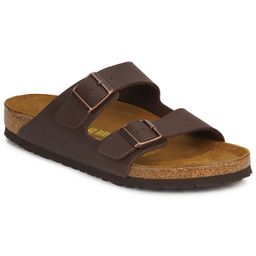
Men's Mules BIRKENSTOCK Brown
No longer available
Sizing: Shearling and Boots Run Tighter
Here's the thing nobody tells you until after you've ordered: Birkenstock boots and shearling styles fit differently from their sandals.
The shearling lining takes up space inside the footbed. If you normally wear a Birkenstock 39 Regular in Arizona sandals, you'll likely need a 40 Regular in the Arizona Shearling. Boots are similar: the enclosed upper plus lining compresses the available volume. Birkenstock's own fit guide recommends sizing up by one EU size for shearling models.
Width still matters. The Regular vs Narrow system applies to boots just as it does to sandals. If you already know your width from a sandal purchase, stick with it. If you're buying Birkenstock boots as your first pair, measure your foot and check the Birkenstock size guide, which covers the entire width system with exact millimetre ranges per EU size.
One more thing: if you plan to wear thick socks with your Boston Shearling during a Troodos mountain weekend, size up two full sizes. Cork doesn't stretch outward the way synthetic boot materials do.
Cyprus Winters: Which Models Actually Make Sense
Let's be honest about what a Cyprus winter looks like. Nicosia averages 17°C in November, 11°C in January, and bounces back to 16°C by March. Limassol and Paphos stay a degree or two warmer. Rainfall peaks in December and January, maybe 10–12 rainy days per month, but it's not persistent Northern European drizzle. It's sharp bursts.
Given that context, here's what I'd actually recommend:
For everyday wear (October–March): Boston Shearling in oiled leather. The closed toe keeps wind out, shearling handles the mild cold, and oiled leather resists light rain better than suede. Pair with bare feet or thin socks on warmer days; thicker socks when Troodos sends cold air down to the plains.
For rainy days: Stalon Chelsea boot in oiled nubuck. The chunky outsole handles wet pavements, the elastic panels make it easy to pull on, and the higher ankle coverage keeps rain out of your shoe. Not waterproof by design, but oiled nubuck handles splashes well enough for Nicosia rain.
For indoor comfort: Zermatt shearling slipper. Air-conditioning in Cyprus offices and marble-floored apartments can make your feet surprisingly cold. The Zermatt solves that without looking like grandma's house slippers.
For going out: Highwood Chelsea boot in smooth leather. Slim enough for restaurants, warm enough for a January evening walk along Molos promenade.
Materials Guide: Leather, Oiled Nubuck, and Suede
Birkenstock uses three main upper materials across their winter range. Choosing the right one for Cyprus conditions makes a real difference to longevity.
Natural leather: smooth, polished finish. Easiest to clean. Handles humidity well, which matters in coastal cities like Larnaca and Paphos where air moisture stays high year-round. The downside: it can feel warm in the September-to-October transition when you're not quite ready for sandals but it's still 28°C.
Oiled nubuck: matte finish, slightly rougher texture than smooth leather. Birkenstock treats this with natural oils that create a mild water-resistant barrier. Best all-rounder for Cyprus: it shrugs off light rain, looks good with casual outfits, and develops a character patina over time. Available across the Stalon and Boston lines.
Suede: the softest, most luxurious feel. But it stains easily, absorbs water, and doesn't love the kind of dust you'll find on Nicosia sidewalks in autumn. If you go suede, commit to treating it with a protective spray every few weeks. Worth the effort for the texture, but be realistic about maintenance.
According to Birkenstock Group's sustainability reporting, 98% of adhesives used in production are water-based, and their cork is harvested renewably every nine years without harming the oak trees. The same sustainability credentials apply to their winter range as to their sandals.
Care Tips for Leather Boots in Mediterranean Climate
Cyprus humidity and dust create a specific challenge for leather footwear. Here's what actually works.
Oiled leather and nubuck: wipe down with a damp cloth after each wear during dusty months (September–November). Apply Birkenstock's own care balm or a neutral leather conditioner once a month. Avoid direct sunlight for drying. Cyprus sun will crack the oils out in an afternoon. Air-dry indoors, stuffed loosely with newspaper.
Suede: use a brass-bristle suede brush to remove dust before it sets. Apply a silicone-free waterproofing spray at the start of the rainy season (December). If suede gets wet, let it dry naturally and brush once dry. Never use a hairdryer or heater.
Shearling lining: the wool is naturally antimicrobial, so you don't need to wash it frequently. Once a month, remove the footbed (if removable) and air it out for a few hours. If the lining flattens, a light brush with a soft-bristle brush restores loft. Birkenstock sells replacement shearling insoles for around €25–€35 when the originals wear out after a couple of seasons.
Does Birkenstock make boots?
Yes. Birkenstock's boot range includes the Stalon Chelsea boot, Bryson lace-up ankle boot, and Highwood slip-on Chelsea. All use the same anatomical cork-latex footbed found in their sandals. Prices for boots with delivery to Cyprus start around €180 and go up to €260 depending on material and retailer.
Are Birkenstock shearling shoes warm enough for winter?
For Cyprus winters, absolutely. The genuine lambskin wool lining insulates to around 5–10°C comfortably, which covers the entire Cyprus cold season. For colder mountain trips (Troodos in January can hit 0°C), you'd need proper winter boots — Birkenstock shearling is designed for mild-to-moderate cold.
Can you resole Birkenstock boots?
Yes. Like their sandals, most Birkenstock boots can be resoled by an authorised cobbler. Birkenstock's own repair service replaces outsoles, footbeds, and even shearling lining. Resoling typically costs €40–€60 and extends the life of a boot by several more years — a genuine advantage over most fashion boots that get thrown away when the sole wears out.
Read next
- Our Birkenstock Boston clog guide for the full breakdown of Boston models, materials, and sizing tips
- The Birkenstock sandals guide covering Arizona, Gizeh, Madrid, and every open-toe option for summer
- The Birkenstock brand story for the 250-year history behind the cork footbed
Prices reflect Stylino's live catalogue data as of July 2026. Prices change as retailers update their inventory.