 Stylino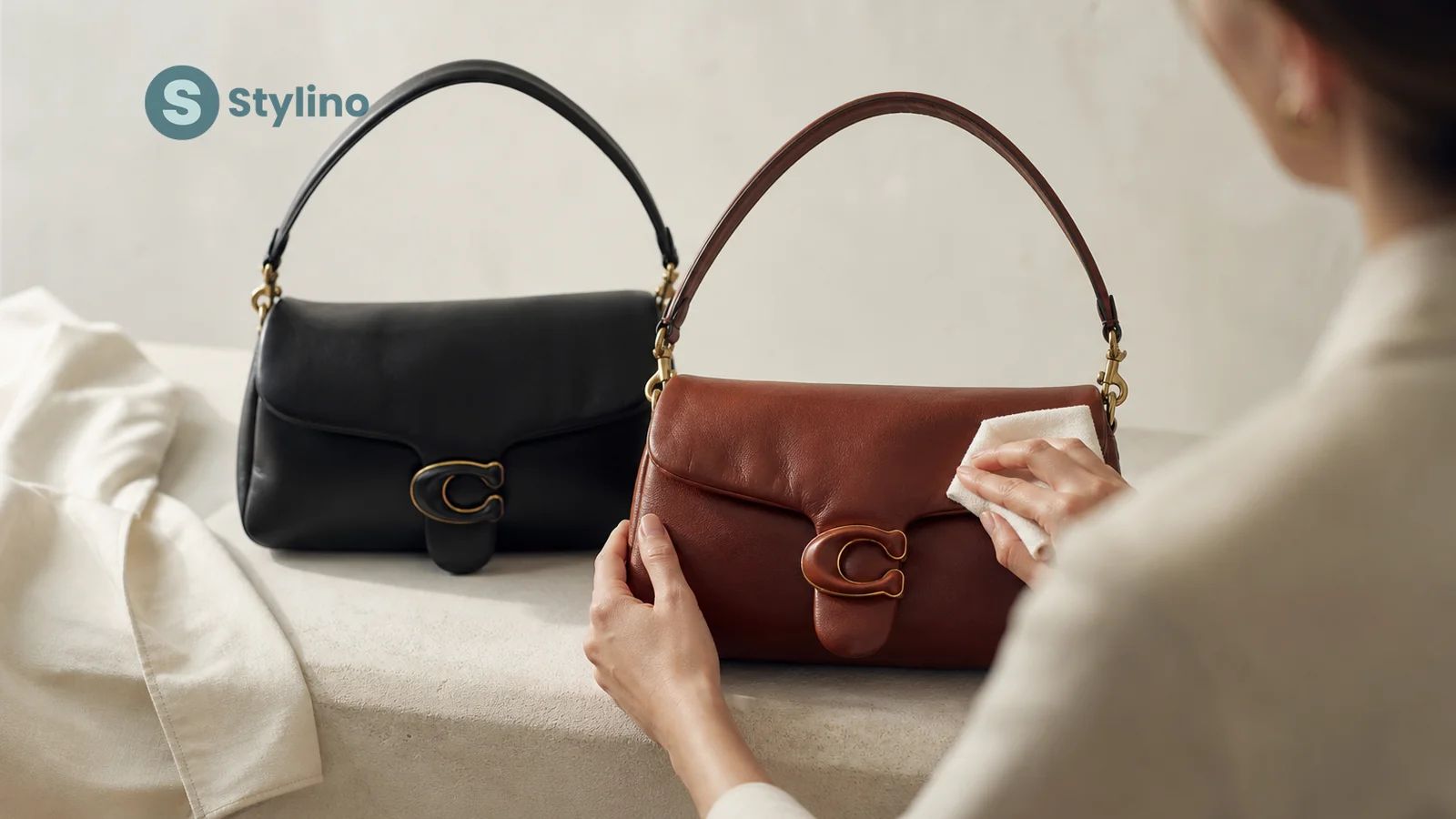
Coach Leather Bag Care: How to Clean & Maintain Your Bag
You spent good money on a Coach bag. Maybe you picked up a glovetanned Tabby at full retail, or maybe you grabbed a pre-owned Prairie Satchel on Stylino for €105 because the patina already looked incredible. Either way, the leather deserves better than being tossed in a closet and forgotten.
Coach has been working with leather since 1941, when six artisans in a Manhattan loft started stitching wallets from glove-tanned hides. That same leather philosophy runs through every mainline bag today. The catch: different Coach leathers need different care. Treat glovetanned leather like suede and you'll ruin it. Ignore conditioning on crossgrain and it'll dry out faster than a Nicosia summer. This guide covers every Coach leather type, the exact cleaning process, and the care schedule that'll keep your bag looking good for years.
Coach leather types and care requirements
Not all Coach leather is the same. According to Coach's own leather guide, the brand uses five distinct leather types across its product lines, and each one responds differently to cleaning and conditioning.
Glovetanned leather is Coach's signature. Soft, supple, and intentionally designed to develop a patina over time, it's the leather you'll find on mainline Tabby, Brooklyn, and Kisslock bags (retail €350–€695). It absorbs oils from your hands gradually, which is a feature, not a flaw. Light scratches buff out with your thumb.
Crossgrain leather is firmer, more structured, and more resistant to scratches. It's the standard for Coach Outlet bags and some mainline wallets. Less romantic than glovetanned, but significantly more practical for daily-carry items.
Signature coated canvas isn't actually leather. It's a PVC-coated fabric with Coach's monogram print. Nearly indestructible. Wipe it down with a damp cloth. The real maintenance concern here is the leather trim, not the canvas itself.
Suede and nubuck are the divas of the Coach leather family. Beautiful to look at, frustrating to maintain. Water stains them, regular cleaner damages them, and they attract dirt like a magnet. Dry brushing only.
Nappa leather is ultra-soft, thinner than glovetanned, and used on selected premium pieces. Treat it gently: no abrasive cloths, no aggressive rubbing.
Step 1: Empty and shake out your bag
Remove everything. Receipts, coins, that loose mint from three months ago. Turn the bag upside down over a bin and give it a firm shake. Debris trapped in seams and pocket corners grinds against the lining every time you move and accelerates wear from the inside out. For bags with multiple compartments (like the Coach totes on Stylino), open every zip and flap.
Step 2: Wipe the exterior with a dry, soft cloth
Use a microfibre cloth or a clean cotton rag. No water yet. Wipe in long, even strokes to remove surface dust, fingerprints, and any residue from daily handling. This step alone, done after every use, prevents most buildup problems. If you're caring for a bag you've just bought pre-owned from a retailer that ships to Cyprus, this initial dry wipe reveals the leather's actual condition beneath travel dust.
Step 3: Apply leather cleaner in circular motions
Dampen a separate soft cloth with Coach Leather Cleaner (or a pH-neutral leather cleaner if you don't have the Coach product). Work in small, circular strokes across one section at a time. Don't soak the leather. The goal is a thin, even application that lifts dirt without saturating the hide. According to Coach's leather care guide, this method works for glovetanned, crossgrain, and polished pebble leathers.
Step 4: Wipe off residue and let the bag dry
Take a clean, damp cloth (barely damp — think wrung-out, not dripping) and remove any cleaner residue. Then set the bag on a clean surface in a well-ventilated room, away from direct sunlight and heat sources. Let it air-dry for at least 30 minutes. Sunlight bleaches leather unevenly, and radiators crack it. A shady spot on your kitchen counter works perfectly.
Step 5: Apply leather moisturiser for protection
Once the leather is fully dry, apply Coach Leather Moisturizer (or a quality leather conditioner) with a clean cloth. Thin, even coats. Think hand cream, not sunscreen — you want absorption, not a surface layer. The moisturiser replenishes the oils that cleaning stripped away and creates a protective barrier against future stains and dryness.
Step 6: Buff gently to finish
Using a dry, soft cloth, buff the entire surface with light circular motions. This step evens out the conditioner, brings up a subtle sheen, and gives glovetanned leather that warm glow that made you buy the bag in the first place. Don't over-buff crossgrain — it already has a natural texture that heavy buffing can flatten.
Conditioning schedule
Leather is skin. It dries out. The conditioning schedule depends on how often you carry the bag and where you live.
Regular use (3+ days per week): Condition every 3 months. Cyprus's dry summers accelerate moisture loss in leather, so don't skip the July–August window.
Occasional use (weekends or events): Condition every 4–6 months. Even bags in rotation lose moisture to ambient air.
Before long-term storage: Always condition before putting a bag away for a month or more. Dried-out leather cracks during storage, and once cracking starts, the damage is permanent.
After heavy rain or humidity exposure: Condition as soon as the leather is fully dry. Don't speed-dry with a hairdryer. Let it air-dry naturally first.
Storage best practices
How you store your bag matters as much as how you clean it. A week of poor storage does more damage than a year of daily use.
Stuff with tissue paper. Crumpled acid-free tissue paper holds the bag's shape and absorbs excess moisture. Never use newspaper because the ink transfers to lighter leathers. Fill to about 80% capacity.
Use the dust bag. Every Coach retail purchase includes a cotton dust bag. Use it. If you bought pre-owned and didn't get one, any breathable cotton pillowcase works. Never store leather in plastic bags or airtight containers. Plastic traps moisture and breeds mould, a genuine risk in Cyprus's humid coastal months from October to March.
Store upright, not stacked. Stacking bags crushes hardware into leather and creates permanent impressions. Place bags side by side like books.
Keep away from sunlight and heat. A shelf in a cool, dark closet is ideal. That decorative hook by the window bleaches one side of your bag within months.
Never hang by the straps. Long-term hanging stretches leather straps irreversibly.
Leathers to NEVER use standard cleaner on
This section could save a bag. Standard leather cleaners (including Coach's own Leather Cleaner) are formulated for smooth, finished leathers. They will damage the following:
Sport Calf leather is the matte, unfinished leather on some Coach 1941 collection pieces. Any liquid-based cleaner darkens it permanently. Dry cloth only, and professional cleaning for stains.
Calf suede appears on Tabby variants and seasonal styles. Water leaves visible marks. Suede brushes and erasers are the only safe cleaning tools. For serious stains, a professional leather cleaner who specialises in suede is your only option.
Haircalf (ponyhair) is the textured, printed leather occasionally used on Coach special editions. Never brush against the grain. Never apply conditioner. A slightly damp cloth wiping in the direction of the hair is the maximum safe intervention.
Patent leather has that high-gloss, lacquered finish. Standard conditioner makes it cloudy. Use a patent-leather-specific product, or simply wipe clean with a soft damp cloth.
If you're unsure which leather your bag uses, check the creed patch inside for material identification, or compare against Coach's leather identification guide.
Caring for pre-owned Coach bags
Bought a pre-owned Coach on Stylino? Smart move. With 311 products ranging from €79 to €435, the Coach has glovetanned leather at prices the outlet can't match. But pre-owned bags often arrive needing a little extra attention.
Deep clean first. Follow the full six-step process above, even if the bag looks clean. Previous owners' hand oils, perfume residue, and environmental buildup all sit in the leather's pores. One thorough cleaning resets the surface.
Check for mould. Open every pocket and inspect seams, folds, and the interior lining. Mould appears as small white or green spots with a musty smell. If you spot it, don't panic. Mix equal parts water and white vinegar, dab (don't rub) the affected areas with a cloth, and let the bag air-dry completely in indirect sunlight. Follow with conditioning. If the mould is widespread, take the bag to a professional.
Polish the hardware. Pre-owned bags often have dull or slightly tarnished hardware. A jeweller's polishing cloth restores brass and nickel zippers, toggles, and clasps. Never use chemical metal polish — it can drip onto and stain the surrounding leather.
Condition generously on day one. Pre-owned leather has been without regular conditioning (sometimes for years). A thorough first conditioning replenishes lost oils and prepares the leather for its second life with you. You'll often see glovetanned leather visibly brighten after this step.
Coach's own care products
Coach sells a Product Care Set (€20–€30 depending on your retailer) that includes Leather Cleaner, Leather Moisturizer, and a polishing cloth. It's formulated specifically for Coach's leathers and takes the guesswork out of product compatibility.
Leather Cleaner works on glovetanned, crossgrain, polished pebble, and smooth calf. Not for suede, haircalf, or Sport Calf.
Leather Moisturizer has the same leather compatibility. Apply after every cleaning session and on the quarterly conditioning schedule.
Polishing cloth is soft, lint-free, and large enough to work an entire tote. You can substitute any clean microfibre cloth.
If you're in Cyprus and can't find the Coach care set locally, any pH-neutral leather cleaner and conditioner (Collonil, Leather Honey, or Saphir) will work. The key factors are pH neutrality and no silicone. Silicone creates a surface film that prevents the leather from breathing and developing its natural patina.
Is it safe to use baby wipes on a Coach bag?
No. Baby wipes contain moisturising agents, fragrances, and sometimes alcohol that can stain or dry out leather. Stick to a leather-specific cleaner or a plain damp cloth for routine cleaning.
How often should I clean my Coach bag?
A full deep clean every 2–3 months is enough for most bags. But wipe the exterior with a dry soft cloth after every use. This daily habit prevents dirt buildup and extends the intervals between deep cleans significantly.
Can I remove ink stains from Coach leather?
Small fresh ink marks sometimes lift with a cotton swab dipped in rubbing alcohol, but this carries risk. Test on a hidden spot first. For set-in ink stains, especially on lighter leathers, a professional leather cleaning service is the safer bet.
Does Coach offer bag repair services?
Yes. Coach stores offer leather care services and can handle repairs including re-dyeing, hardware replacement, and structural stitching. If you're travelling through Athens or any EU city with a Coach boutique, bring your pre-owned bag along. It's one of the underrated perks of buying a heritage brand.
Read next
- our Coach wallets & accessories guide for care tips specific to smaller Coach leather goods
- our how to authenticate a Coach bag guide to verify your pre-owned Coach is genuine before you start caring for it
- our 10 best Coach bags buying guide if you're still choosing your next Coach piece
Browse Coach leather bags on Stylino — compare pre-owned prices from retailers that ship to Cyprus and find your next glovetanned treasure.