 Stylino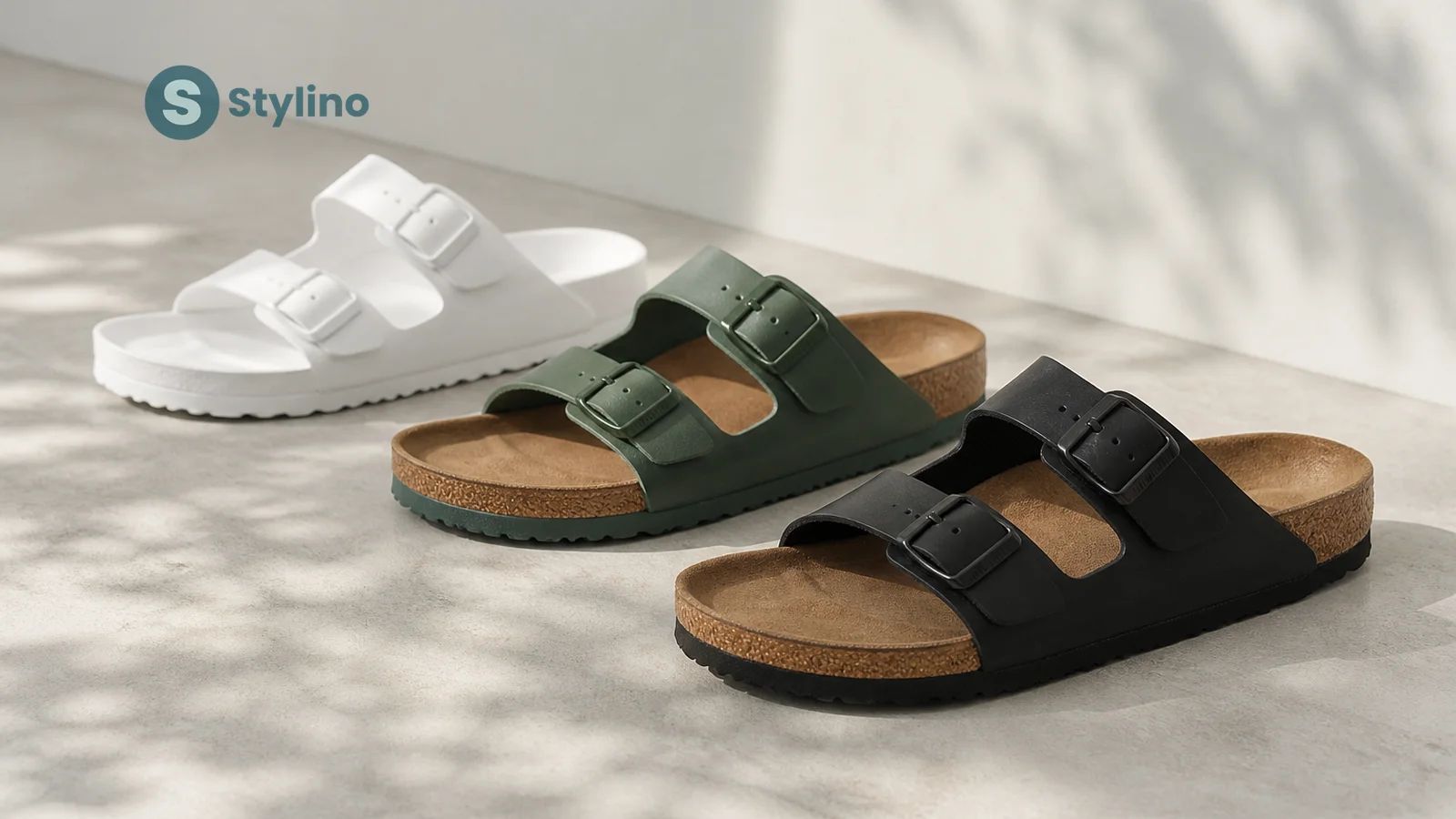
Shoes Like Birkenstocks — Best Alternatives & Dupes in 2026
You already know you want the cork-footbed sandal look. The contoured arch, the chunky-buckle straps, the "I'm comfortable and I don't care what you think" attitude. But maybe the €90+ price tag on a genuine Arizona gives you pause. Maybe you tried Birkenstocks and the fit wasn't right. Maybe you're vegan and want something without suede linings. Or maybe you just live for a bargain and want to know what's out there.
Whatever the reason, the "shoes like Birkenstocks" search has become its own category. Dozens of brands now sell cork-footbed sandals in the two-strap Arizona silhouette. Some cost €15 at Walmart. Others cost €200 and are arguably better than the original.
I've tested four different "dupes" alongside my actual Birkenstocks over two Cyprus summers. The conclusion? Most alternatives get one thing right and two things wrong. This guide breaks down exactly what each tier offers, what it sacrifices, and why the cheapest real Birkenstock on Stylino might actually be your best budget move.
Why People Look for Birkenstock Alternatives
Four reasons keep coming up. Price is the obvious one: a cork-footbed Arizona in natural leather costs €90–110 through retailers that ship to Cyprus, and the Boston clog in oiled nubuck runs even higher. For families buying sandals for three kids who'll outgrow them in a season, that stings.
Fit is the second. Birkenstock's two-width system (Regular and Narrow) works brilliantly for most feet, but people with very high arches or unusually wide toe boxes sometimes find even the Regular too restrictive during the break-in period.
Third, veganism. Birkenstock does make a vegan line (Birko-Flor and Birkibuc uppers, microfiber lining), but the standard suede footbed lining in most models uses animal-derived materials. Shoppers who want zero animal contact sometimes look elsewhere.
Fourth, pure curiosity. When something becomes an icon, people wonder if the premium is justified. Fair question. Let's answer it by category.
Premium Alternatives: Real Cork, Real Competition
These brands use genuine cork-latex footbeds and charge prices similar to (or above) Birkenstock. They're not dupes. They're competitors.
Naot (Israel, est. 1942) builds its sandals on a cork-and-latex footbed with a natural suede lining. The construction quality is comparable to Birkenstock, and their Kayla and Santa Barbara models offer two-strap designs that mirror the Arizona shape. Naot tends to run wider than Birkenstock Regular, which makes them popular with people who found Birkenstocks too narrow. Prices sit around €80–130 depending on model.
Mephisto (France, est. 1965) takes a different approach: their SOFT-AIR technology uses a latex-cork blend with air chambers for extra shock absorption. The result feels plusher underfoot than Birkenstock's firmer cork, which some people love and purists dislike. Premium pricing, typically €120–180, puts them above Birkenstock.
Haflinger (Germany, est. 1898) is better known for boiled-wool house shoes, but their sandal line uses a cork-latex footbed that breaks in similarly to Birkenstock. Less selection, fewer retailers, but solid quality at €60–100.
The honest assessment: if Birkenstocks don't fit your foot shape, trying Naot is the most logical step. If you want a cushier ride and don't mind paying more, Mephisto delivers. But none of these are "cheaper alternatives." They're parallel choices in the same price bracket.
Mid-Range Alternatives: Podiatrist-Designed Comfort
Two brands occupy the space between premium cork and budget foam.
Vionic was literally co-founded by a podiatrist (Phillip Vasyli) and builds every sandal on a biomechanical footbed with a deep heel cup. According to WalkFulton's alternatives comparison, Vionic's arch support is more aggressive than Birkenstock's, which makes them a better pick for people with diagnosed plantar fasciitis but occasionally too firm for those without foot issues. €60–100 for most models.
Aetrex uses memory-foam footbeds with built-in arch support and markets heavily to the orthopedic crowd. They include a Lynco orthotic system that comes in three arch profiles (flat, medium, high). Smart idea, decent execution, though the materials feel less premium than Birkenstock's cork. €70–120.
Both brands solve foot-health problems effectively. What they lack is the fashion credibility. Nobody at a Paphos wine bar is going to compliment your Vionics. But if your podiatrist recommended better arch support, these deliver.
Budget Dupes: Cork-Look at One-Third the Price
This is where the market gets crowded and the quality gets inconsistent.
Cushionaire (sold primarily on Amazon) offers two-strap sandals from €15–25 with a cork-wrapped midsole. They look remarkably like Arizonas from a distance. Up close, the differences multiply: the "cork" is a thin layer glued to an EVA foam base rather than a solid cork-latex block. The footbed doesn't mould to your foot. The straps use synthetic leather that cracks in Mediterranean sun. I wore a pair around Larnaca for three weeks before the footbed compressed flat at the heel.
Khombu (available at Costco for roughly €20) follows a similar formula. Cork-style appearance, foam-core reality. Fine for padding around a hotel pool for a week's holiday. Not built to survive a full Cyprus summer of daily wear.
Arizona Love is interesting because it's actually a fashion brand that modifies real Birkenstock sandals with bandana straps and custom prints. They're not dupes; they're customized originals at 2–3× the retail price. I mention them only because they appear in "Birkenstock alternative" searches despite being the opposite of budget-friendly.
The pattern with budget dupes is consistent: they replicate the look of a cork footbed without the substance. Real cork is renewable, antibacterial, and moulds permanently to your foot's pressure map. A thin cork veneer over EVA foam does none of these things. According to Birkenstock's official materials documentation, their footbed uses a cork-and-natural-latex blend that takes 1–2 weeks to adapt and then holds that shape for years. No budget dupe replicates that.
Recovery Alternatives: Foam, Not Cork
A separate category worth mentioning. These brands don't claim to be Birkenstock-like; they solve a different problem.
OOFOS uses OOfoam, a material that absorbs 37% more impact energy than standard EVA foam according to the brand's published testing data. The OOriginal sandal (thong style, ~€55) is designed for post-run or post-workout recovery. Zero arch support in the traditional sense, but extreme cushioning that reduces joint stress. I keep a pair by the door for quick walks to the periptero after long runs.
HOKA Ora Recovery Slide (~€50–60) applies their running-shoe maximal-cushion philosophy to a slide sandal. Thick, squishy, and surprisingly supportive for foam. Not a daily driver, but excellent for recovery days.
Neither replaces Birkenstock for all-day wear. But if you're searching "shoes like Birkenstocks" because your feet hurt after exercise, these are what you actually need.
The Honest Verdict: What Dupes Can't Copy
After testing alternatives at every price point, three things separate genuine Birkenstocks from everything else.
Custom moulding. Real cork adapts to your foot over time. By week three, the footbed has a visible impression of your arch, heel, and toe pattern. No foam, memory-foam, or cork-veneer product does this. It's the single biggest reason people become lifelong Birkenstock buyers.
Re-soleability. A cobbler can replace a worn Birkenstock sole for €30–40, giving the same footbed another 3–5 years. Budget dupes are disposable by design. When the sole wears out, you bin the whole sandal.
Material durability. Cork-latex doesn't compress permanently the way EVA foam does. A five-year-old Birkenstock still bounces back; a five-year-old budget dupe (if it survived that long) would be flat.
Why the Real Thing Might Be Your Best Budget Move
Time for some uncomfortable maths.
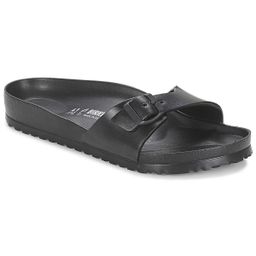
A Birkenstock Arizona EVA costs €36 on Stylino (product ID 196347, via Spartoo). Worn daily for three summers, that's roughly €12 per summer. A cork-footbed Arizona at €82 lasts 7–10 years with one re-soling, so €82 + €35 = €117 over, say, eight years. That's €14.60 per year. Under five cents per day.
A Cushionaire dupe costs €20 and lasts one summer if you're lucky. Over eight years, you'd buy eight pairs: €160. More expensive than the real thing, with worse foot support every step of the way.
The cheapest authentic Birkenstock footwear on Stylino starts at €36. Some budget dupes cost nearly that much. At similar prices, the choice becomes obvious.
Where to Find Discounted Authentic Birkenstocks in Cyprus
Birkenstock operates a scarcity model, and SELF magazine's testing of Birkenstock alternatives confirms that genuine discounts are rare because the brand ships only about 75% of retailer orders. Over 90% of Birkenstocks sell at full price. That said, deals do exist if you know where to look.
On Stylino, filtering by discount shows current price drops across Spartoo, Mybrand.shoes, SportsPoint, and Mandellos Sports. End-of-season colours (last summer's neons, for instance) get marked down 10–15% around September–October. The EVA collection already sits at entry-level pricing year-round: €36–50 for most styles.
The Birkenstock Ledras store (132 Ledras Street, Nicosia) occasionally runs small in-store promotions, though don't expect Black Friday-style discounts. Birkenstock's LVMH-backed pricing strategy explicitly avoids aggressive markdowns.
My advice: skip the dupes, buy the genuine EVA or Birko-Flor at entry pricing. You get the real footbed technology without the premium leather surcharge. Browse women's shoes or the Birkenstock on Stylino to compare live prices across all retailers.
Frequently Asked Questions
What sandals are comparable to Birkenstocks?
Naot and Mephisto are the closest in quality, both using genuine cork-latex footbeds with similar anatomical contouring. Naot tends to run wider, which suits people who found Birkenstocks too narrow. For podiatrist-level arch support without the cork, Vionic is the strongest mid-range option. Budget dupes like Cushionaire mimic the look but use foam cores that don't mould to your foot.
Are Birkenstock dupes worth buying?
For short-term use (a week's holiday, house slippers), a €15–20 dupe is fine. For daily wear lasting more than one season, no. Budget dupes lack the cork-latex footbed that moulds to your foot over time, and the materials degrade quickly in heat and sun. Over three years, buying genuine Birkenstocks (from €36 for EVA) costs less than replacing dupes annually.
Which is better: Naot or Birkenstock?
It depends on foot shape. Naot sandals run wider and have a softer initial feel, making them better for wide feet or people who dislike the Birkenstock break-in period. Birkenstock offers more styles, wider retail availability, and the iconic cork footbed that adapts specifically to your foot over 1–2 weeks. Both are excellent; Naot is the natural first alternative if Birkenstock's fit didn't work for you.
Can cheap cork sandals replace Birkenstocks?
Not meaningfully. Budget "cork" sandals typically use a thin cork veneer glued over EVA foam, which doesn't mould, doesn't provide real arch support, and compresses within months. Birkenstock's footbed is a solid cork-and-natural-latex blend that shapes to your foot and lasts years. The price gap has also narrowed: genuine Birkenstock EVA starts at €36 on Stylino, making many dupes redundant on price alone.
Read next
- our complete Birkenstock buying guide for Cyprus for pricing across all retailers and models
- the Birkenstock vs Crocs comparison if you're specifically weighing foam vs cork comfort
- our Birkenstock sandals guide to explore Arizona, Madrid, Gizeh, and the full sandal range
All Birkenstock prices reflect live data from Stylino — updated daily from retailers that ship to Cyprus. Compare 1,131 products across Spartoo, Mybrand.shoes, SportsPoint, and Mandellos Sports in one place.