 Stylino
Sustainable shoe brands you can buy in Cyprus: 2026 guide
Sustainability in footwear is no longer a niche concern — it's becoming a deciding factor for shoppers across Europe, including Cyprus. If you've been searching for sustainable shoes in Cyprus or eco friendly shoes that actually ship here, you'll know the challenge: most "green" brands either don't deliver to the island or charge prohibitive shipping. This guide covers three brands with genuine sustainability credentials that are available to Cyprus shoppers through retailers tracked on Stylino — Geox, Camper, and Ecco — and helps you separate real environmental commitment from marketing spin.
The growing demand for sustainable footwear
The global sustainable footwear market has grown consistently year over year, driven by consumers who want to know where their shoes come from and what happens to them at end of life. For Cyprus shoppers, the practical question isn't "should I buy sustainable?" — it's "can I actually find sustainable shoes that ship here at a reasonable price?"
The answer is yes, but with caveats. Not every brand that claims sustainability backs it up with verifiable action. The three brands below represent different approaches to sustainability — from recycled materials to waterless manufacturing processes — and all are available through retailers that ship to Cyprus.
Geox: recycled materials and carbon-neutral ambitions
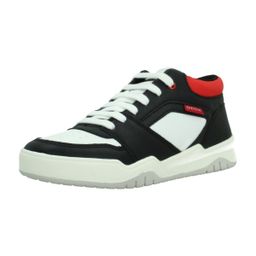
Geox, the Italian brand known for its breathable shoe technology, has invested significantly in sustainability over the past decade. Their sustainability programme focuses on three pillars: recycled materials in production, reducing factory emissions, and extending product life through durable construction (geox.com sustainability).
Key Geox sustainability initiatives:
- Recycled materials programme — Geox uses recycled polyester in shoe uppers and linings across multiple product lines. Their target is to incorporate recycled content into the majority of new collections by 2027.
- Carbon-neutral factory plans — the brand's Montebelluna headquarters in Italy has committed to reducing carbon emissions, with stated goals toward carbon-neutral manufacturing.
- Durability as sustainability — Geox's patented membrane technology (which allows vapour to escape while blocking water) extends shoe life by preventing the moisture damage that degrades cheaper footwear within a single season.
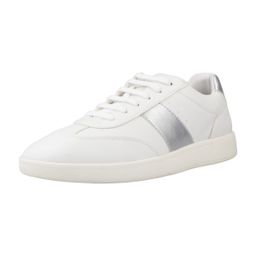
For Cyprus shoppers, Geox sustainability translates into shoes that last longer in the Mediterranean climate — breathability reduces internal moisture that accelerates material breakdown. The current Geox range on Geox starts from around €41 for women's sneakers.
Camper: B Corp certified and committed to circularity
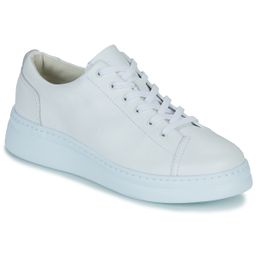
Camper, the Mallorca-born brand, achieved B Corp certification — a rigorous third-party assessment that evaluates a company's entire social and environmental impact, not just its products (camper.com B Corp). This makes Camper one of the few major footwear brands to hold this certification.
What B Corp means in practice for Camper:
- Verified environmental standards — B Corp certification requires meeting specific benchmarks across governance, workers, community, environment, and customers. It's renewed every three years through independent audit.
- Recycled materials — Camper uses recycled rubber, recycled polyester, and organic cotton across its ranges. Their "Ground" collection is specifically designed around circular economy principles.
- Packaging reduction — Camper has eliminated unnecessary packaging materials and uses recycled cardboard for shoeboxes.
The Camper range available to Cyprus shoppers on Camper spans from around €65 for men's sneakers to €130+ for premium lines. The brand sits at a higher price point than Geox but carries the weight of third-party-verified sustainability credentials.
Ecco: DriTan waterless tanning and vertical integration
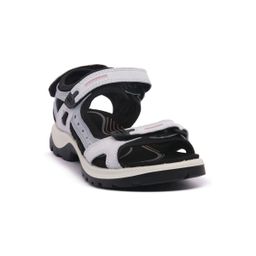
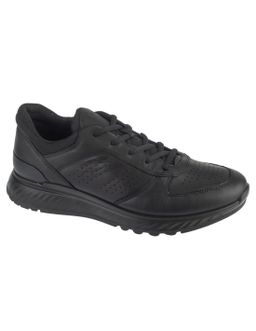
Ecco takes a different approach to sustainability — rather than relying on recycled materials (though they use those too), the Danish brand owns its entire leather supply chain, from raw hide to finished shoe. This vertical integration allows Ecco to control environmental impact at every stage (ecco.com DriTan).
Ecco's standout sustainability credentials:
- DriTan technology — Ecco's proprietary waterless tanning process eliminates water usage in the leather tanning stage. Traditional tanning uses approximately 25 litres of water per hide; DriTan uses zero. This is verified and measurable, not aspirational.
- Leather Working Group membership — Ecco's tanneries hold gold-rated Leather Working Group certification, the highest tier of environmental compliance in the leather industry.
- Own-tannery model — by owning its tanneries (in the Netherlands, Indonesia, Thailand, and China), Ecco doesn't outsource environmental responsibility to third-party suppliers it cannot audit.
Ecco's price point reflects this vertical integration — shoes available to Cyprus shoppers on Ecco typically sit between €105 and €150+. You're paying for a fundamentally different manufacturing model.
What to look for when buying sustainable shoes
Not all sustainability claims are created equal. Here's what actually matters when evaluating whether a shoe is genuinely more sustainable:
Materials transparency — does the brand specify exactly what percentage of recycled or sustainable materials are in each product, or just say "eco-friendly" without numbers?
Third-party certification — B Corp, Leather Working Group Gold, bluesign, OEKO-TEX — these require independent audits. Brand-created "eco labels" mean nothing without external verification.
Supply chain visibility — does the brand disclose where its shoes are manufactured and where materials are sourced? Opacity is a red flag.
Durability — a shoe that lasts three seasons is more sustainable than a "recycled" shoe that falls apart in three months. Construction quality is itself a sustainability metric.
End-of-life programme — does the brand offer take-back, repair, or recycling services? Few do, but it separates genuine commitment from surface-level marketing.
Greenwashing red flags
Watch out for these common tactics that make brands appear more sustainable than they are:
- Vague language — "eco-friendly", "green", "natural" without specific measurable claims
- Single-product sustainability — one "eco line" while the other 95% of production has no environmental consideration
- Offsetting instead of reducing — buying carbon credits without actually reducing manufacturing emissions
- Self-created certifications — logos and badges designed by the brand itself, with no external auditing body
- Highlighting one metric while ignoring others — "recycled upper!" but the sole, adhesives, packaging, and shipping have zero environmental consideration
Price vs sustainability: is it worth paying more?
The honest answer: sustainable shoes typically cost 20–40% more than conventional equivalents. Here's the maths for Cyprus shoppers using current Stylino prices:
| Brand | Entry price (sneakers) | Sustainability approach | Cost per year (assuming 3-season life) |
|---|---|---|---|
| Geox | ~€41 | Recycled materials, durability focus | ~€14/year |
| Camper | ~€84 | B Corp certified, circular design | ~€28/year |
| Ecco | ~€142 | Waterless tanning, owned supply chain | ~€47/year |
The premium is real but the calculation changes when you factor in longevity. A €142 Ecco sneaker that lasts 4+ years costs less per wear than a €30 fast-fashion sneaker that lasts 6 months. Add the environmental cost — which you don't pay directly but the planet does — and the equation tilts further.
The pragmatic approach: you don't need to replace your entire shoe collection with sustainable options overnight. Start with your most-worn pair — the daily sneaker or work shoe that gets 200+ wears per year. That's where both the financial and environmental return is highest.
Frequently asked questions
Read next
Shop sustainable brands on Geox — compare current prices from Geox, Camper, and Ecco across retailers that ship to Cyprus, all in one place. Set a price alert on any product and we'll notify you when it drops to your target.