 Stylino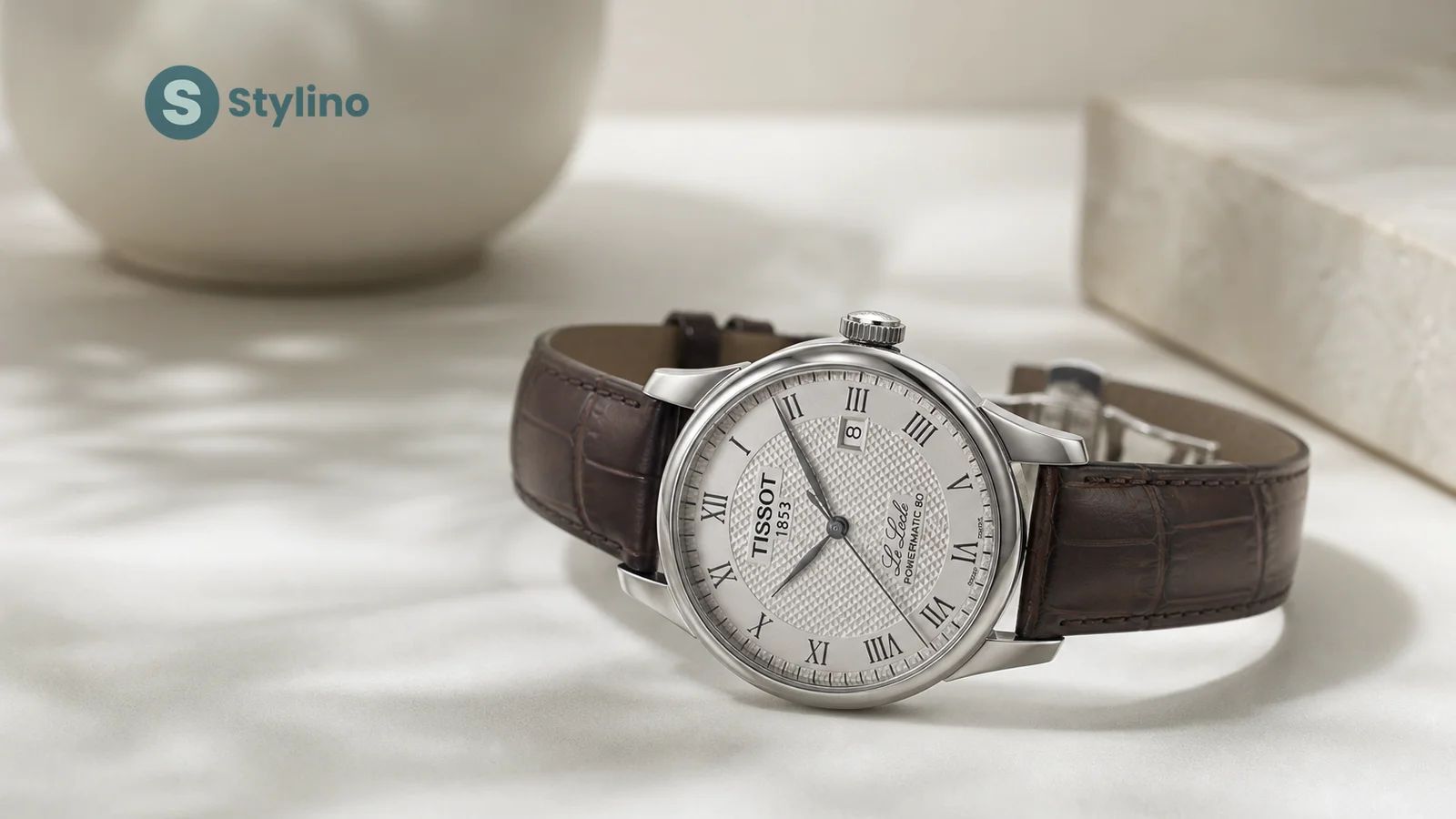
Tissot Le Locle & Classic Dress Watches Guide
Most watch collections are named after something aspirational. A mountain, an ocean, a racing circuit. Tissot went a different route with the Le Locle: they named it after their own hometown. The small Swiss town of Le Locle, nestled in the Jura mountains, is where Charles-Félicien Tissot and his son Charles-Émile founded the company in 1853. It's the kind of decision that only makes sense if you genuinely believe the place shaped who you are. For Tissot, it clearly did.
That personal connection shows in the watch itself. The Le Locle sits at the heart of Tissot's dress watch lineup, and it anchors a broader collection of classic timepieces that cover everything from entry-level elegance to COSC-certified precision. If you've been looking at Swiss dress watches under €500 and wondering whether the Le Locle is really the benchmark everyone claims, or whether another Tissot classic might suit you better, this guide breaks down every option.
Le Locle: Tissot's Hometown on Your Wrist
The Le Locle collection has been a cornerstone of Tissot's catalog since the brand decided to honour its origins with a dedicated line. According to Tissot's official site, the collection draws design inspiration from the architectural details of Le Locle itself, with guilloché-patterned dials that echo the decorative facades of 19th-century Jura buildings.
The standard men's Le Locle measures 39.3mm in diameter. That's smaller than the current 40–42mm trend, and deliberately so. Dress watches prioritise discretion. At 39.3mm, the Le Locle slides under a shirt cuff without snagging. The case is fully polished stainless steel, which gives it a more formal character than the alternating brush-polish finish you see on sportier Tissot lines like the Gentleman.
What makes it genuinely stand out in this price bracket is the dial work. The guilloché pattern isn't stamped on; it's a textured finish that catches light from different angles and gives the dial a sense of depth that flat, printed dials simply can't match. Pair that with applied Roman numeral indices and a date window at 3 o'clock, and you have a dress watch that looks like it should cost considerably more than it does.
Le Locle Powermatic 80: The Benchmark Under €500
The Powermatic 80 version of the Le Locle is where this watch becomes genuinely compelling against its Swiss competition. The movement delivers 80 hours of power reserve, meaning you can leave the watch in a drawer from Friday evening through Monday morning and it'll still be running when you pick it up. Most Swiss automatics at this price offer 38–42 hours. That's not a marginal improvement; it's nearly double.
According to Tissot, the Powermatic 80 in the Le Locle uses an elaborated-grade ETA base with a Nivachron hairspring, which provides improved anti-magnetic performance over the standard grade found in entry-level Tissot automatics. Sapphire crystal on both sides means you get a transparent caseback to watch the movement at work. At roughly €400–€500 with delivery to Cyprus through retailers tracked on Stylino, it undercuts every comparable Swiss dress automatic I can think of.
Chemin des Tourelles: The Slightly Bolder Option
If the Le Locle feels too reserved for your taste, the Chemin des Tourelles occupies interesting middle ground. Named after another street in Le Locle (the one where Tissot's original workshop stood), it's a dress watch that flirts with sport-watch proportions.
The case is larger at 42mm, with a thicker profile. Roman numeral indices and a date window keep the classical vibe, but the extra size gives it more wrist presence. The Chemin des Tourelles is available with the Powermatic 80 movement and, in some references, with a COSC chronometer certification that matches the Ballade's accuracy standards.
For someone who wears casual tailoring rather than formal suits, the Chemin des Tourelles makes more sense than the Le Locle. It reads as "dressed up" without the full formality of a slim 39mm dress watch. At around €500–€700, it sits between the Le Locle and the higher-end Tissot dress options.
Visodate: Vintage Heritage, Modern Guts
The Visodate is Tissot's love letter to mid-century watch design. Originally released in the 1950s, it was revived as a heritage piece and received a refresh for 2026. The distinguishing feature is the day-date complication at 3 o'clock, showing both the day of the week and the date. That's practical in a way that most dress watches aren't; you glance at your wrist on a Wednesday morning and get confirmation without checking your phone.
Design-wise, the Visodate sits between vintage and modern. The dial is cleaner than the guilloché Le Locle, with applied baton indices that keep the aesthetic understated. Case size is 40mm, slightly larger than the Le Locle. The Powermatic 80 movement is standard across automatic Visodate references.
What I find appealing about the Visodate is its personality. Walking through the old town in Nicosia, you see enough Seiko Presage Cocktail Times and Hamilton Jazzmasters on wrists that a Visodate stands out precisely because fewer people know about it. It's a conversation piece for people who actually care about watch history.
Classic Dream & Carson: Entry-Level Dress
Not everyone needs the Le Locle's guilloché flourishes. The Classic Dream and Carson collections strip Tissot's dress DNA down to essentials, and they do it at prices that make Swiss watchmaking accessible to anyone willing to spend more than €275.
The Classic Dream keeps things minimal: clean dial, slim case, reliable movement. It's available in both quartz and automatic variants. The quartz versions start around €275 at Eleftheriou Online (the lowest-priced Tissot on Stylino's catalog), while automatic versions with the Powermatic 80 sit in the €350–€450 range.
The Carson is marginally dressier, with a rounder case shape and often Roman numeral indices. Carson Premium variants include the Powermatic 80, and the women's Carson in a smaller case size is one of Tissot's best sellers for gift purchases. At €295–€400, it occupies the same territory as the Classic Dream but with a slightly more traditional aesthetic.
Ballade: COSC Precision for Purists
The Ballade is the watch for people who read movement specs before looking at dial colours. It's Tissot's only collection with COSC chronometer certification as standard, which means every individual movement has been tested by the Contrôle Officiel Suisse des Chronomètres across five positions and three temperatures over 15 days.
According to Tissot, the Ballade's Powermatic 80 uses a silicon hairspring that resists magnetic fields and doesn't require lubrication, theoretically improving long-term stability. The COSC certification guarantees accuracy within -4/+6 seconds per day, but Tissot claims most Ballade movements regulate closer to +1 second per day.
At around €800–€1,000, the Ballade costs more than the Le Locle. Is it worth the premium? If you're the kind of person who checks their watch against an atomic clock app, absolutely. For the rest of us, the standard Powermatic 80 in the Le Locle keeps perfectly adequate time for daily life. The Ballade's real audience is the watch enthusiast who treats COSC the way coffee people treat single-origin beans.
Couturier: Still Available, No Longer Made
Tissot discontinued the Couturier, but it hasn't vanished from the market. Remaining stock shows up through retailers that ship to Cyprus, often at discounted prices. The Couturier sat between dress and sport, with a slightly thicker case and a more angular design language. If you find one at €300–€400, it's solid value for a Swiss automatic with Tissot build quality. Just know that replacement parts may become harder to source over the next decade.
Le Locle for Women
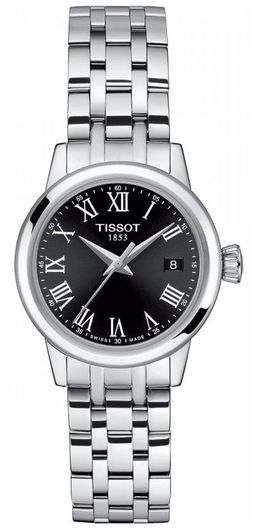
The Le Locle isn't exclusively a men's watch. Tissot produces a women's Le Locle with a 25.3mm case, diamond-set dial markers on some references, and mother-of-pearl dial options. Two-tone steel-and-gold PVD models give it a jewelry-like quality without the jewelry-like price tag. The women's Le Locle ranges from roughly €325 to €600 depending on configuration. The automatic versions use the same Powermatic 80 family, though in a smaller calibre. For a Swiss dress watch to gift for a graduation or anniversary, the women's Le Locle with diamond indices is hard to beat in this price range.
Read next
- Our Tissot quality review breaks down Powermatic 80 tiers, build quality, and where Tissot falls short versus higher-end Swiss brands
- The Tissot Gentleman guide compares the Gentleman's dress-sport versatility with the Le Locle's formal elegance
- Our complete Tissot buying guide for Cyprus covers where to buy, all price tiers, and retailer comparisons across three retailers that ship to Cyprus
Frequently Asked Questions
What does Le Locle mean?
Le Locle is a small town in the Jura mountains of Switzerland where Tissot was founded in 1853. According to Worn & Wound's brand history coverage, the town has been a centre of Swiss watchmaking for centuries, earning UNESCO World Heritage status alongside its neighbour La Chaux-de-Fonds. Naming a collection after it is Tissot's way of anchoring their identity in their origins.
Is the Tissot Le Locle a dress watch?
Yes. The 39.3mm fully polished case, guilloché dial, and slim profile make it a textbook dress watch. It fits under a shirt cuff, pairs naturally with suits, and avoids the bulk of sport-oriented designs. That said, the 100m water resistance means you don't need to baby it. Wear it to the office, wear it to dinner, and don't worry about washing your hands.
What is the difference between Le Locle and Chemin des Tourelles?
Size and formality. The Le Locle is 39.3mm and fully polished, designed for formal settings. The Chemin des Tourelles is 42mm with a thicker case, bridging dress and casual wear. Both offer the Powermatic 80 movement and sapphire crystal. Choose the Le Locle for suits and classic style; choose the Chemin des Tourelles if you want a dress watch that also works with jeans.
Is Tissot Visodate automatic?
Yes. Current Visodate models use the Powermatic 80 automatic movement with 80 hours of power reserve. The day-date complication at 3 o'clock is mechanical, driven by the same movement. A quartz Visodate existed in earlier generations, but the current production lineup is automatic only.
What is COSC certification on the Ballade?
COSC (Contrôle Officiel Suisse des Chronomètres) is an independent Swiss testing body that certifies individual watch movements for accuracy. Each Ballade movement is tested over 15 days in five positions and three temperatures. The standard requires -4/+6 seconds per day. It's the same certification used by Rolex and Omega, applied to a watch that costs a fraction of either.
Looking for your next dress watch? Browse all Tissot watches on Stylino and compare prices across three retailers that ship to Cyprus. Price gaps of €50–€100 on the same Tissot reference are common across retailers. Set a price alert and let Stylino notify you when your preferred Le Locle, Visodate, or Ballade drops in price.