 Stylino
Tissot Watch Care, Straps & Battery Replacement Guide
You spent €400 on a Tissot Gentleman. Maybe €700 on a PRX Powermatic 80. The watch arrives, you wear it daily, and then... what? Nobody tells you that a €30 battery change at the wrong place can void your water resistance. Or that a leather strap left sweaty in a drawer warps permanently within weeks. Or that your automatic needs professional service before it starts losing minutes per day.
This guide covers everything after the purchase: maintaining your Tissot, knowing when batteries need changing, replacing straps without damaging lugs, and finding proper service in Cyprus.
Automatic vs Quartz: Two Different Maintenance Lives
Your Tissot is either battery-powered (quartz) or self-winding (automatic). The care requirements are fundamentally different.
Quartz watches (Classic Dream, PR 100 quartz, Lovely, Everytime, most PRX models under €400): battery every 2–3 years, no winding needed, minimal moving parts. They're low-maintenance by design. But "low-maintenance" doesn't mean "no maintenance." The gaskets that keep water out degrade regardless of movement type.
Automatic watches (anything labeled Powermatic 80, Swissmatic, or "Automatic" on the dial): no battery, but need wearing or winding to run. Leave one in a drawer for four days and it stops. The mechanical movement needs professional cleaning and lubrication every 3–5 years. Skip this and accuracy degrades, then eventually components wear. A full service costs more than a battery, but it keeps the watch running for decades.
Here's the practical difference: a quartz Tissot costs about €30–€50 every two years for batteries. An automatic Tissot costs €250–€450 every 3–5 years for a full service. Both are worthwhile investments on a watch that lasts a lifetime.
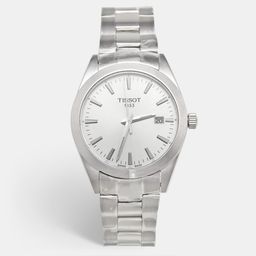
Tissot
Tissot Gentleman T127.410.11.031.00 Silver Dial Stainless Steel Men's Wristwatch 40mm
€398.00
How to Handle Tissot Battery Replacement
Recognize the signs
Your quartz Tissot needs a new battery when the second hand starts jumping in 4-second intervals instead of ticking once per second. This is called the End-of-Life (EOL) indicator, and Tissot builds it into most quartz models. Don't wait weeks after this happens. A dead battery left inside can leak and corrode the movement.
Choose the right service point
This is where most people get it wrong. Any mall kiosk or market stall can pop open a case back and swap a cell. But they won't reseal the gaskets properly. They won't pressure-test for water resistance. They may use the wrong cell voltage.
For Tissot, go to an authorized Swatch Group service center. In Cyprus, Onnik Time Center in Larnaca is the authorized point for Swatch Group brands including Tissot. They have the correct pressure-testing equipment and genuine gaskets.
Know the cost
Expect €30–€80 for a battery replacement at an authorized center. The price includes: new cell, gasket inspection/replacement, and water-resistance pressure test. Mall kiosks charge €10–€15 but skip the pressure test entirely. That €20 saving becomes a €400 replacement watch when water enters the case next summer at the beach.
After the replacement
Ask for a water-resistance certificate after every battery change. Any reputable service center will provide one. If they can't or won't pressure-test after resealing, find another center.
Full Mechanical Service: What Actually Happens
When you hand over your Powermatic 80 or Swissmatic watch for a full service, here's the process inside the workshop:
Disassembly: The watchmaker removes the movement from the case, then strips the movement down to individual components. A Powermatic 80 has roughly 80–100 parts.
Cleaning: Every metal component goes through an ultrasonic bath in specialized cleaning solutions. Old oil is dissolved. Microscopic debris is removed.
Inspection: Worn parts (particularly the mainspring, pallet stones, and balance staff) get examined under magnification. Damaged components are replaced with genuine Tissot parts.
Lubrication: Fresh synthetic oils are applied to specific points. Different viscosities for different functions: heavy oil for the mainspring barrel, light oil for the balance jewels. Getting this wrong ruins accuracy.
Regulation: The movement is timed on a machine (typically a Witschi or similar) in multiple positions. According to Tissot's service standards, a properly serviced Powermatic 80 should run within -4/+6 seconds per day.
Reassembly and pressure test: Movement goes back in the case with fresh gaskets. The case is pressure-tested to its rated water resistance.
Full service pricing from Swatch Group: approximately €250–€350 for a three-hand automatic, €350–€450 for a chronograph. Timeline: 4–8 weeks including shipping to a Swatch Group service center.
Water Resistance: The Most Misunderstood Specification
Your Tissot says "100m water resistant" on the case back. That rating was valid when the watch was brand new, tested at the factory. It does not remain guaranteed forever.
Every time the case back is opened (battery change, service), the gaskets are disturbed. Without proper resealing and re-testing, water resistance drops to effectively zero. This is why mall-kiosk battery changes are risky on anything you plan to wear near water.
Gaskets also degrade naturally. UV exposure, temperature changes, and contact with sunscreen or chlorine accelerate this. In Cyprus, where summer means daily heat above 35°C and frequent swimming, gasket condition matters more than in cooler climates.
The rule: re-test water resistance every 12–18 months if you regularly wear your watch in water, and always after any case opening.
Watch Straps and Bracelets: Care and Replacement
Steel bracelet care
That brushed steel bracelet on your PRX or Gentleman collects dead skin, soap residue, and salt within weeks. The gaps between links become a breeding ground for bacteria (yes, that smell is bacteria).
Weekly cleaning: Remove the watch. Hold the bracelet under warm running water. Use a soft toothbrush with mild soap (dish soap works fine) between links. Rinse thoroughly. Pat dry with a lint-free cloth.
Monthly deep clean: Soak the bracelet (not the watch head) in warm water with a drop of dish soap for 15 minutes. Brush between links. Rinse under running water. Air dry completely before wearing.
Scratches: Light surface scratches on brushed steel are normal wear and arguably add character. For polished center links, a Cape Cod polishing cloth removes light scratches at home. Deeper scratches need professional polishing.
Leather strap care
Leather and water don't mix. Cyprus summers are brutal on leather straps: sweat, humidity, salt air. A leather strap lasts 12–18 months with daily summer wear in Cyprus, versus 2–3 years in cooler climates.
Daily habits: Rotate between two straps if possible. After sweaty wear, let the strap rest strap-side-up in open air for 24 hours before wearing again. Never store leather straps in sealed containers.
Replacement timing: When the strap starts cracking, flaking, or develops a persistent odor that cleaning can't fix, it's time. Don't wait until it snaps on your wrist.
Compatibility: Tissot uses standard lug widths with quick-release spring bars on most modern models. Measure between the lugs with a ruler before ordering aftermarket straps.
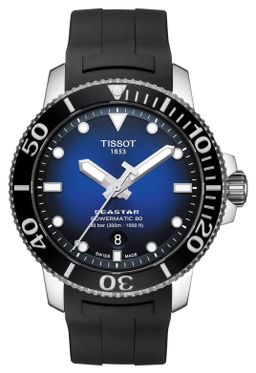
Common Strap Widths by Tissot Model
Buying the wrong strap width is the most common mistake. Here's the reference table:
| Collection | Lug width | Notes |
|---|---|---|
| PRX (35mm) | 12mm | Integrated bracelet; aftermarket straps require adapter |
| PRX (40mm) | 12mm | Same as 35mm; integrated design limits strap options |
| Gentleman (40mm) | 21mm | Standard drilled lugs; aftermarket friendly |
| Seastar 1000 | 22mm | Diver's strap; rubber or steel bracelet |
| Le Locle (men) | 19mm | Dress strap; leather or steel |
| Le Locle (women) | 16mm | Smaller lug width for 29mm case |
| PR 100 (men) | 19mm | Standard lug width |
| T-Race | 22mm | Rubber or silicone sport straps |
| Lovely | 9mm | Jewelry-style bracelet, brand-specific only |
Important note about the PRX: The integrated bracelet design means you cannot simply swap in any standard strap. Tissot sells official PRX rubber straps as accessories, but generic 12mm straps won't fit the proprietary lug geometry. If you want strap variety, the Gentleman or Le Locle are much more strap-swap friendly.
Where to Get Service in Cyprus
Onnik Time Center (Larnaca): The authorized Swatch Group service point in Cyprus. They handle warranty work, battery replacements with proper pressure testing, and can send watches to the Swatch Group service center for full mechanical service. Located on Ermou Street in central Larnaca.
ORA Cyprus: Stocks Tissot and provides basic after-sales support. Can facilitate warranty claims and service requests.
For full mechanical service: Most watches from Cyprus get shipped to the Swatch Group regional service center (typically Greece or Switzerland). Turnaround is 4–8 weeks. Your authorized dealer handles the shipping logistics.
For battery replacement only: Onnik Time Center in Larnaca can do this on-site within 1–2 days, with pressure testing included.
What about unauthorized watchmakers? Cyprus has skilled independent watchmakers in Nicosia and Limassol. They're fine for basic battery changes on non-water-resistant dress watches. But for anything you wear near water, for anything under warranty, or for any mechanical service, stick with authorized. The cost difference is small, and the peace of mind is substantial.
How much does a Tissot battery replacement cost?
At an authorized Swatch Group service center, expect €30–€80. This includes the battery cell, gasket inspection or replacement, and water-resistance pressure testing. Mall kiosks charge €10–€15 but skip the critical pressure test. The extra cost at authorized centers protects your watch's water resistance and keeps the warranty valid.
How often should I service my Tissot?
Quartz models: battery every 2–3 years, gasket check every 3–4 years. Automatic models (Powermatic 80, Swissmatic): full mechanical service every 3–5 years. You'll notice an automatic losing accuracy (more than ±10 seconds per day) before the service interval. Don't wait until accuracy is severely off. Early service costs the same and prevents component damage.
Can I change my own Tissot strap?
On models with standard drilled lugs and quick-release spring bars (Gentleman, Le Locle, Seastar, PR 100): yes, with a spring bar tool or by hand using the quick-release tab. On integrated bracelet models (PRX): no. The PRX requires Tissot-specific adapters for alternative straps, and the bracelet removal needs a proper tool to avoid scratching the case.
Where can I repair a Tissot in Cyprus?
Onnik Time Center in Larnaca is the authorized Swatch Group service point for Cyprus. They handle battery replacements (on-site, 1–2 days), warranty claims, and can ship watches to the regional Swatch Group service center for full mechanical overhauls. ORA Cyprus also provides after-sales support for Tissot. Turnaround for full service: 4–8 weeks including transit.
How do I clean my Tissot steel bracelet?
Remove the watch from your wrist. Hold under warm running water and scrub between links with a soft toothbrush and mild dish soap. Rinse thoroughly. For deeper cleaning, soak the bracelet (detached from the watch head if possible) in warm soapy water for 15 minutes, brush, rinse, and air dry. Avoid ultrasonic cleaners at home since they can damage gaskets if the watch head is submerged. Weekly cleaning prevents bacterial buildup and keeps the bracelet looking fresh.
Read next
- the Tissot watches Cyprus buying guide for retailer details and warranty coverage
- the Tissot watch size guide for help picking the right strap width for your wrist
- our Tissot Powermatic 80 guide if you want to understand what's inside your automatic
Browse all 619 Tissot watches on Stylino. Compare prices from retailers that ship to Cyprus, set alerts for price drops, and find replacement straps at the best available price.